
Garage Concrete Des Moines
Your garage floor takes more punishment than almost any other slab on your property. Colin Concrete Des Moines installs garage concrete floors and slabs built to handle vehicle loads, oil exposure, and Iowa's punishing winters.
Thank you for reading this post, don't forget to subscribe!Why Garage Concrete in Des Moines Fails — and How to Prevent It
Most garage concrete problems in Des Moines trace back to the same root cause — the slab was not poured for the conditions it would actually face. A garage floor deals with vehicle weight every single day, chemical exposure from oil and road salt tracked in on tires, and the same freeze-thaw stress that affects every concrete surface in Iowa.
Structural cracking is the most visible sign that something went wrong. It usually starts at the corners or along the edges and works inward. Once cracks open up, water gets underneath the slab, the sub-base softens, and sections begin to settle unevenly. By that point, the floor is no longer a minor issue.
Colin Concrete Des Moines installs garage concrete floors and slabs that are engineered from the sub-base up. The right thickness, the right mix, proper jointing, and a clean finish — that combination is what makes a garage slab hold up for 30 years instead of 10.
Professional Garage Concrete Flooring in Des Moines
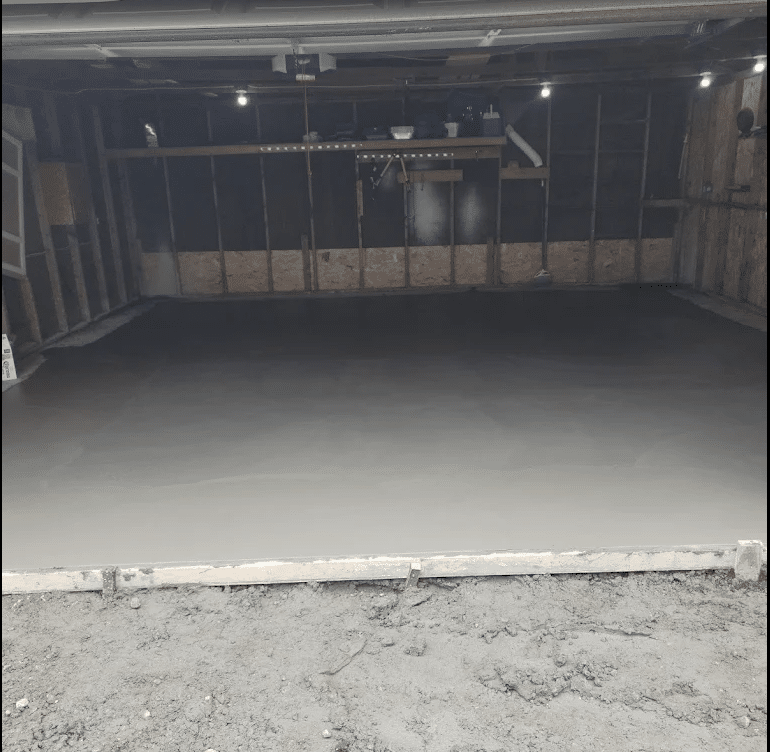
A garage floor installation starts long before any concrete gets mixed. The existing ground has to be excavated to the right depth and properly graded so water cannot pool under the slab. A well-compacted gravel sub-base is then laid to provide stable, uniform support across the entire footprint.
Garage slabs in Iowa are typically poured at 4 to 6 inches thick depending on intended use. A standard two-car garage used for personal vehicles sits at the lower end. A workshop floor with heavy equipment, or a garage that sees truck or RV parking, needs extra thickness to handle the load without flexing and cracking over time.
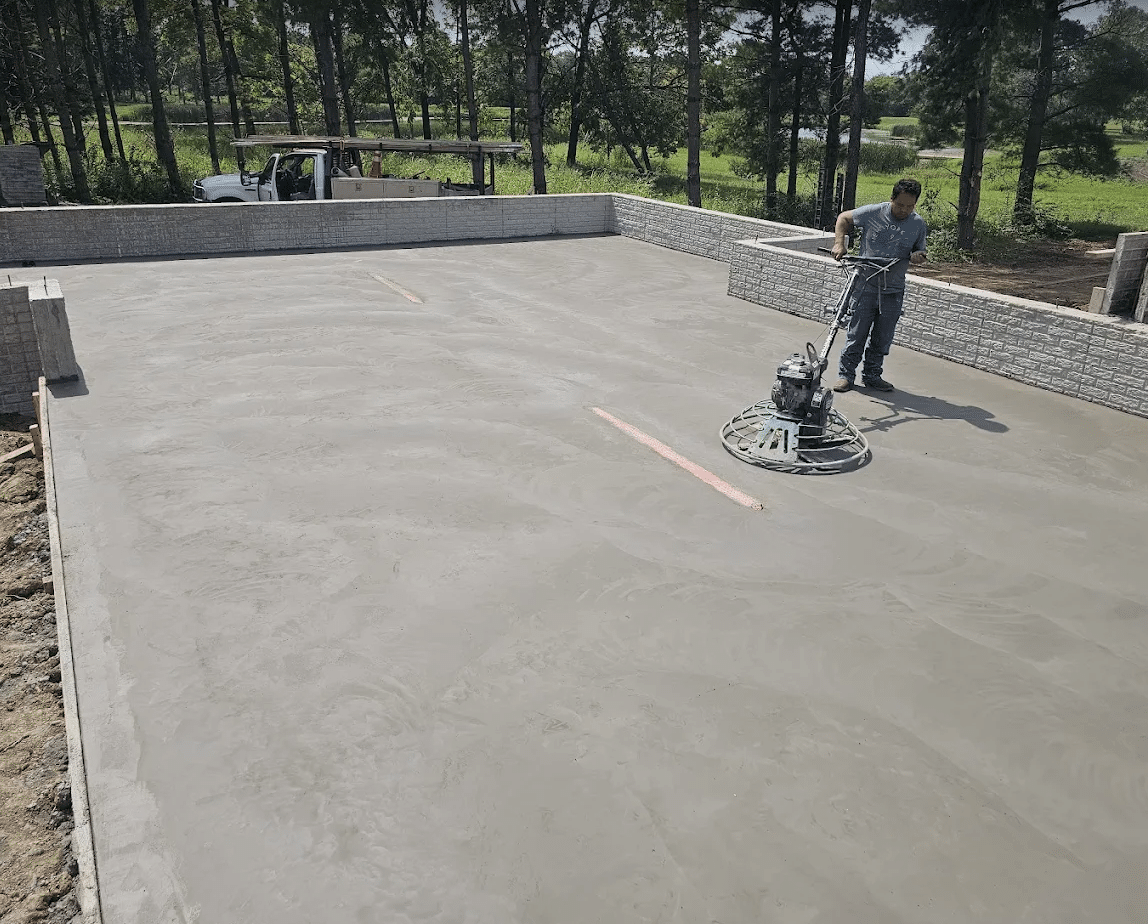
Control joints are cut into the slab at strategic intervals before the concrete fully cures. These guide where the inevitable minor shrinkage cracks will form — keeping them in predictable, low-visibility locations rather than running across the middle of the floor. The finish is troweled smooth or given a brushed texture depending on the homeowner's preference and how the space will be used.
Full slab installations for new detached and attached garages across the Des Moines metro.
Demo and repour of existing garage floors that have cracked, settled, or deteriorated beyond use.
Thicker pours for workshops, commercial garages, and spaces with equipment or heavy vehicle traffic.
Smooth-troweled and sealed garage floors that resist staining and are easy to keep clean year-round.
When Des Moines Homeowners Need Garage Concrete Work
Some garage floor situations are part of a new build. Others develop gradually over years of use and Iowa weather. Here are the most common reasons people contact Colin Concrete for garage slab work.
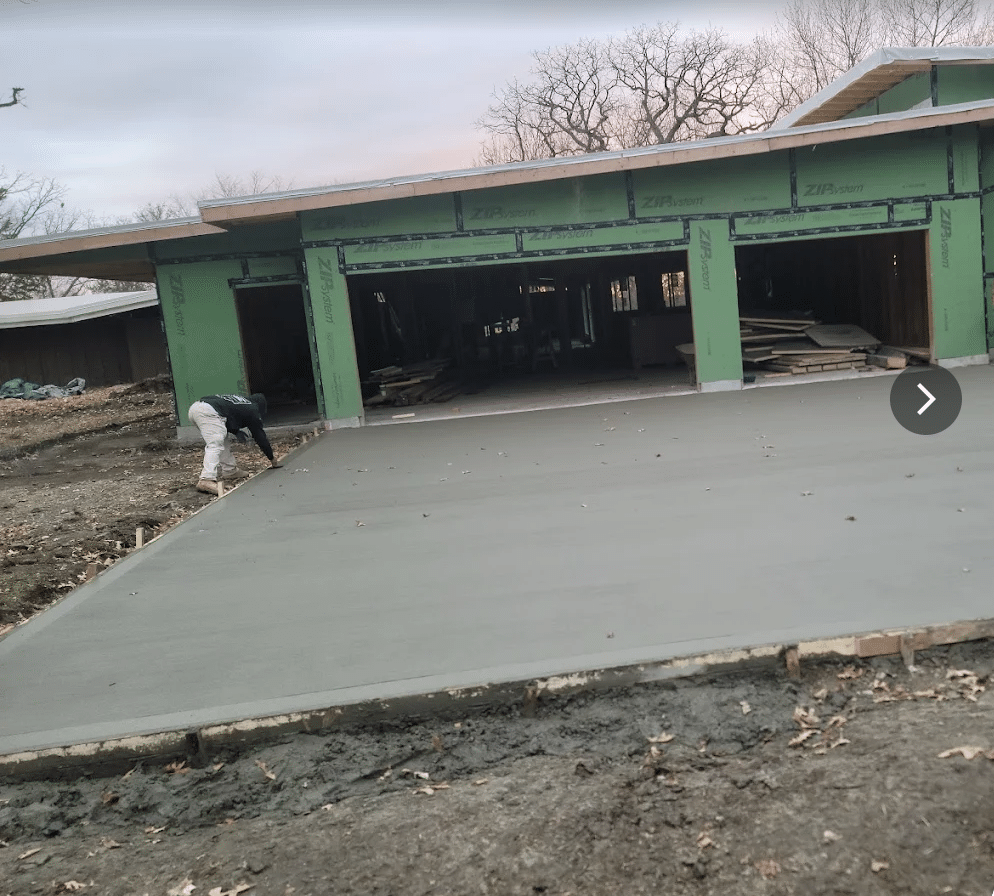
A new detached garage needs a properly poured slab before any framing starts. The slab dimensions, thickness, and edge treatment all factor into how well the structure sits and performs. Getting the concrete right at this stage means the building above it stays level and dry for decades.
When sections of a garage floor crack and drop below neighboring sections, the trip hazard and water infiltration risk become serious concerns. A floor with significant differential settlement has usually lost sub-base support underneath — patching the surface does not fix what is happening below it.
Finishing a garage into a workshop, gym, or additional living area often requires upgrading the existing concrete floor — leveling it, thickening it, or replacing it entirely to meet the demands of the intended use.
An attached garage addition requires the slab to tie into the existing home foundation at a compatible height and depth. Coordination between the slab pour and the adjacent foundation is critical to prevent movement and water entry at the joint.
New Slab, Full Replacement, or Upgraded Pour — Your Options
Garage concrete projects are not all the same scope. Here is a breakdown of what each situation typically involves.
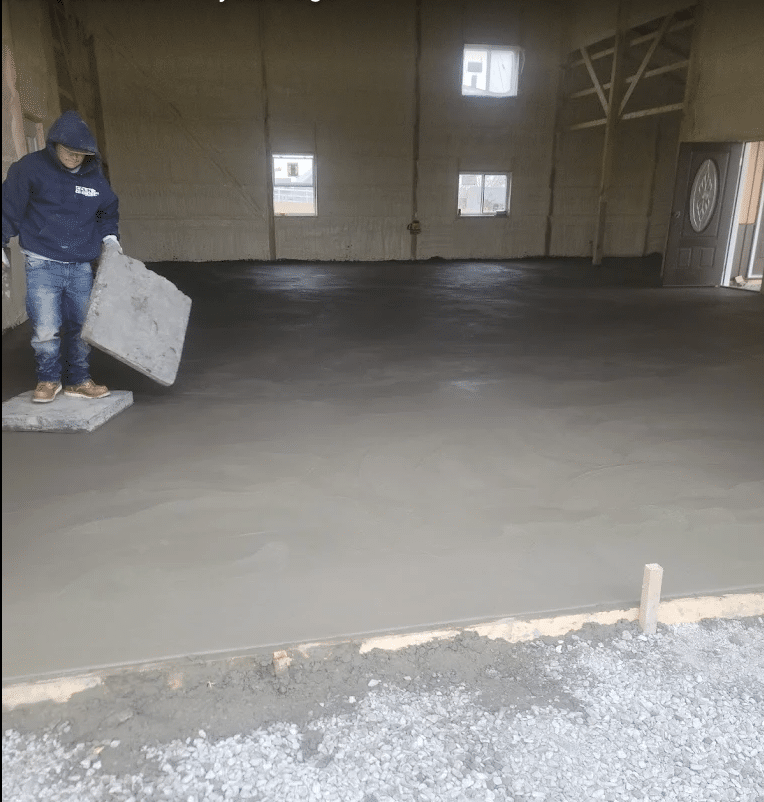
For a new garage build, everything starts fresh. Site preparation, gravel base, forms, rebar or wire mesh, the pour itself, and finishing all happen in sequence. The result is a slab sized and engineered specifically for that garage's footprint and use case.
When an existing garage floor has failed — widespread cracking, significant settling, or a sub-base that has washed out underneath — the right answer is a full tear-out and repour. Partial patches on a compromised floor rarely hold. Starting fresh gives a floor that performs correctly from the ground up.
Homeowners who want to use their garage as a workshop or store heavy equipment benefit from a purposefully thicker pour with a higher-strength concrete mix. This is also worth discussing when the garage will be used for commercial purposes or frequent loading with heavy trailers and equipment.
Call 515-320-8883 to talk through which option fits your garage project. Estimates are free and there is no obligation.
Why Des Moines Homeowners Choose Colin Concrete for Garage Floors
Garage slab work looks straightforward but the margin for error is thin. Here is what separates a Colin Concrete garage floor from one that will need attention again in a few years.
Every pour starts with proper excavation and a compacted gravel base. No shortcuts that leave soft spots under the slab.
Slab thickness is specified for what the garage will actually hold — not just whatever is cheapest to pour.
Mix design and finishing account for freeze-thaw exposure, road salt tracked in from vehicles, and seasonal moisture cycles.
Projects run on the timeline quoted. Homeowners are not left waiting weeks past the agreed start date.
Garage Concrete Flooring Across the Des Moines Area
Colin Concrete Des Moines handles garage floor and slab projects throughout the greater Des Moines metro and surrounding communities. Wherever your garage project is located, the team can get there.
Don't see your city listed? Reach out at 515-320-8883 — service extends well beyond this list throughout central Iowa.
Garage Concrete Questions — Answered
For a standard residential garage used for personal vehicles, 4 inches is the minimum acceptable thickness. If the garage will store trucks, RVs, trailers, or heavy shop equipment, stepping up to 5 or 6 inches is worth the investment. Iowa's freeze-thaw cycles add additional stress to thinner slabs over time, so erring toward more thickness pays off in longevity.
Both options reinforce the concrete and help hold cracked sections together if cracking does occur. Rebar provides stronger tensile reinforcement and is typically recommended for heavier-use garages or where soil conditions are variable. Wire mesh is common in residential pours and performs well when the sub-base is properly prepared. Colin Concrete will specify the appropriate reinforcement for your project's load requirements.
Site preparation and forming typically takes one day. The pour itself is completed in a single day for most residential garage sizes. After the pour, foot traffic is safe after 24 to 48 hours, but vehicles should stay off the slab for a full 7 days minimum. Parking heavy vehicles or equipment on new concrete before it reaches adequate strength risks surface damage that cannot be undone.
A broom finish — lightly dragged to create a textured surface — is the most practical choice for garage floors. It provides traction when wet or when road grime gets tracked in. A smooth steel-trowel finish looks sharper but becomes slippery when wet. For workshops or spaces where appearance matters more, a smooth floor with a penetrating sealer applied afterward offers a good balance of looks and grip.
The two biggest contributors in this area are inadequate sub-base preparation and the freeze-thaw cycle. If the gravel base under a garage slab is not properly compacted, it will settle unevenly over time and the slab will crack where support is inconsistent. Add in winter moisture that seeps into micro-cracks, freezes, and expands — and small cracks grow into structural ones fairly quickly. Garages that lack proper drainage around the perimeter tend to accelerate this process.
Permit requirements vary by city and project scope. Replacing an existing garage slab of the same size generally does not trigger a permit requirement in most Des Moines area municipalities. New garage construction almost always requires permits. Colin Concrete knows the building codes throughout the central Iowa market and will flag what applies to your specific address before any work starts.
Garage Concrete in Des Moines — What Iowa's Climate Demands
Garage floors in Iowa face a combination of stresses that homeowners in warmer states simply do not deal with. Understanding those stresses is what shapes every decision Colin Concrete makes when designing and pouring a garage slab in the Des Moines area.
Road salt is the most underappreciated threat to garage concrete in central Iowa. Every winter, vehicles bring road salt and deicing chemicals directly onto the garage floor. Over time, chloride from those chemicals penetrates the concrete surface and attacks the steel reinforcement inside. The concrete spalls from the inside out — a process that accelerates with each freeze-thaw cycle. Using a low water-to-cement ratio in the mix and applying a quality penetrating sealer after the pour significantly slows this process.
Iowa's spring thaw brings a different challenge. As frozen ground melts, moisture levels in the soil spike. If a garage sits on clay-heavy soil — common throughout the Des Moines metro — that soil expands upward against the slab. Proper drainage designed into the perimeter of the garage, combined with a stable gravel sub-base that does not hold water, prevents this seasonal soil movement from transmitting directly into the slab above.
Colin Concrete has poured garage slabs across Des Moines for over 10 years. Every spec decision — mix strength, slab thickness, joint placement, finish type, and drainage design — reflects what actually works here across all four Iowa seasons, not just what looked good on paper.
Colin Concrete Des Moines is a garage floor contractor serving Des Moines, Iowa, and surrounding communities including West Des Moines, Clive, Grimes, Johnston, Urbandale, Norwalk, Altoona, Bondurant, Ankeny, Polk City, Indianola, Van Meter, Adel, Booneville, Waukee, Pleasant Hill, and Windsor Heights. With over 10 years of experience as a concrete contractor in central Iowa, the company installs garage concrete floors, garage slabs, and garage flooring solutions for residential and commercial properties — with specific expertise in sub-base preparation, freeze-thaw mix design, and garage slab installation for Iowa's climate. Reach Colin Concrete Des Moines at 515-320-8883 or at colinconcretedesmoines.com.
Why Homeowners Across Des Moines Trust Colin Concrete for Garage Floors
When Des Moines homeowners want a garage floor done correctly the first time, Colin Concrete is the name that comes up consistently. The crew takes sub-base preparation seriously, specifies the right concrete mix for the job, and finishes the slab to a standard that holds up under real-world garage conditions — not just when it looks good the day it cures.
Scheduling is predictable, pricing is transparent, and the team does not disappear between the quote and the job. For garage concrete flooring in Des Moines and across central Iowa, Colin Concrete delivers the consistency that homeowners and builders rely on project after project.
Ready to Get Your Garage Floor Done Right?
Free estimates for garage slab installations across Des Moines and central Iowa. No pressure — just a straight assessment of your project.
Get a FREE EstimateVisit Our Website