When a schedule, tolerance, and inspection report matter to your project, the right concrete partner makes the difference. Experienced crews who use modern equipment and clear documentation reduce rework and keep your critical path moving.
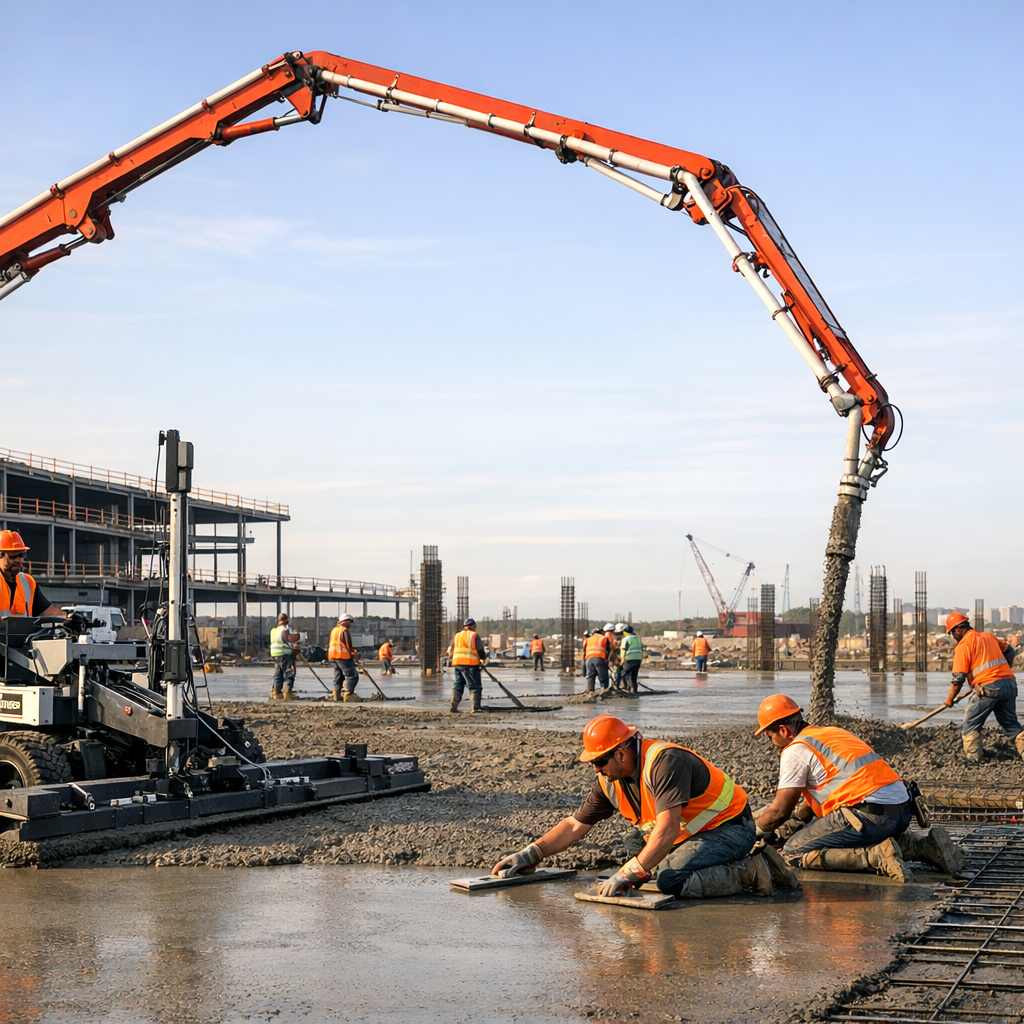
Thank you for reading this post, don't forget to subscribe!Experienced concrete flatwork contractors for general contractors bring laser screeds, ride-on trowels, GPS layout, and Procore reporting to the site so you get accurate slabs, reliable pour windows, and traceable QA records.

Why general contractors choose specialized flatwork partners
Here is the thing, flatwork is deceptively simple on paper. Poor subgrade prep, wrong mix design, or a missed inspection can create months of headaches. Partnering with a contractor who focuses on flatwork and industrial slabs reduces those risks.
Benefits you will see on day one:
- Predictable schedules through crew rotations and pump/laser equipment availability.
- Tight tolerances, often under 1/8 inch, using laser screeds and experienced finishers.
- Documentation for code compliance and owner turnover, including daily logs, pour maps, and QC test results.
Concrete Flatwork Contractors for General Contractors: what they bring to your team
Concrete flatwork subcontractors do more than pour concrete. They integrate with your sequence, coordinate utilities and trade access, and reduce inspection friction. Key capabilities include:
Modern equipment and techniques
Laser screeds, concrete pumps, fiber-reinforced mixes, and power buggies let crews place and finish slabs faster and flatter, reducing jointing and sawcut errors.
Mix design and freeze-thaw durability
In Iowa and other freeze-prone climates, air-entrained mixes, proper entrainment, and moisture-controlled curing are essential to avoid scaling and early deterioration. A flatwork specialist will specify mixes for local conditions and traffic loads.
Documentation and project controls
Expect daily pour logs, test cylinders, MSDS packets, and ability to upload photos and reports to your project management platform. If you use Procore, choose a partner who can push daily reports directly into your project for transparent tracking.
Safety and compliance
OSHA-trained crews, written safety plans, and low EMR are not optional on commercial sites. Professional flatwork contractors show up with permits, pre-pour checklists, and a chain of custody for QC testing.
How a flatwork partner protects your schedule and budget
When slabs go wrong, it is often because scope and sequencing were not aligned early. You reduce change orders by bringing the concrete team to precon, confirming joint layout, confirming control joint patterns, and agreeing on cure windows.
Common approaches that save time and money:
- Early subgrade and drainage verification to avoid last-minute excavation.
- Coordinated pour sequencing with other trades to keep lead times short.
- Value engineering options, like fiber reinforcement instead of mesh, when appropriate.
Selecting the right flatwork contractor for commercial projects
Ask these practical questions during prequalification:
- What is your crew capacity and typical weekly pour volume? Do you have multiple crews for overlapping sites?
- Do you use laser screeds, pumps, and ride-on trowels? Can you provide tolerance test reports?
- How do you document QC and share daily logs or pour maps? Can you work in our PM system?
- Are your crews insured, and do you provide submittals and MSDS for mixes?
A contractor who answers these clearly will save you time in bidding and reduce surprises in construction.
Integrating flatwork into complex builds: podiums, parking garages, and warehouses
Multifamily podiums and large warehouses require staging, coordination with waterproofing, and precise embed layout. Flatwork specialists coordinate slab openings, edge conditions, and crane access so finishes and trades that follow have clean interfaces.
For parking garages and heavy traffic slabs, ask about reinforcement strategies, joint spacing, and drainage design to avoid premature deterioration.
Common objections and how to address them
- "A local handyman can save us money." Poorly executed flatwork often leads to costly repairs, warranty claims, and schedule delays. Savings up front can become expensive later.
- "We do not need daily reports." Without records you cannot prove compliance, track weather events that affect cure, or resolve claims quickly.
Frequently asked questions
What is the difference between general concrete contractors and flatwork specialists?
Flatwork specialists focus on slabs, site concrete, and pavements with equipment and processes optimized for fast, accurate placement. General concrete contractors may also build foundations and structures, but a flatwork specialist brings tighter tolerances and higher placement productivity.
How much lead time does a large slab pour require?
Plan for subgrade prep, reinforcement coordination, material submittals, and inspection scheduling. Typically allow 2 to 4 weeks for precon and coordination on large commercial pours, more if specialty mixes or complex staging are required.
What warranties or workmanship guarantees should I expect?
Look for a written workmanship warranty covering defects for a stated period, and clarity on what is excluded, such as settlement from poor subgrade that was not addressed before placement.
How do you reduce freeze-thaw damage in Des Moines area projects?
Specify proper air entrainment, adequate slab thickness, correct base compaction, timely sawcutting, and moisture-controlled curing to minimize scaling and freeze-thaw distress.
Can flatwork contractors handle phased pours and multi-site schedules?
Yes, reputable flatwork firms run crew rotations and maintain equipment fleets to handle overlapping projects. Confirm their weekly pour capacity and crew counts in prequalification.
Do flatwork contractors provide test cylinders and third-party QA?
Most professional contractors manage cylinder breaks and coordinate third-party testing labs, delivering results and QC documentation as part of turnover.
Ready to lock schedule and specs for your next concrete scope?
If you are managing a build in Central Iowa and need a dependable flatwork partner, get a free site review and written estimate. Colin Concrete Des Moines handles residential and commercial pours with laser-screed precision and documented reporting. Request a site visit or estimate at Colin Concrete Des Moines contact page: https://colinconcretedesmoines.com/contact-us/ or view project examples on our portfolio page: https://colinconcretedesmoines.com/portfolio/.
Conclusion
Concrete flatwork is a specialty that pays dividends in schedule certainty, long-term performance, and fewer punch-list items. By choosing a contractor with the right equipment, freeze-thaw aware mix designs, strong safety practices, and transparent documentation, you protect your schedule and reputation. Bring the flatwork partner into precon, define the interfaces early, and hold the slab to the agreed checklist. Your finish trades and owners will thank you.