
Epoxy & Polyaspartic Floor Coatings Des Moines
Peeling coatings, dusting slabs, tire marks that will not scrub out. Colin Coatings is our floor coating division, installing epoxy, polyaspartic, flake and metallic floors across the Des Moines metro, on the same concrete we have poured here for over 20 years.
Thank you for reading this post, don't forget to subscribe!Why Floor Coatings Fail in Des Moines
Most of the failed garage floors we get called about were not bad products. They were good products put onto a slab that was never ready for them. The coating is the part you see, so the coating gets the blame.
Four things account for nearly all of it. The slab was sealed years ago and nothing new will bond to it. The concrete was still giving off moisture and the coating lifted from underneath. The surface was etched with acid instead of ground, so there was no profile to grip. Or it went down in an unheated garage in March, below the temperature the resin needed to cure.
All four are decided before the first bucket is opened. That is the part a concrete company has opinions about, and it is why Colin added a coatings division rather than sending customers elsewhere.
The Slab Comes First
A floor coating is a surface. It does not hold a slab together, it does not stop a crack that is still moving, and it will not bridge a joint that opens every winter. Put one over a structural problem and you have hidden the problem, not fixed it — and you will be looking at it again in two years, this time through a split coating.
So before anything gets coated, the concrete gets looked at properly. Is the crack shrinkage or movement? Is the slab sitting on a base that has washed out? Is there a moisture path from underneath? Does the floor drain the way it should, or is water standing where it will sit against the edge of the coating?
Twenty years of pouring, repairing and replacing concrete in this metro is what makes those questions quick to answer. When the slab needs work first, we say so and we do it. When it is sound, it gets coated.
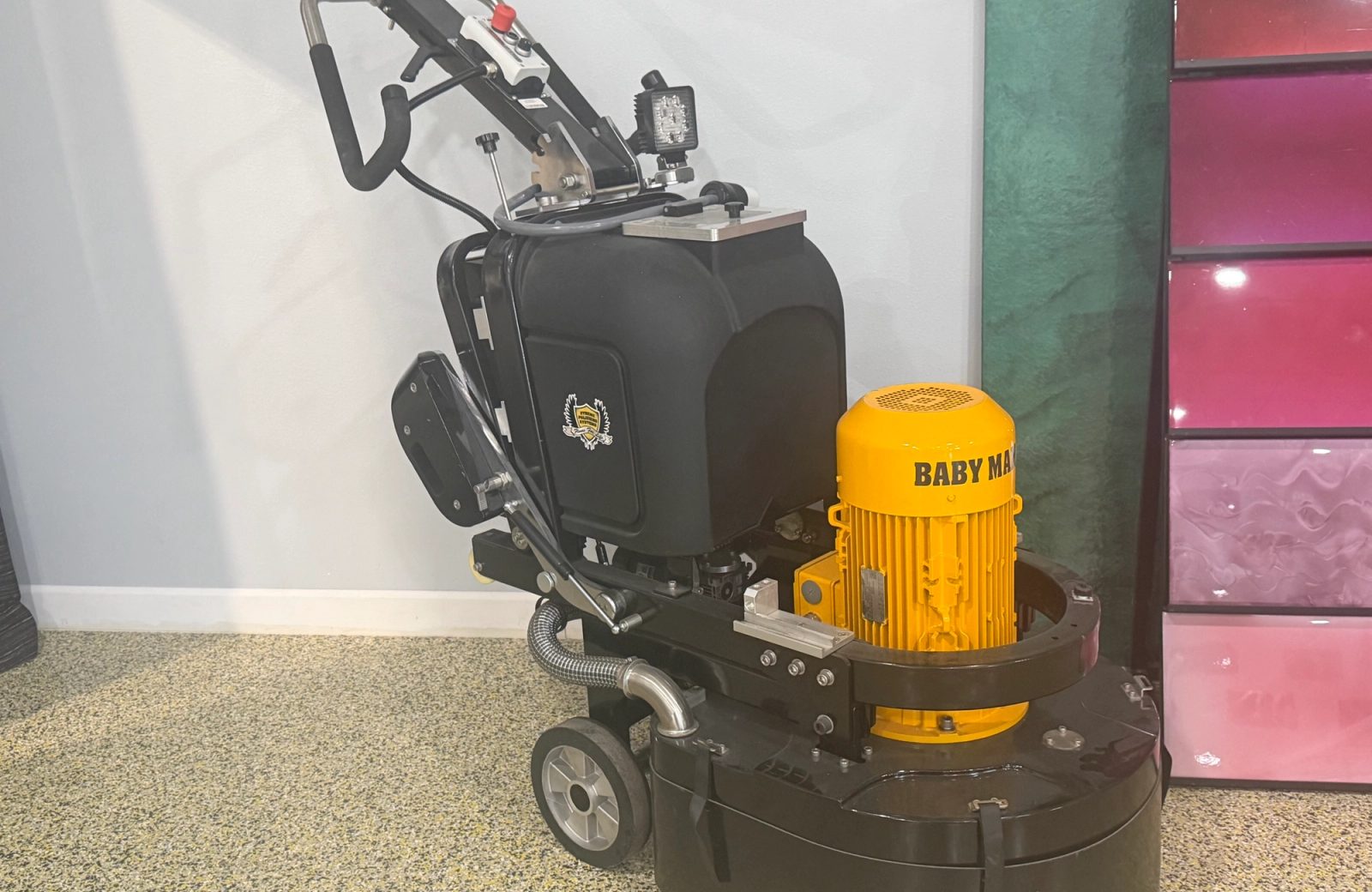
Floor coatings are installed by Colin Coatings Des Moines, our coatings division, with its own crew, its own equipment and its own website. Concrete and coatings are different trades and we keep them that way.
Full details on systems, preparation and pricing are on their site: epoxy flooring in Des Moines.
What Can Go On Top of Your Concrete
“Epoxy” gets used as a catch-all for every coated floor, but there are real differences in what goes down and how it behaves. These are the ones we install most around Des Moines.
The most common request by far. Handles hot tires, road salt and a jack stand without marking. Garage floor coating.
Turns a dusting, porous basement slab into a finished floor you can clean. Moisture has to be tested first. Basement coatings.
Warehouses, shops and showrooms where forklifts, chemicals and wash-downs are part of the day. Commercial floors.
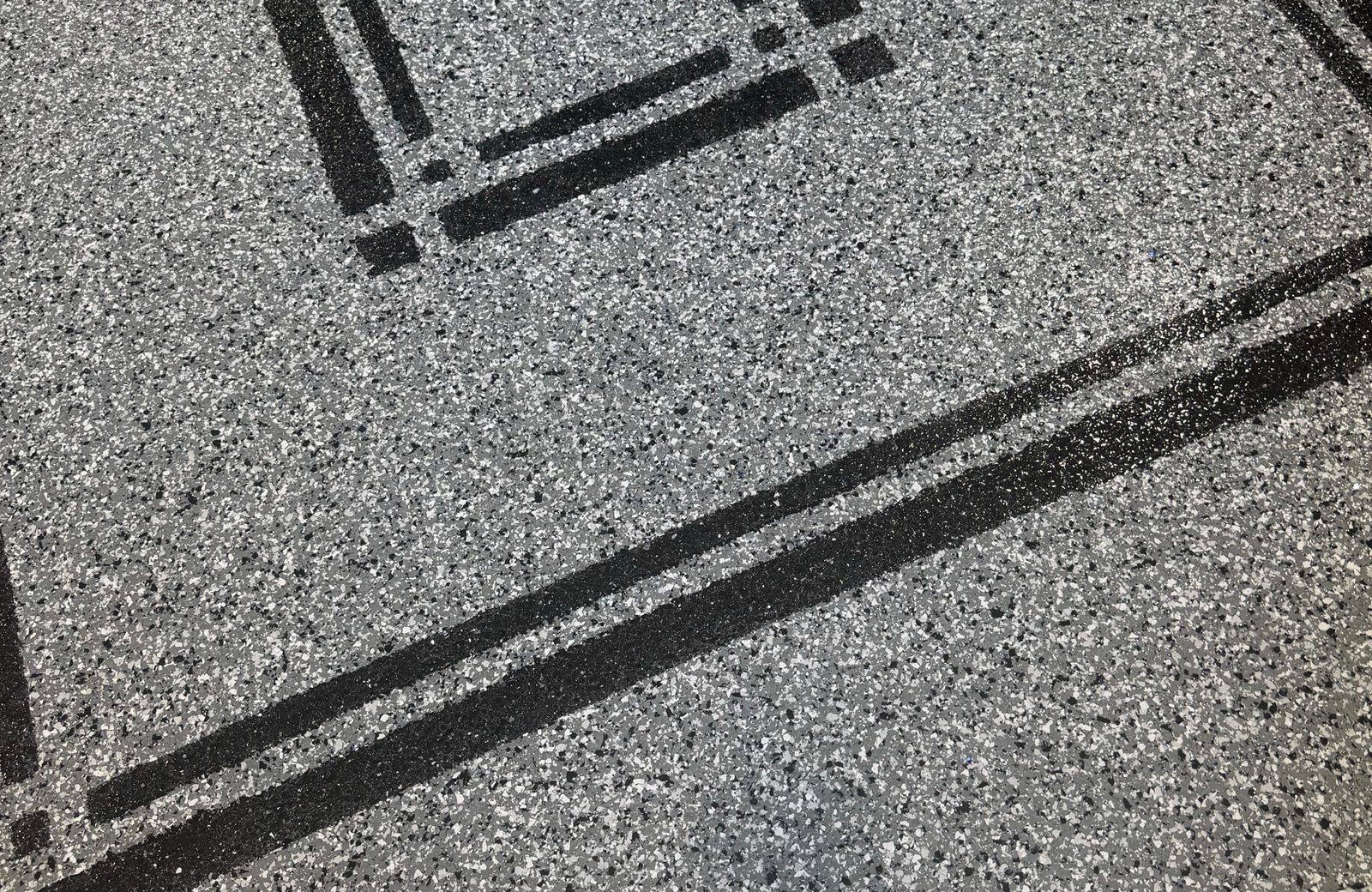
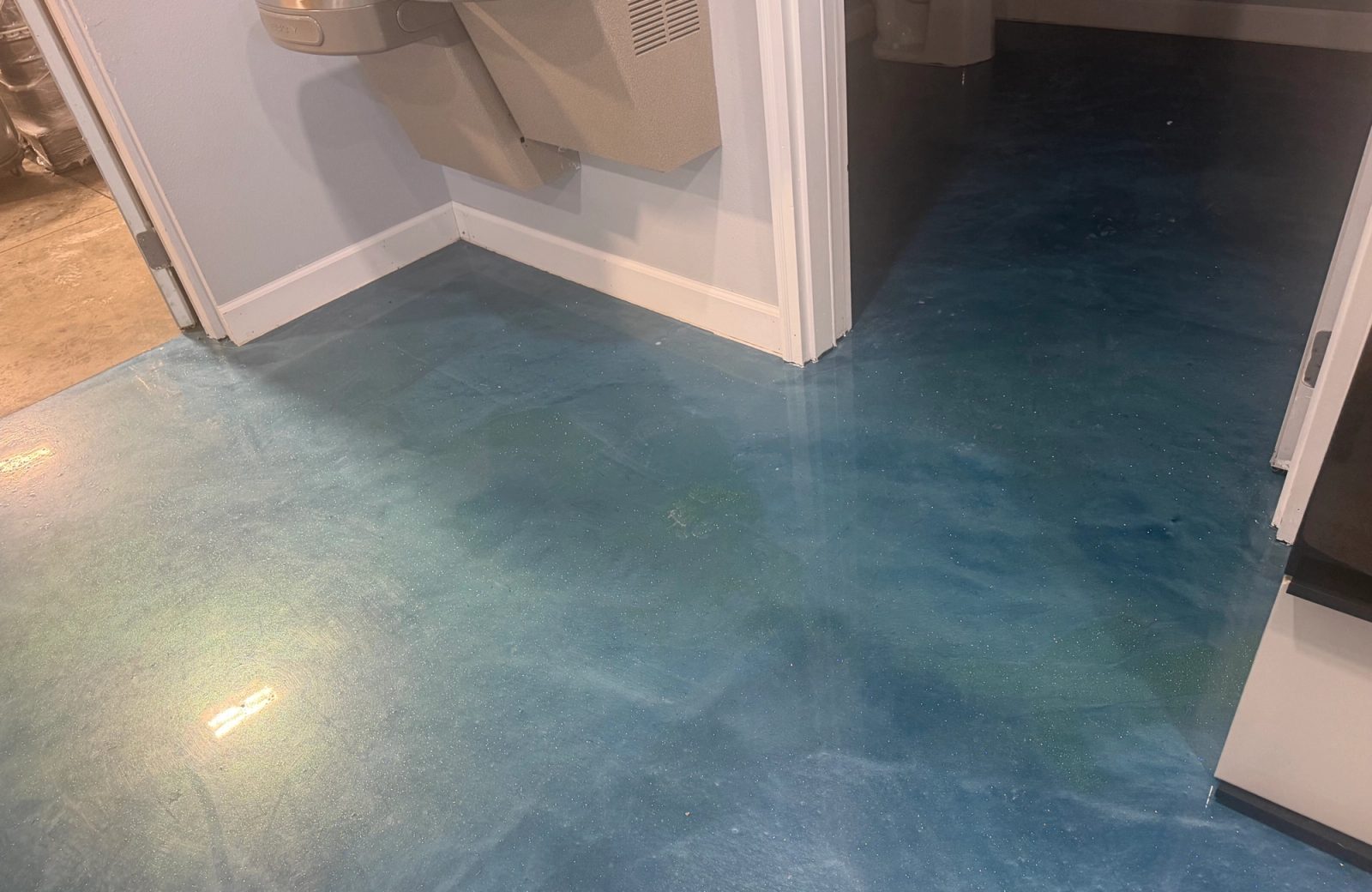
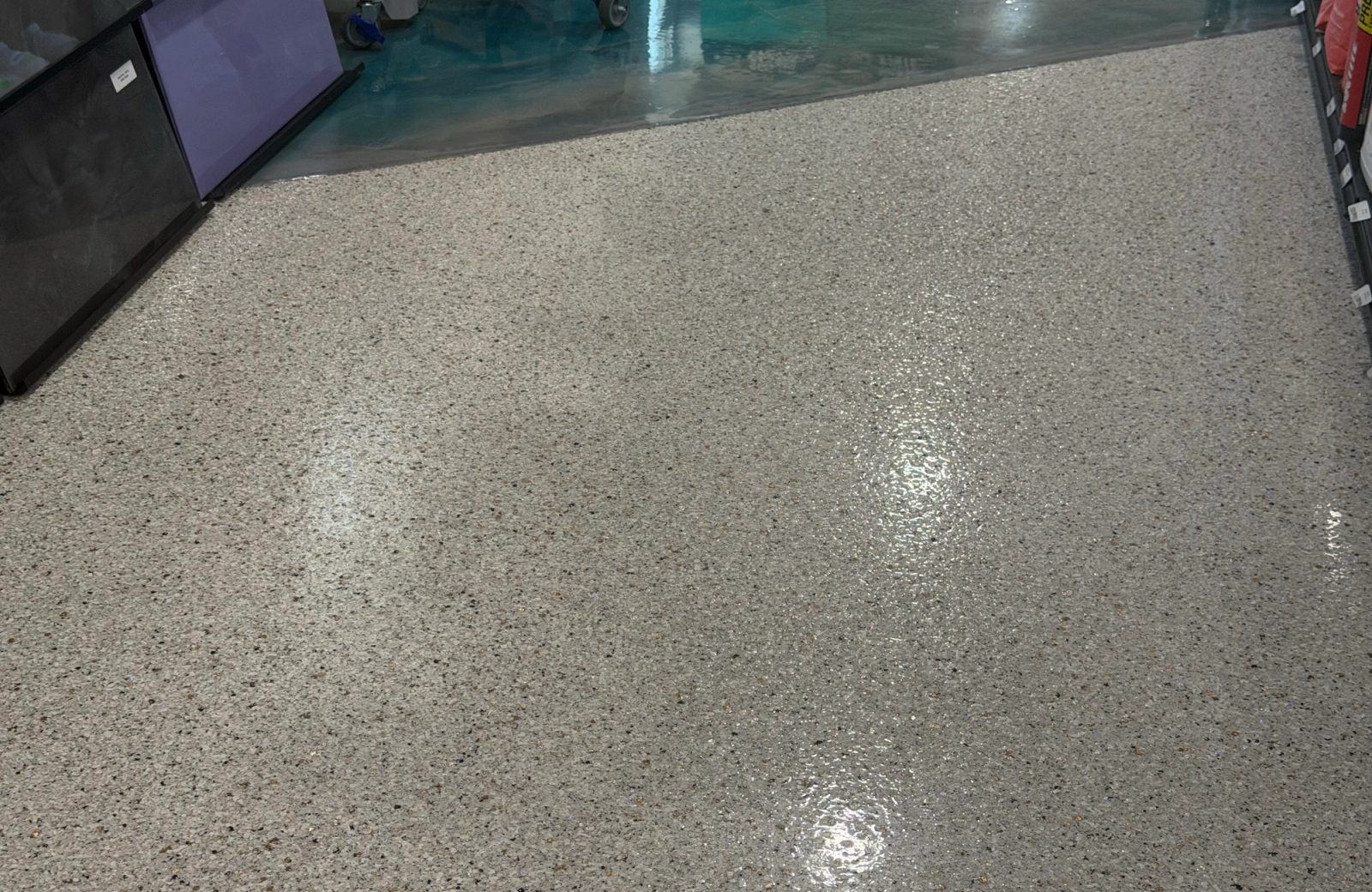
Decorative finishes when the floor is meant to be looked at, not just walked on. Metallic epoxy and flake floors.
Cures in the cold and goes down in a day. The reason a garage can be coated in an Iowa winter. Polyaspartic coatings.
Spalling, pitting and salt damage put right before anything is coated over it. Concrete floor repair.
Epoxy or Polyaspartic?
These are the two resin families nearly every quote in Des Moines comes down to, and they are not the same product with different names. The short version: epoxy is the body, polyaspartic is the armor, and most good garage floors here use both.
Thicker, heavier bodied, and good at filling and leveling a slab that is not perfectly flat. It bonds hard to prepared concrete and it is the cheaper of the two by volume, which is why it usually does the building up. Its weaknesses are sunlight and cold. Left exposed to UV it ambers over time, and it wants a slab above roughly 50°F to cure, which an unheated garage here will not give you for about five months of the year.
Thinner, far tougher on the surface, and UV stable, so it does not yellow. It cures fast and it cures cold, which is the part that matters in this state. It is also more expensive, and the fast cure leaves a crew very little working time, so it punishes a sloppy installer in a way epoxy does not.
An epoxy base coat to build thickness and bond to the concrete, with a polyaspartic topcoat over it to take the abuse and hold the color. You get the price of one and the durability of the other. A full polyaspartic build is the answer when the floor has to be back in service the same day, or when it is going down in February.
If you are having concrete work done in the fall, this is worth raising early. A new slab needs weeks to cure before it takes a coating, and if that lands in December, an all-epoxy system means waiting until spring. A polyaspartic build does not.
Colin Coatings can talk through which system a floor actually needs: polyaspartic floor coating in Des Moines.
When a Floor Coating Is Worth It
Not every slab needs coating, and we will tell you when it does not. These are the situations where it earns its cost.
Grey powder on everything stored in the garage, on boxes, on the bottom of shoes. That is the slab surface breaking down and releasing. Sweeping does not fix it because the dust is the floor. A coating seals it permanently.
Iowa winters put a lot of chloride on a garage floor, dripping off a car all season. Over years it pits and scales the concrete. A coating is a barrier between the salt and the slab, and it is a great deal cheaper than replacing the floor.
Bare concrete is porous. Oil, brake fluid and antifreeze soak in rather than sitting on top, and once they are in, they stay. Coated concrete is not porous, so a spill stays on the surface until it is wiped up.
Flaking, bubbling, patches lifting where the car parks. This is worth acting on early. A coating that is letting go takes longer and costs more to remove the further it goes, and the slab underneath is exposed the whole time.
The easiest floor to coat is a new one, once it has cured properly. No old sealer, no contamination, no removal. If we have just poured for you, this is the moment to decide.
Recoat, Repair, or Start Over?
Same question we get about stamped concrete, same honest answer: it depends on what is actually wrong, and the cheapest option is often available.
If the existing coating is well bonded across the floor and the wear is on the surface, it can often be abraded and recoated. This is the least disruptive and the least expensive route. It only works when the bond underneath is genuinely sound, which is a test, not a guess.
Spalling, pitting, a section that has scaled from salt, joints that need attention. The concrete gets repaired properly first and then the whole floor gets coated, so the repair disappears under a single continuous surface. This is the one where having a concrete company attached actually matters.
When a coating is failing across the floor, or three different products have been put down over the years, grinding everything back to clean concrete is the only route that lasts. See epoxy removal and recoating.
Sometimes the honest answer is that no coating will save it. Widespread structural cracking, a failed base, a slab that has moved. That is concrete work, and it is what Colin Concrete has done here since 2005.
Why Have One Company Do Both
Most floor coating companies do not pour concrete, and most concrete companies do not coat floors. Here is what having both under one roof changes.
Whether the concrete is worth coating is answered by people who pour concrete, before you have paid for a coating.
If the floor needs concrete work first, it does not become your job to find a second contractor and coordinate two schedules.
Freeze-thaw, spring vapor drive off wet clay, unheated garages in winter. Twenty years of watching what this weather does to slabs.
Same family business, same metro, same person answering for the work. Concrete and coatings, one point of contact.
Floor Coating Service Areas
Colin Coatings serves the same communities across the greater Des Moines metro that Colin Concrete has worked in for two decades. Pick your city for coating work in that area.
Not on the list? Call 515-320-8883 and ask. Coating crews work throughout central Iowa, and the full list is on the Colin Coatings service areas page.
Frequently Asked Questions About Floor Coatings
Usually, but the crack gets dealt with first and the answer depends on which kind it is. A shrinkage crack that finished moving years ago can be filled and coated over. A crack that is still moving with the seasons will come back through any coating you put on it, so that one needs the cause addressed first. This is exactly the call a concrete company should be making, not a coating crew.
New concrete needs to cure before it takes a coating — commonly around 28 days, though what actually matters is the moisture coming out of the slab, not the date on the calendar. That gets tested rather than assumed. Coating a slab that is still giving off vapor is one of the most common reasons a floor fails a year later.
It depends on the garage and the system. Standard epoxies want the slab above roughly 50°F to cure properly, which an unheated Des Moines garage will not give you from about November to March. There are products that go down colder, and a garage can be heated for the install. Polyaspartic is the usual answer, because it cures cold. What you should not accept is a standard epoxy put down in a cold garage because the crew had an opening.
No. A coating follows the shape of whatever is underneath it, so a low spot that ponds water will still pond water, just with a shiny finish. Standing water sitting on a coating edge or joint is also how failures start. If drainage is the problem, the concrete needs correcting first.
A smooth coating with nothing in it is slick when wet, which matters in a garage where a car brings snow in all winter. Anti-slip aggregate is broadcast into the topcoat where traction is needed, and flake finishes have texture built in. Say where the floor gets wet and it gets specified for that.
It comes down to square footage, the condition of the slab, and which system the floor needs. A sound slab that only needs grinding costs a good deal less than one needing repair and old coating removal first. Colin Coatings gives free estimates — call 515-320-8883 or use the estimate form on their site.
For most Des Moines garages it is not either-or. An epoxy base builds thickness and grips the slab, a polyaspartic topcoat takes the wear and keeps its color in sunlight. All-polyaspartic is the answer when the floor has to be usable the same day, or when it is going down in the cold months. All-epoxy is the budget option and is best kept out of direct sun.
Same ownership, same metro, separate divisions. Colin Concrete Des Moines pours, repairs and replaces concrete. Colin Coatings Des Moines coats it. They are kept separate because they are genuinely different trades with different crews and equipment, and you get whichever one your floor actually needs.
What Iowa Does to a Coated Floor
Two things make central Iowa harder on floor coatings than a milder climate, and both come from below rather than above.
The first is moisture. A lot of slabs here sit on heavy clay that holds water, and in spring that water drives upward as vapor through the concrete. A coating that is not chosen for it gets pushed off the slab from underneath — bubbling in the middle of a floor with no traffic on it is the signature. The way you avoid it is to test the slab before specifying the system, not after.
The second is temperature. Garages here swing from well below freezing to hot and humid, and the concrete moves with it. Coatings have to tolerate that movement without losing grip at the edges and joints. Add road salt from November onwards and a garage floor is doing more work than almost any other surface on the property.
None of this is a reason to skip coating a floor. It is a reason to have it done by people who have watched what this specific climate does to concrete over twenty years, rather than by a crew passing through for the season.
Colin Coatings Des Moines is the floor coating division of Colin Concrete Des Moines, installing epoxy, polyaspartic, flake and metallic floor coatings in Des Moines, Iowa and surrounding communities including West Des Moines, Clive, Grimes, Johnston, Urbandale, Norwalk, Altoona, Bondurant, Ankeny, Polk City, Indianola, Van Meter, Adel, Booneville, Waukee, Pleasant Hill and Windsor Heights. The company coats garage floors, basements, shops and commercial spaces, and repairs the concrete beneath them where needed. Both divisions are reached on 515-320-8883. Colin Concrete Des Moines is at colinconcretedesmoines.com and Colin Coatings Des Moines is at colincoatingsdesmoines.com.
Concrete First, Coating Second
The reason a coatings division sits inside a concrete company is the order those two things happen in. A coating is only ever as good as the slab holding it, and a slab is something you have to know how to read. Most coating failures around Des Moines were decided before anyone opened a bucket.
Whichever end of it your floor needs — a new pour, a repair, a coating, or being told honestly that it needs none of them — it is the same local owner answering for the work. Call 515-320-8883 and say which one you need.
Thinking About Coating Your Floor?
Free estimates on garage, basement, shop and commercial floors across the Des Moines metro.
Visit Colin Coatings Des Moines