
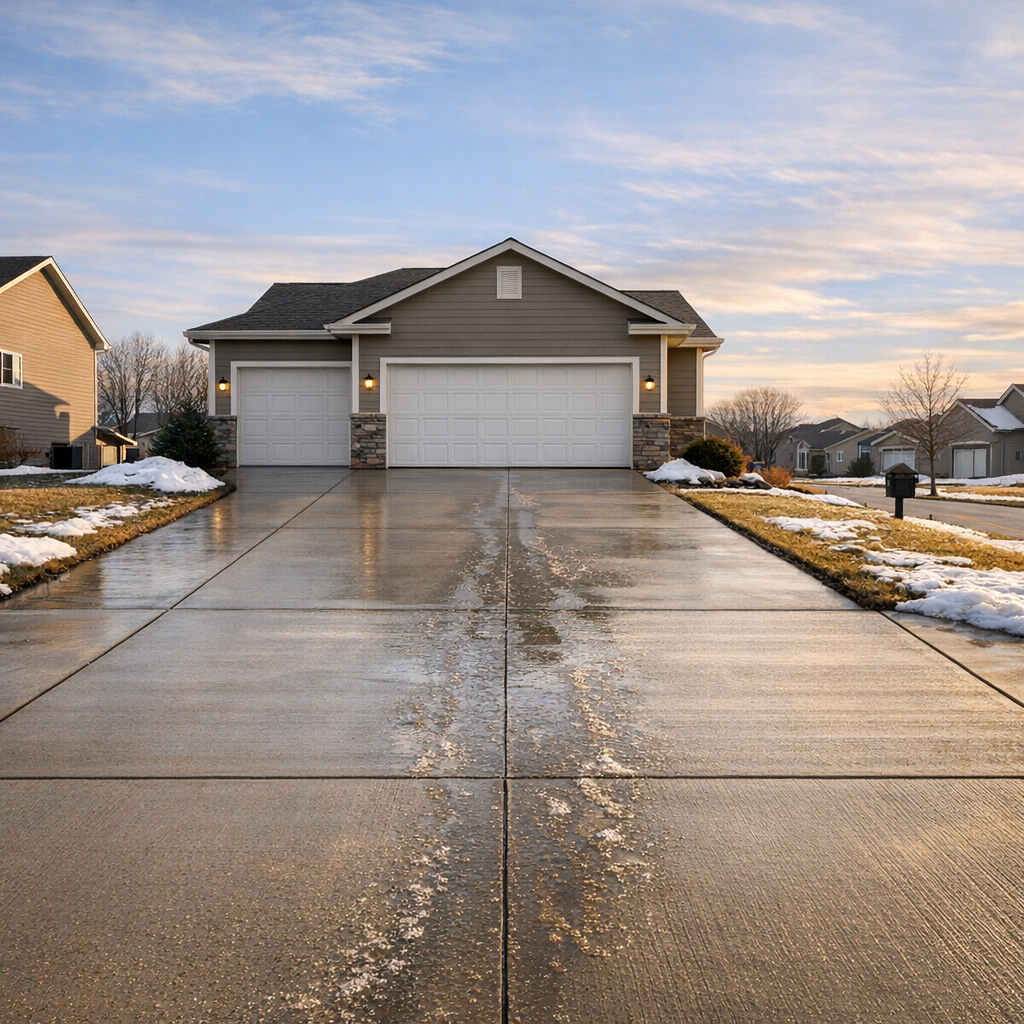
If you live in Iowa, you know how harsh freeze and thaw cycles can be on driveways. Proper mix design, base preparation and ongoing maintenance make the difference between a driveway that lasts a couple of decades and one that needs replacement early.
Thank you for reading this post, don't forget to subscribe!How Long Does a Concrete Driveway Last in Iowa depends on climate exposure, installation quality and maintenance, but with the right approach many well-built concrete driveways in central Iowa reach 25 to 40 years or longer.
How Long Does a Concrete Driveway Last in Iowa: Lifespan Guide
Typical lifespan, in plain terms
A properly installed concrete driveway in Iowa typically lasts between 25 and 40 years, sometimes longer when contractors use best practices and homeowners keep up simple maintenance. Expect the lower end of that range when installation or subgrade prep is poor, or when heavy deicing, poor drainage and repeated freeze-thaw cycles are common.
Key factors that control life expectancy
Climate and freeze-thaw cycles
Iowa’s freeze-thaw seasons are the single biggest durability challenge. Water that soaks into cracks or the slab base will freeze, expand and cause spalling or cracking over time. Proper air entrainment in the mix and good drainage reduce that risk.
Base preparation and subgrade quality
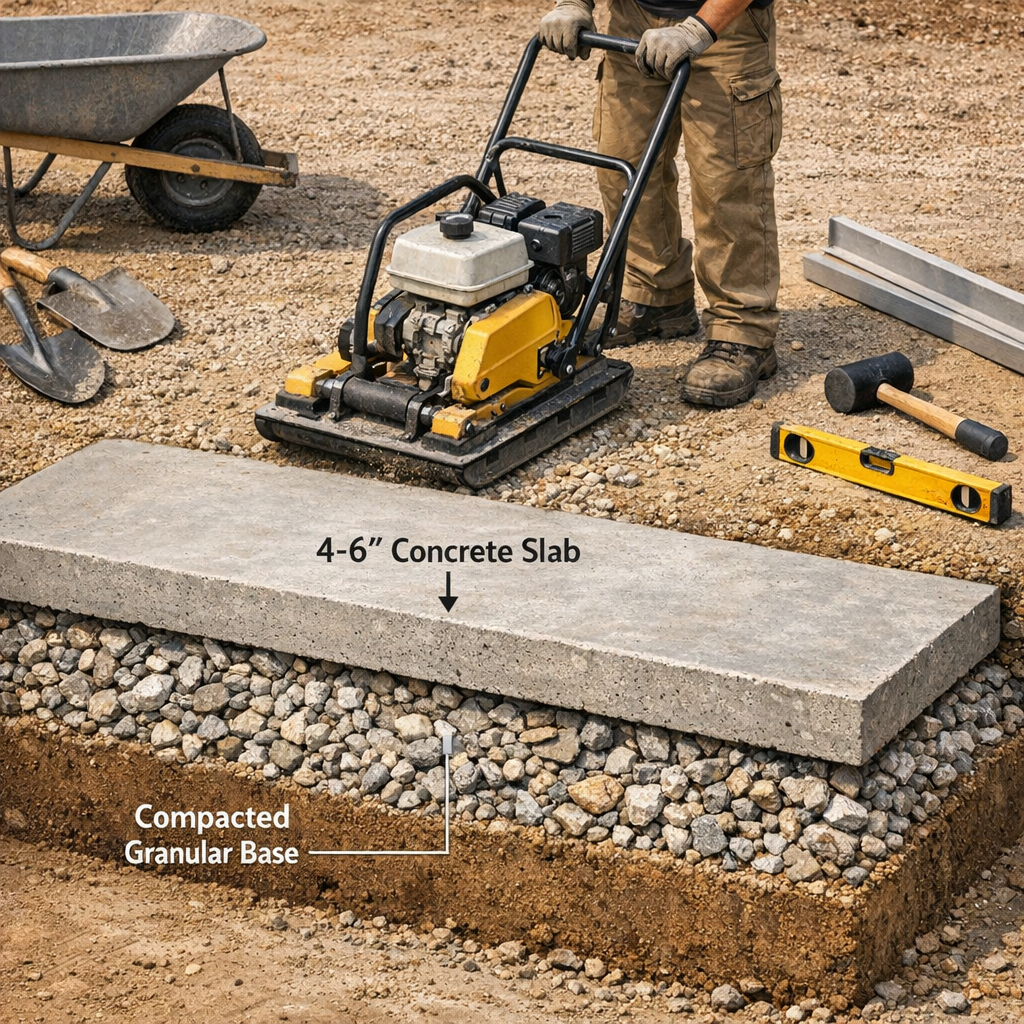
A compacted, uniform base with the right granular material prevents settlement and edge cracking. Too often a driveway fails not because of the concrete itself, but due to a weak, wet or poorly compacted subbase.
Mix design and reinforcement
Fiber-reinforced mixes, properly dosed air entrainment and the right water-cement ratio improve durability. Reinforcement (rebar or welded wire) and control joints help control cracking and extend life.
Installation quality and finishing
Correct slump, timely finishing, proper curing (moisture-control curing), and accurate joint spacing are critical. Overworking the surface or improper curing shortens service life.
Load and use
Heavy vehicles, frequent salt application and snowplows accelerate wear. Residential use is lighter than commercial, so homeowners usually see longer lifespans.
Maintenance and repairs
Sealing, timely crack repair and keeping drainage away from slab edges add years. Neglect speeds deterioration.
Iowa-specific considerations for driveways
- Salt and deicing chemicals, common during Iowa winters, can accelerate surface scaling. Use air-entrained concrete and limit salt exposure near new pours.
- Freeze-thaw exposure is higher in northern and rural siting with poor drainage. Slope driveways to shed water away from the slab and foundation.
- Frost heave can be mitigated by installing a thicker base and ensuring proper subgrade compaction.
Signs your Iowa driveway needs repair or replacement
- Wide, jagged cracks that continue to grow or step cracks along joints
- Areas of spalling or surface scaling that expose aggregate
- Differential settlement where slabs sink or trip hazards form
- Repeated patches within a few years, signaling deeper base issues
Small surface cracks and hairline shrinkage are normal and often repairable. If you see structural cracking or heaving, plan for replacement with corrected base and improved drainage.
How to maximize lifespan: best practices
- Use an experienced local contractor who understands Iowa freeze-thaw conditions and code requirements.
- Specify air-entrained concrete with appropriate compressive strength for residential driveways, and consider fiber reinforcement.
- Ensure a well-compacted, uniform base—often 6 to 8 inches of compacted gravel under a 4 to 6 inch slab for residential use.
- Install proper control joints at recommended spacing and depth to control cracking.
- Cure concrete properly with moisture-control curing for at least the first 7 days when possible.
- Keep water and snowmelt directed away from slab edges and do timely crack sealing.
Repair vs replace: quick decision guide
- Repair if damage is limited to surface scaling, small cracks, or isolated settlement that can be stabilized.
- Replace when there is widespread cracking, stepping, base failure, or repeated repairs within a short timeframe.
Here’s the thing, a well-done replacement with attention to subbase and modern mix design will last longer and cost less over time than repeat patching.
Cost versus value and lifespan
A properly installed concrete driveway typically costs more up front than asphalt, but it often lasts longer and needs less frequent full replacement. That durability translates to lower life-cycle cost when you factor in 25 to 40 year service windows.
Why experience and documentation matter
For longevity, choose a contractor who provides: transparent pricing, insured crews, workmanship warranties, project documentation and scheduling reliability. Modern contractors who use laser screeds, quality pumps, fiber-reinforced mixes, moisture-control curing and Procore reporting deliver better tolerances and traceability, which improves long-term performance.
Frequently asked questions
How long will a 4-inch concrete driveway last in Iowa?
With a proper base and quality mix, a 4-inch residential slab commonly lasts 25 to 35 years, depending on exposure and maintenance.
Does sealing a concrete driveway make it last longer?
Sealing reduces water penetration and helps protect against staining and some surface wear. It is not a cure-all, but regular sealing combined with crack repair can extend service life.
How much does freeze-thaw damage reduce lifespan?
Freeze-thaw damage accelerates scaling and spalling when the mix lacks air entrainment or when water accumulates under the slab. Proper design and drainage are the best defenses.
Can I pour a new driveway in winter in Iowa?
You can pour in cold conditions with the right mix and temperature control, but best results are obtained when temperatures are stable and above critical thresholds. Cold pours require special curing and often additives.
Are fiber-reinforced mixes worth it for driveways?
Yes, fiber reinforcement helps control cracking and improves impact resistance. Combined with good joints and base prep, fibers add durability.
When should I call a pro versus DIY repairs?
Call a professional when cracks are wider than a quarter inch, when there is settlement or edge failure, or when you plan a full replacement. Small crack sealing and surface cleaning are reasonable DIY tasks.
Ready to replace or repair your driveway?
If you need an honest assessment, fast estimate and warranty-backed work in the Des Moines metro, we can help. Colin Concrete provides residential and commercial concrete solutions including driveways, garage slabs, patios and full-scale flatwork, using laser screeds, fiber-reinforced mixes and moisture-control curing for long-term performance. Learn more or request a free estimate at https://colinconcretedesmoines.com
Conclusion
Concrete driveways in Iowa can be long-lasting when designed and installed for local freeze-thaw conditions, with attention to base prep, mix design and curing. Expect decades of service from a quality installation, and remember routine maintenance—proper drainage, timely crack sealing and avoiding harsh deicing chemicals—keeps your driveway performing longer. If you want a driveway built to last, choose contractors who document work, guarantee workmanship and use modern placement methods.