

Looking for concrete work that shows up on time, uses the right equipment, and stands up to Iowa winters? You are in the right place. Whether you need a durable driveway, a smooth garage slab, a decorative stamped patio, or a large commercial foundation, having local, experienced concrete pumping crews matters more than you might think.
Thank you for reading this post, don't forget to subscribe!When you search for concrete pumping services near me, you want quick estimates, clear pricing, and crews who use pumps and laser-guided tools to hit tight tolerances. This article explains how modern concrete pumping works, why it matters for freeze-thaw durability in Central Iowa, what to ask a pump operator, and how local teams like Colin Concrete Des Moines deliver reliable residential and commercial pours.
Why concrete pumping matters for homeowners and contractors
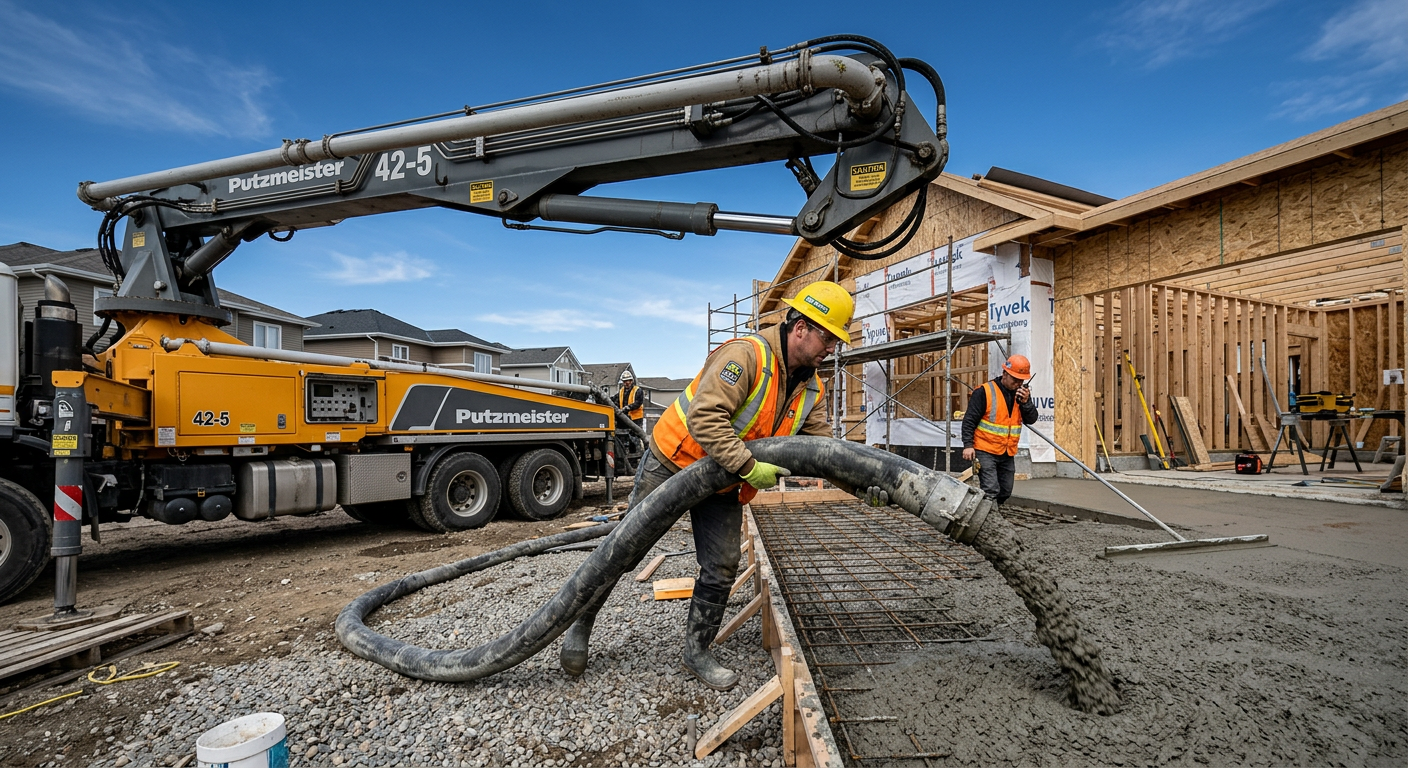
Concrete pumping speeds up placement, improves mix consistency, and reduces labor on tight or tricky sites. For homeowners, pumps mean faster garage and driveway pours with fewer people on your lawn. For developers and general contractors, boom pumps and line pumps let crews place concrete precisely across podiums, footings, and large slabs while meeting schedule constraints.
Key benefits of using a pump:
- Faster placement, shorter open-site time, and less disturbance to landscaping.
- Ability to reach tight or elevated locations without wheelbarrows or extra handling.
- More consistent pours, which helps minimize cold joints and random cracking.
- Safer site conditions by reducing manual concrete transport.
Types of pumps and when to use them
Boom pump
Boom pumps use a hydraulic arm to place concrete quickly at medium to long reach. Best for large residential pours like driveways or commercial slabs where speed and reach are priorities.
Line pump
Line pumps push concrete through flexible hose sections. Ideal for small pours, patios, and areas with tight access or overhead constraints.
Choosing the right option
Ask your contractor what pump type they plan to use and why. Good crews size the pump and hose based on mix design, aggregate size, and distance to the placement to avoid blockages and delays.
What a professional pumping crew should offer
Modern concrete pumping is about more than the truck. Look for these features:
- Insured, OSHA-trained crews and clear written estimates. Visit the company homepage for service outlines and credentials.
- Use of fiber-reinforced mixes, air entrainment, and moisture-control curing to resist freeze-thaw damage common in Iowa winters.
- Equipment like laser screeds and power buggies to achieve flatness tolerances and clean finishes.
- Daily reporting and documentation for commercial pours, including Procore-ready logs when required.
- Transparent warranty and post-pour instructions so you know how to care for the slab during early cure.
Freeze-thaw durability: what matters in Des Moines
Iowa winters put concrete durability front and center. Air-entraining admixtures, proper mix design, correct finishing, and timely curing are essential. State and industry guidance recommends protecting fresh concrete from freezing during the early-age cure period because freezing water can stop strength gain and reduce long-term durability. When you hire a pumping crew, confirm they use mixes and curing methods designed for local freeze-thaw cycles.
How pumping improves quality control on bigger jobs
For commercial or multifamily projects, pumps help maintain continuous placement, which reduces cold joints and improves structural integrity. Professional teams coordinate pour sequencing, pour maps, and on-site testing, then upload daily logs to owners and general contractors. That kind of documentation matters when schedules and code compliance are nonnegotiable.
Cost considerations and what affects price
Concrete pumping adds equipment and operator cost, but it often saves on labor and job time. Factors that affect price:
- Distance and height from truck to pour location.
- Pump type and setup complexity.
- Mix design (fiber, air entrainment, special admixtures).
- Site preparation and access, including traffic control on commercial jobs.
Ask for a written estimate that separates pump charges, labor, and materials so you can compare apples to apples. For quick estimates and scheduling, you can request a free estimate through the company contact page.
Choosing the right local crew: questions to ask
- Which pump will you use and why? Do you own it or subcontract the pump?
- Can you handle freeze-thaw mixes and recommend curing plans for winter pours?
- Do you provide written pour maps, daily reports, and QC documentation for commercial jobs?
- Are crews insured and OSHA certified? What is your workmanship warranty?
- Can you show recent project photos or references for similar work in Des Moines?
FAQs
How soon can a concrete pump arrive after I request a quote?
Most local teams offer fast estimates and, depending on season, many can schedule pours within a few days to a couple of weeks. Busy summer windows fill fast, so early booking is wise.
Is pumping worth the extra cost for a small patio?
Yes, when access is tight or you want a clean finish with less lawn damage. Line pumps are cost effective for small pours and often faster overall.
Can pumps handle decorative mixes like stamped or exposed aggregate?
Absolutely. Pumping works well with decorative mixes, but the contractor will adjust mix proportions and placement technique to protect finish quality.
Will concrete pumped into a garage slab be as strong as one placed by wheelbarrow?
Yes, when properly mixed, placed, and finished. Pumps can actually improve uniformity and reduce workmanship variation.
What should I do to protect a new slab from Iowa’s freeze-thaw cycles?
Follow contractor guidance: keep the slab covered during early cure when needed, use proper air-entrained mixes, and maintain recommended curing times and moisture control.
Where can I see local project examples and get an estimate?
Check the portfolio and driveway pages for real project photos, then request a free estimate or contact the team to schedule a site visit.
Next steps if you want a dependable local pump crew
If you value schedule reliability, freeze-thaw durability, and clear documentation, work with a local contractor that offers both residential and commercial pumping solutions. View detailed service pages like the driveways and commercial flatwork pages, then schedule a free estimate through the contact form to lock in timing and pricing.
Ready to schedule your pour in Des Moines?
For fast estimates, honest pricing, and crews that use pumps, laser screeds, and fiber-reinforced mixes, visit the Colin Concrete Des Moines homepage or request your free estimate now. If you need help deciding between a boom or line pump, or want a recommended curing plan for winter, the team can walk you through options and timing.
Visit the company homepage to learn more about services and scheduling: Colin Concrete Des Moines. See their driveway project examples and service details on the driveways page: Concrete Driveways in Des Moines. Ready to talk dates and pricing? Use the contact form or call to schedule your free estimate: Contact Colin Concrete Des Moines.
Conclusion
Concrete pumping is a simple change that delivers big benefits: less yard disruption, faster pours, and better consistency. For homeowners and contractors in the Des Moines metro, choosing a local, experienced pumping crew with modern equipment and freeze-thaw savvy ensures your slab looks great and lasts for years. Ask the right questions, check documentation and warranties, and schedule early to lock in the best crew for your job.