
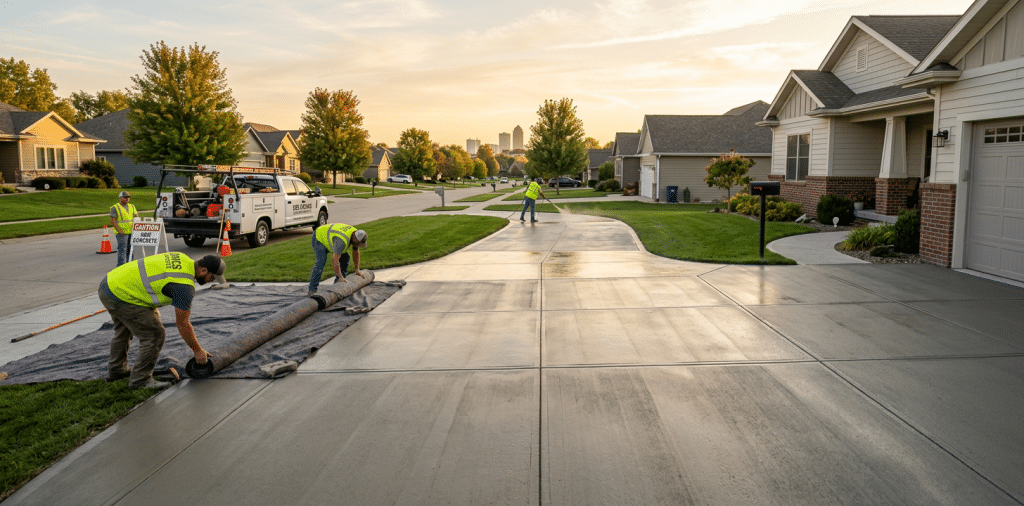
A properly cured driveway is the difference between a short-lived patch and a surface that survives Iowa winters for decades. When you want a durable, freeze-thaw resistant surface, understanding the concrete curing process for driveways helps you plan, avoid costly repairs, and extend the life of your investment.
Thank you for reading this post, don't forget to subscribe!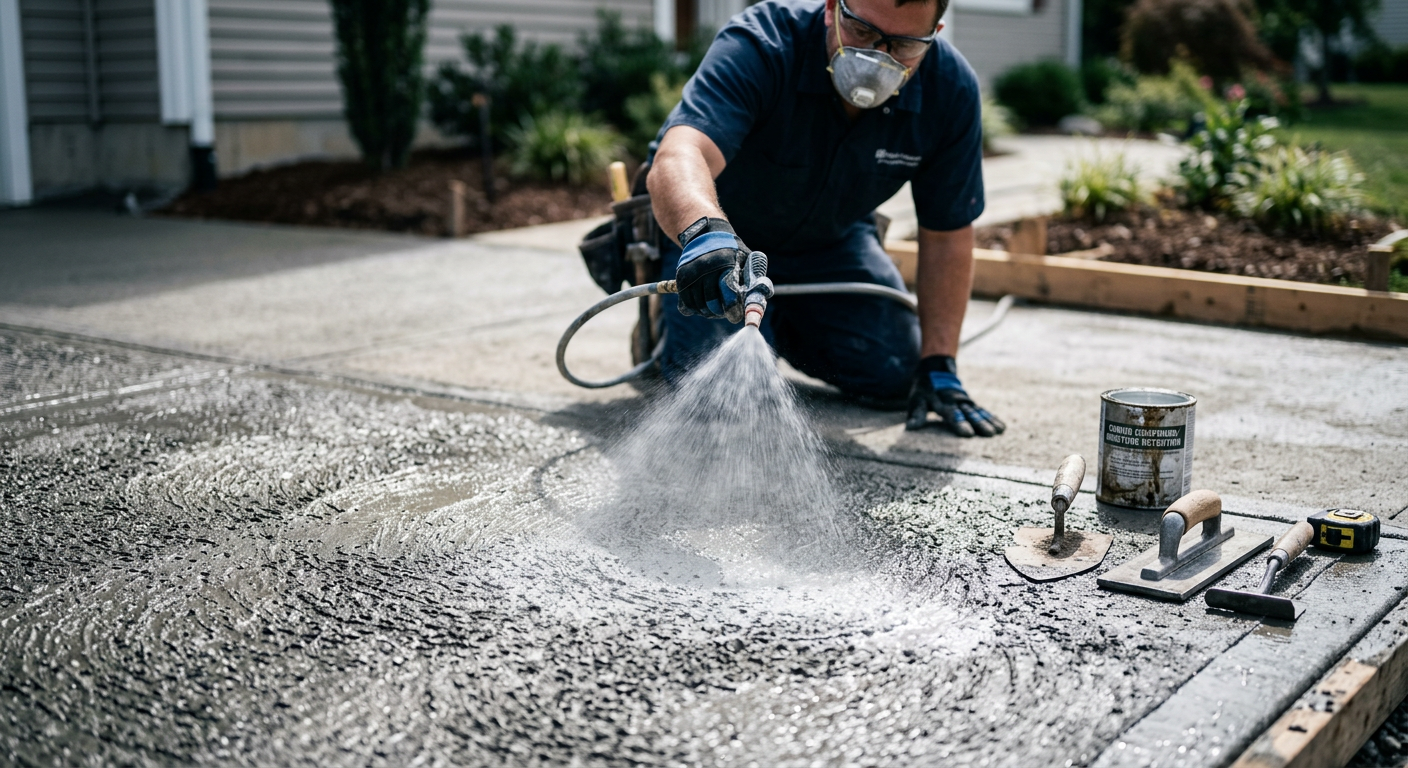
Why curing matters for driveway longevity
Curing is the controlled process of maintaining adequate moisture and temperature so concrete can hydrate and gain strength. Proper curing reduces surface crazing, improves abrasion resistance, and dramatically improves freeze-thaw durability. For Des Moines homeowners dealing with repeated winter freeze-thaw cycles, good curing is one of the most cost-effective ways to protect your driveway.
Freeze-thaw resistance and long-term performance
When concrete cures correctly it develops a denser, less permeable microstructure. That means fewer cracks from water infiltration and less damage from deicing chemicals. Combine correct mix design, placement, and curing and you get a driveway that resists spalling, scaling, and early failure.
Key elements of an effective curing program
- Maintain moisture, control temperature, and prevent early drying.
- Use the right curing method for season and project size, wet curing for hottest days and curing compounds in tight-access areas.
- Coordinate saw-cut timing and joint placement so curing does not interfere with control joints.
Common curing methods
- Wet curing, using ponding, wet burlap, or continuous misting. Best for small to medium slabs with accessible edges.
- Curing compounds that form a moisture-retaining membrane, useful on driveways where wet curing is impractical.
- Polyethylene sheeting and blankets to trap moisture and regulate temperature, especially for cooler weather pours.
Step-by-step curing timeline for driveways
First 0 to 24 hours
Keep the surface protected from direct sun, wind, and traffic. If using wet curing, keep burlap or towels continuously damp. If using curing compound, apply it once bleed water has disappeared and the surface can safely support equipment.
Days 1 to 7
This is the critical period for moisture retention. For standard mixes, maintain moist curing for at least 7 days when possible, or use a high-quality curing compound labeled for 7-day equivalent performance. Strength gain is rapid during this window, and freeze-thaw resistance improves dramatically.
Days 7 to 28
Concrete continues to gain strength for weeks. By day 28 most mixes reach a large portion of their design compressive strength. Continue to avoid heavy loads and construction traffic until strength is adequate. If curing compounds were used, they can remain in place as specified by the product.
After 28 days
Surface strength is mostly established, but hydration continues slowly for months. Routine maintenance like sealing, cleaning, and addressing drainage will protect performance long term.
Temperature and seasonal considerations in Des Moines
Iowa sees hot summers and cold winters, and both extremes affect curing. High temperatures accelerate evaporation, so increase curing effort on hot, windy days. Cold-weather pours require insulating blankets and possibly heated enclosures to keep concrete above minimum curing temperatures until it has gained sufficient strength. Consult local pros for winter-specific procedures to avoid freeze damage while concrete is gaining strength.
Practical tips contractors and homeowners should follow
- Schedule pours for cooler times of day in summer, or plan for extended moist curing.
- Use fiber-reinforced mixes and proper air entrainment to improve freeze-thaw resistance.
- Time saw cuts for control joints so you do not weaken freshly cured sections.
- Avoid deicing salts in the first winter. Use sand for traction until the concrete has had a season to harden.
- Document curing method and timelines, especially for warranty or commercial compliance.
How curing ties to other quality practices
Curing is one piece of a bigger quality puzzle. Proper subgrade preparation, drainage, mix design, reinforcement, and finishing are equally important. A coordinated approach, like the project reporting and moisture-control practices used by professional contractors, produces predictable results that meet code tolerances and long-term durability expectations.
Frequently asked questions
How long should I keep my driveway wet during curing?
Aim for at least 7 days of continuous moisture for conventional mixes, longer if temperatures are high or if you want maximum durability. If wet curing is impossible, use a rated curing compound applied correctly.
Can I drive on a newly cured driveway after 7 days?
Light foot traffic is usually safe after 24 to 48 hours, but wait at least 7 days before light vehicle traffic and closer to 28 days for full loading when possible. Always follow your contractor's guidance based on mix strength tests.
What is the best curing method for winter pours?
Use insulating blankets or heated enclosures to maintain curing temperature, combined with proper cold-weather mix design. Avoid rapid temperature swings and do not let the surface freeze during initial curing.
Do curing compounds replace wet curing?
Curing compounds are effective alternatives when wet curing is impractical, but they must be applied at the right time and coverage. For maximum performance, wet curing is preferred when feasible.
How does curing affect crack control and joints?
Proper curing reduces plastic shrinkage and surface cracking. However, correctly placed control joints and timely saw cutting remain essential for controlling normal shrinkage cracks.
Should I seal my driveway after curing?
Sealing can help with stain resistance and surface protection, but wait until the concrete has fully cured, typically 28 days, and follow manufacturer instructions for sealer compatibility with curing compounds.
Questions contractors and property managers ask
What documentation should I collect?
Record mix design, batch tickets, curing method, start and end times for curing, weather conditions, and any strength test results. Good documentation supports warranties and compliance reviews.
Next steps for homeowners in Des Moines
Want a driveway that survives freeze-thaw cycles and looks great for years? Our team coordinates mix design, placement, and a documented curing plan so you get predictable results. Learn about our driveway services and scheduling on the Colin Concrete Driveways page, or request a free estimate through our contact page.
Ready to schedule or get a quote
If you need a reliable, long-lasting driveway, contact our team for a fast estimate and detailed curing plan. Visit our driveway services page at https://colinconcretedesmoines.com/concrete-driveways/ or request a free estimate at https://colinconcretedesmoines.com/contact-us-2/.
Conclusion
Here's the thing, curing is not an optional last step, it is the foundation of a durable driveway. Follow season-appropriate curing, control moisture and temperature, and coordinate curing with jointing and finishing. Do that, and your driveway will resist Iowa winters, minimize repairs, and protect your investment for decades.