

Managing concrete work is never just about the pour. It is about timing, weather, inspections, crew coordination, mix design, curing, and keeping everyone aligned when the schedule gets tight. That is where Procore for concrete project management can make a real difference, especially for teams that need clear communication and reliable documentation from preconstruction through closeout.
Thank you for reading this post, don't forget to subscribe!For homeowners, remodelers, developers, and property managers in the Des Moines metro, the right process can mean the difference between a driveway that holds up through freeze-thaw cycles and one that flakes too soon. For larger commercial work, it can mean fewer RFIs, cleaner handoffs, better QA records, and less stress when multiple trades are working around a critical slab pour.
Why Concrete Projects Need Better Coordination
Concrete is unforgiving when the plan is vague. Once the truck arrives, the clock starts, and issues like formwork readiness, pump access, reinforcement placement, and finishing sequence have to be handled fast. If one part slips, the whole day can go sideways.
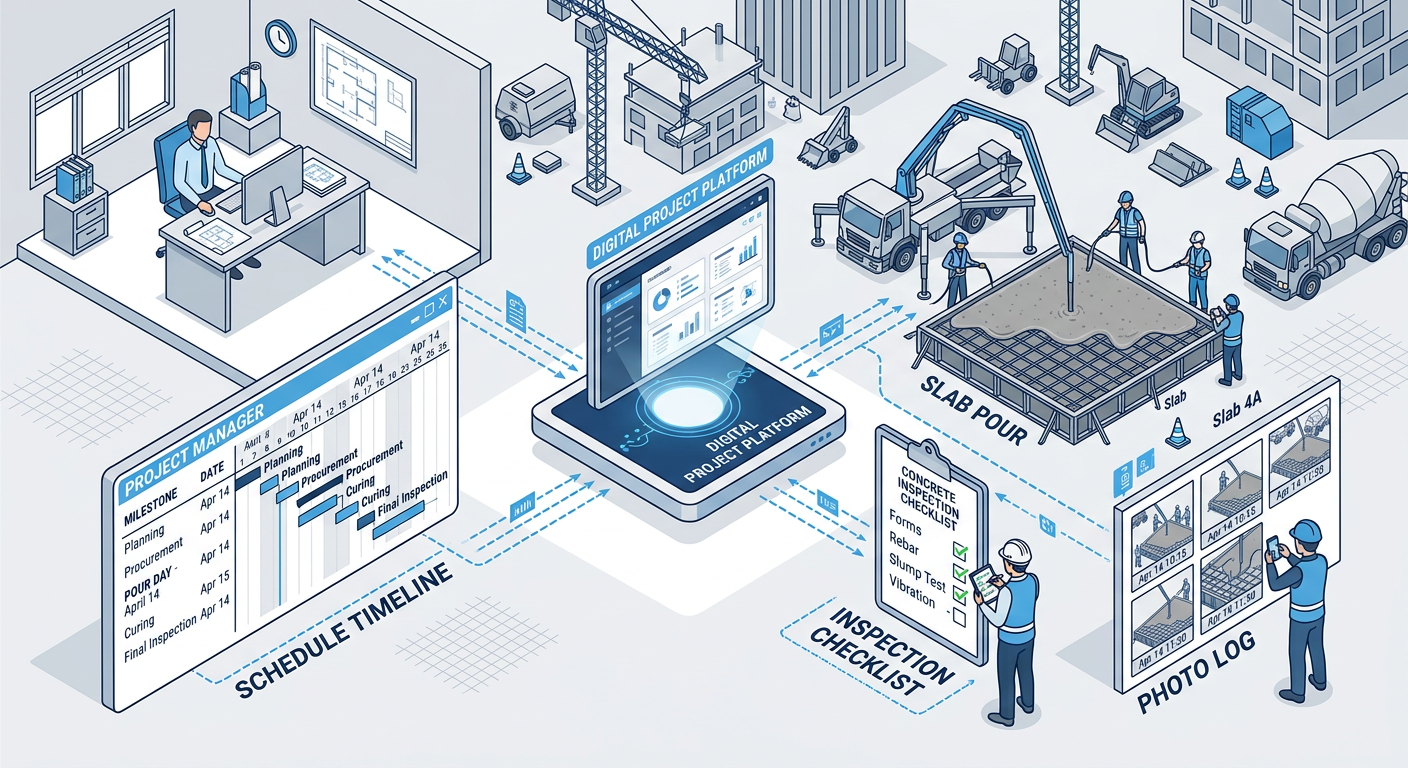
Procore helps centralize the project details that matter most, including documents, communication, logs, submittals, and field updates. Procore describes its platform as a connected construction management system that helps teams manage projects from preconstruction through closeout, with project management, document control, and reporting built in. (procore.com)
What that means on a concrete job
- Everyone sees the same drawings, specs, and updates.
- Daily logs create a clearer record of weather, manpower, and site conditions.
- Photos and reports help document each pour for owners, GCs, and inspectors.
- Schedule changes are easier to communicate before they turn into expensive delays.
Where Procore Adds the Most Value for Concrete Work
Preconstruction planning
Before the first load arrives, teams need to confirm scope, sequence, access, and equipment. For concrete contractors, that includes things like excavation readiness, base compaction, reinforcement placement, embedded items, and curing expectations. A digital platform makes it easier to keep the right version of the plan in front of the right people.
Daily field reporting
Daily logs matter more than most people realize. If there is a rain delay, a temperature concern, a mix change, or a crew adjustment, documenting it in real time keeps the project record clean. That helps protect both the contractor and the client if questions come up later.
RFIs, submittals, and approvals
Concrete projects often involve mix designs, testing requirements, finish expectations, and coordination with structural or civil teams. Procore’s document and specification tools are designed to organize that paper trail and keep tasks moving. (procore.com)
Change management
Scope changes happen. Maybe a driveway needs more base repair than expected, or a commercial slab needs added reinforcement after engineering review. Having the change documented in the same system as the rest of the project helps reduce confusion and protects the budget conversation.
Why It Matters in Central Iowa
Des Moines weather is hard on concrete. Freeze-thaw cycles, moisture, and seasonal swings make curing and mix selection especially important. That is why contractors serving this market need more than a good finish crew. They need repeatable systems, documentation, and field discipline.
For homeowners, that can mean better outcomes on driveways, patios, sidewalks, and garage slabs. For developers and GCs, it can mean better control on foundations, parking lots, multifamily podiums, and industrial flatwork. The more complex the job, the more valuable a single source of truth becomes.
How Colin Concrete Uses Procore in Real Projects
Colin Concrete Des Moines pairs field experience with project tracking tools to keep communication clear on both residential and commercial work. The team uses Procore reporting alongside services like flatwork, foundations, decorative concrete, parking lots, industrial slabs, and multifamily podium work, which helps with transparency from estimate to final closeout.
That matters when you need:
- fast estimates and realistic scheduling
- transparent pricing and documented scope
- inspection-ready records
- coordination across multiple trades
- durable, freeze-thaw resistant concrete solutions
What to Ask a Concrete Contractor Using Procore
If a contractor says they use Procore, ask how they actually use it. Software is only useful when the team commits to the process.
Good questions to ask
- Who updates the daily logs?
- How are photos, test results, and submittals stored?
- How are schedule changes communicated to owners and GCs?
- Do you document weather, curing conditions, and punch-list items?
- Can I see examples of your reporting process?
A contractor who can answer those questions clearly is usually better prepared for complex work than one who just mentions the software in a sales pitch.
Best Use Cases for Homeowners and Commercial Clients
Homeowners
If you are replacing a driveway, patio, or garage slab, Procore may not be the part you notice most. What you will notice is cleaner communication, fewer surprises, and a better record of what was promised and delivered.
Remodelers and small property owners
If your project is tied to a renovation timeline, documentation matters. One missed step can delay framing, masonry, or final inspections. A contractor with a disciplined reporting process can help keep the whole job on track.
Developers and general contractors
For larger concrete scopes, the value is even clearer. Procore can support schedule tracking, coordination, testing records, and closeout documentation, all of which help reduce risk on high-stakes jobs. Procore also emphasizes connected workflows across project management, resource management, and document control for construction teams. (procore.com)
FAQ
What is Procore used for in concrete project management?
It is used to organize drawings, logs, photos, RFIs, submittals, schedule updates, and project communication so concrete teams can stay aligned from planning through closeout.
Does Procore help with quality control?
Yes. It supports documentation that can include daily reports, photos, test results, and approvals, which helps create a traceable record for QA and closeout.
Is Procore useful for residential concrete work?
It can be, especially for larger residential projects or jobs with multiple stakeholders. Even on smaller projects, better communication and documentation can improve the customer experience.
Why does concrete work need so much documentation?
Because timing, weather, curing, and inspection requirements can all affect final performance. A clear record helps reduce disputes and makes it easier to verify what happened on site.
Can Procore improve schedule reliability?
Yes, when the team uses it consistently. Shared updates, visible milestones, and documented changes make it easier to keep the project moving.
Ready For A More Organized Concrete Project?
If you want a contractor who understands both concrete and modern project management, Colin Concrete Des Moines is a strong fit. Whether you need a driveway, patio, foundation, or large commercial slab, their Procore-based reporting helps keep the job transparent and on schedule.
To get started, visit Colin Concrete Des Moines and request a free estimate. If your project depends on durability, communication, and accountability, the right process can save you time, money, and headaches.
Conclusion
Procore for concrete project management is about more than software. It is about giving owners, contractors, and crews a clearer way to plan, document, and deliver concrete work that lasts. In a market like Des Moines, where weather and schedule pressure can be tough on any project, that kind of structure is a real advantage.
If you are comparing contractors, look beyond price alone. Choose the team that can show you how they manage the work, document the details, and stand behind the finished product.