
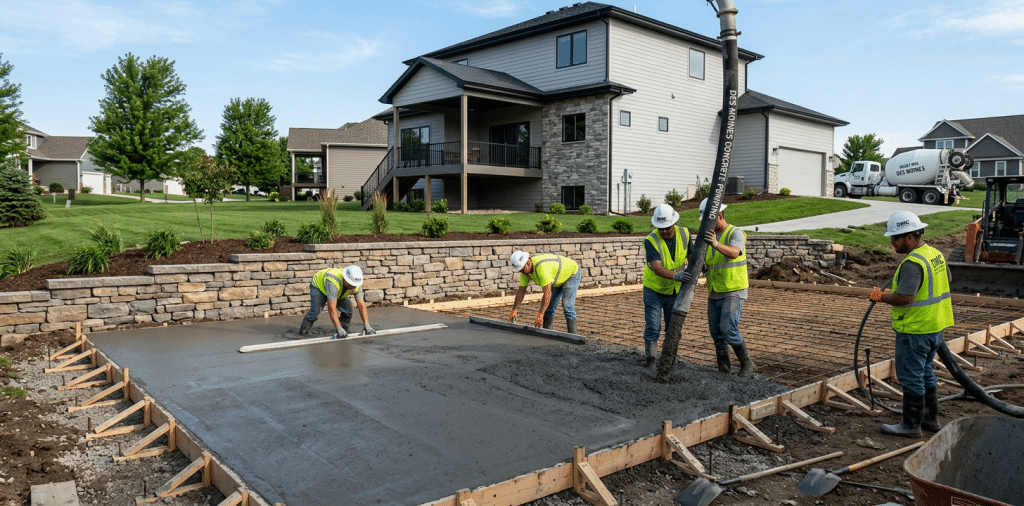
When you are planning an outdoor project, the details matter more than most people realize. A driveway that drains the wrong way, a patio that settles unevenly, or a retaining wall that fails under pressure can turn a good investment into an expensive fix.
Thank you for reading this post, don't forget to subscribe!That is why choosing the right retaining wall and flatwork contractors is such a big deal. You are not just hiring someone to pour concrete or stack blocks. You are hiring a team that understands grading, drainage, frost movement, load-bearing design, and long-term durability in Iowa’s freeze-thaw climate.
Why The Right Contractor Matters
Concrete work and wall construction are connected more often than homeowners expect. If the base is weak or drainage is ignored, even a beautiful slab or wall can start to crack, shift, or lean. A quality contractor looks at the whole site, not just the surface.
For Des Moines metro properties, that means planning for seasonal moisture, soil movement, slope management, and code requirements. The goal is not just a finished project, it is a finished project that stays straight, drains properly, and lasts.
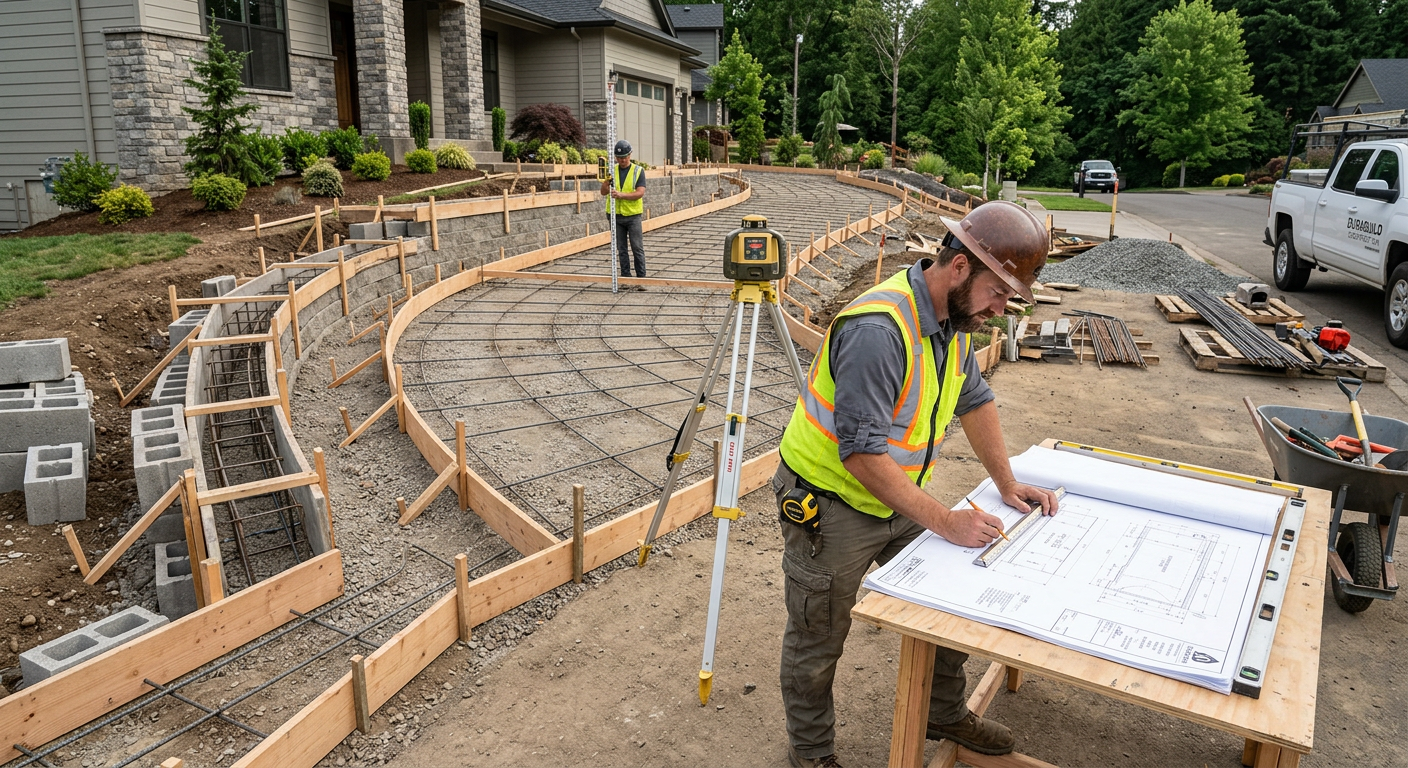
What Retaining Wall And Flatwork Contractors Actually Do
Retaining wall work
Retaining walls help control elevation changes, reduce erosion, and create usable space in yards or commercial sites. Depending on the project, a contractor may handle excavation, base preparation, drainage stone, wall reinforcement, and finish grading around the structure.
Flatwork services
Flatwork covers poured concrete surfaces like driveways, patios, sidewalks, garage slabs, curbs, parking lots, and industrial floors. Good flatwork is about more than appearance. It must be level where needed, sloped where required, and built to handle traffic and weather.
Full-site coordination
The best contractors coordinate both pieces together. That matters because a wall and a slab often influence each other through drainage, elevation, and access. If one is done without the other in mind, problems can show up later.
Signs You Need A Specialist, Not A General Handyman
Not every concrete job requires a large commercial crew, but certain projects do require experienced retaining wall and flatwork contractors. If your project includes significant slope, water runoff, vehicle traffic, or structural loading, you want a contractor who understands the engineering side as well as the finish work.
Look for experience with:
- Driveways that need proper subgrade prep and reinforcement
- Patios that must resist freeze-thaw damage
- Retaining walls that need drainage and base stability
- Commercial slabs with tight tolerances
- Multifamily or podium work with schedule coordination and documentation
What To Look For Before You Hire
Clear estimating process
A professional contractor should explain scope, materials, site prep, and schedule in plain language. If the estimate is vague, the project probably will be too.
Proof of insurance and experience
You want a team that is insured and experienced with projects similar to yours. Residential work and commercial flatwork are not the same, and neither are decorative patios and structural retaining walls.
Quality tools and methods
The right equipment can make a huge difference. Laser screeds, pumps, moisture-control curing, and fiber-reinforced mixes all help improve consistency and durability on the right project.
Communication and documentation
For larger jobs, reporting matters. Tools like Procore help keep schedules, inspections, and progress organized so everyone stays aligned.
Common Mistakes That Lead To Costly Repairs
One of the biggest mistakes is focusing only on the visible finish. A smooth surface is nice, but what is underneath matters more. Poor compaction, thin base layers, and weak drainage are common reasons concrete fails early.
Another mistake is treating a retaining wall like a decorative feature instead of a structural system. Walls hold back soil and moisture, so the base, drainage, and backfill all need to be right.
Why Freeze-Thaw Durability Matters In Iowa
Central Iowa winters put real stress on exterior concrete. Water seeps into tiny cracks, freezes, expands, and makes the damage worse. That is why proper mix design, curing, and drainage are so important for driveways, patios, sidewalks, and walls.
If you are investing in a new surface, ask how the contractor plans to protect it from weathering. Good answers include proper slope, air-entrained mixes where appropriate, reinforcement, and curing methods that support long-term performance.
FAQ
How do retaining wall and flatwork contractors work together on one property?
They coordinate grading, drainage, and elevation so the wall and concrete surfaces function as one system. That helps reduce settling, pooling, and movement over time.
What should I ask before hiring a concrete contractor?
Ask about experience, insurance, project timeline, site prep, drainage planning, mix design, and warranty terms. A strong contractor should answer without hesitation.
Are retaining walls considered structural?
Some are decorative, but many are structural or semi-structural. If the wall is holding back significant soil or supporting a change in grade, it should be treated seriously and built correctly.
How long should a new concrete driveway or patio last?
Lifespan depends on site prep, climate, mix quality, drainage, and maintenance. A well-built project should provide many years of service when installed properly.
What causes retaining walls to fail?
Common causes include poor drainage, weak base preparation, improper backfill, and lack of reinforcement. Water management is often the biggest factor.
Why does commercial flatwork need special planning?
Commercial slabs and parking areas often require tighter tolerances, heavier loads, and clearer documentation. That means coordination, sequencing, and experienced crews matter more.
Get A Contractor Who Builds For The Long Term
If your project needs both strength and a clean finish, work with a team that understands the full picture. The best retaining wall and flatwork contractors do more than place concrete, they plan for drainage, durability, and performance from day one.
If you are ready to move forward in the Des Moines metro, visit Colin Concrete Des Moines to learn more about residential and commercial services, request an estimate, and start planning a project built to last.
Conclusion
Retaining walls and flatwork should never be treated like separate concerns. When they are designed and built together, the result is safer, stronger, and easier to maintain.
Whether you need a new driveway, a patio, a sidewalk, a commercial slab, or a retaining wall that handles Iowa weather the right way, the contractor you choose will shape the outcome for years. Pick experience, clear communication, and quality workmanship, and you will be glad you did.