
Choosing the right driveway surface in Iowa is not just about curb appeal, it is about survival. One bad winter can expose weak mix design, poor drainage, or a thin base long before the driveway looks old.
Thank you for reading this post, don't forget to subscribe!If you are comparing options for best driveway concrete for Iowa winters, the real question is not whether concrete works, it is which concrete details help it handle freeze-thaw cycles, salt, and repeated vehicle traffic without scaling or cracking too early.
The good news is that a well-built concrete driveway can last for decades in Central Iowa when the mix, base, reinforcement, curing, and sealing are all done the right way. The trick is knowing what matters most before the pour.
What Iowa Winters Do To Driveways
Iowa winters are tough on hard surfaces because they combine freezing temperatures, snowmelt, deicers, and repeated thaw cycles. Water gets into tiny pores and cracks, expands when it freezes, and slowly breaks the surface apart.
Road salt and deicing chemicals make the damage worse if the slab was not built for durability. That is why surface scaling is so common on low-quality driveways, especially around the edges and tire paths.
The Best Concrete Mix For Winter Performance
For most homes, the best choice is air-entrained concrete with proper strength and a durable finish. Air entrainment creates tiny internal air bubbles that give freezing water room to expand, which helps reduce freeze-thaw damage.
A strong residential mix, usually around 4,000 psi or higher for demanding conditions, is a smart target for Iowa driveways. Pair that with fiber reinforcement or rebar, and you get better crack control and improved long-term performance.
Why air entrainment matters
Air-entrained concrete is one of the most important features for winter durability. Without it, moisture inside the slab can cause surface pop-outs, scaling, and early wear.
Why reinforcement still matters
Reinforcement does not stop concrete from cracking, but it helps control where and how cracks form. For driveways that will see plows, SUVs, pickup trucks, or frequent turning, that extra support is worth it.
The Base Is Just As Important As The Concrete
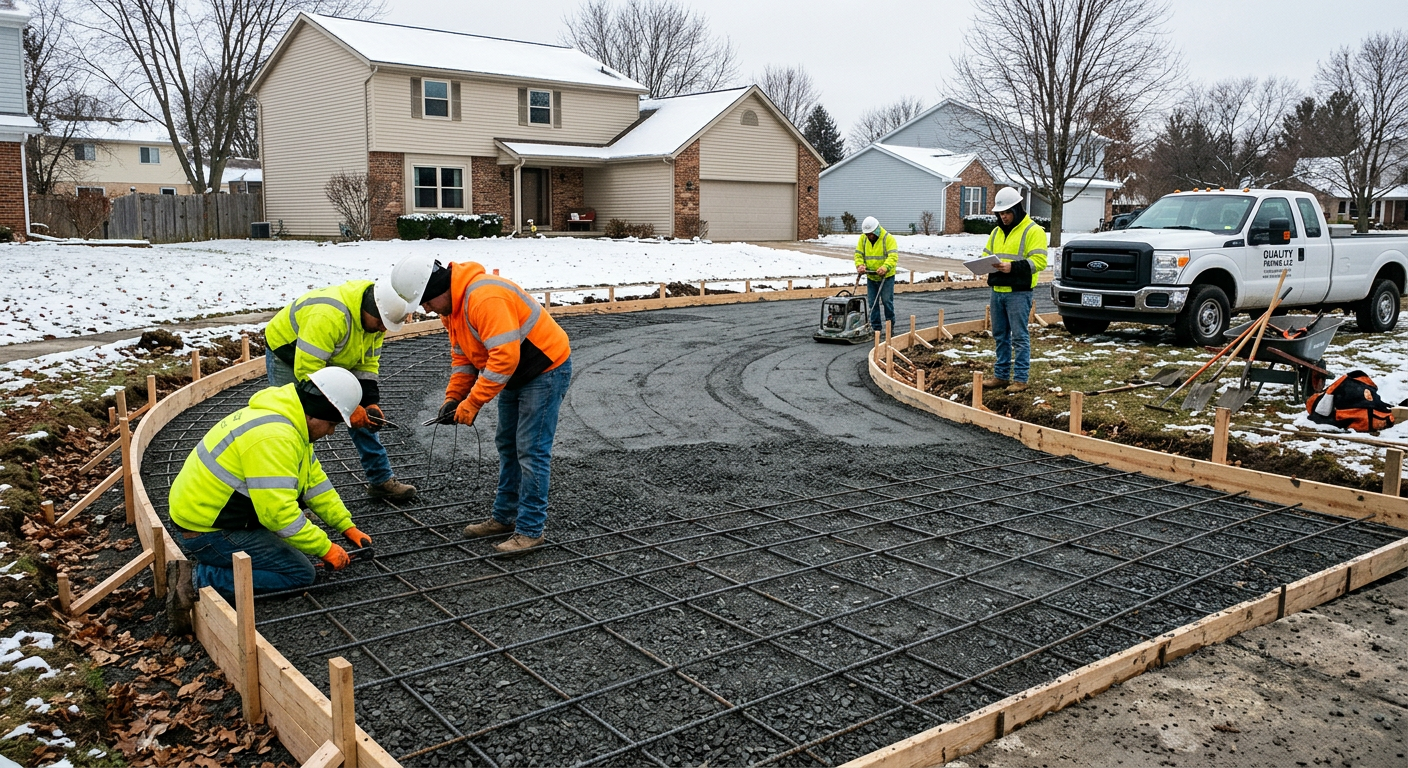
Even the best mix will fail early if the base underneath is weak. In Iowa, a driveway should sit on a properly compacted, well-draining base that limits movement when the ground freezes and thaws.
A solid base helps prevent settling, heaving, and water pooling beneath the slab. That is especially important in the Des Moines area, where clay soils and changing moisture conditions can put extra stress on flatwork.
What good prep includes
- Grading for positive drainage
- Compacting the subgrade thoroughly
- Adding a stable aggregate base
- Setting forms with proper slope away from the house and garage
Thickness And Finish Recommendations
For a standard residential driveway, a 4-inch slab may work in lighter-use situations, but 5 inches or thicker is often a better investment if you want more durability. Heavier vehicles, steep driveways, and turning areas usually benefit from extra thickness.
For finish, a broom finish is often the best winter choice because it provides traction. Decorative finishes can still work, but they need the right sealer and maintenance plan to hold up through snow removal and deicer exposure.
Best practical option for most Iowa homes
If you want the safest all-around choice, look for:
- Air-entrained concrete
- 4,000 psi or stronger mix
- Reinforcement with fiber or rebar
- 5-inch thickness for higher-use driveways
- Broom finish for traction
- Proper curing and sealing
Curing And Sealing Make A Big Difference
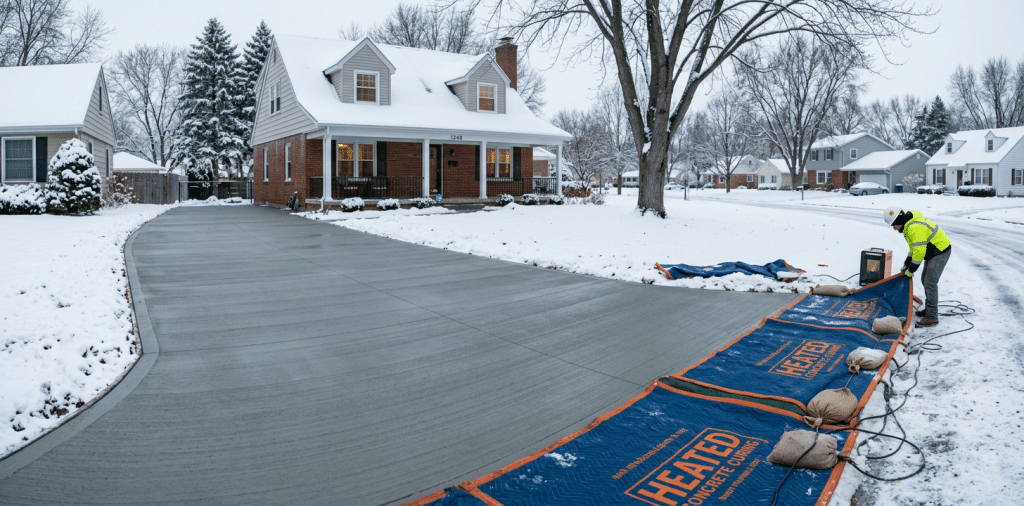
A driveway is most vulnerable right after placement, so curing matters a lot. Moisture-control curing helps the slab gain strength properly, which improves durability before the first winter arrives.
Sealing should happen at the right time, not too early. A quality sealer helps reduce moisture intrusion, salt damage, and surface wear, but it works best when the slab is fully cured and the surface is ready for protection.
If you want deeper guidance on this part of the process, see concrete curing best practices for driveways.
How To Choose The Right Driveway For Your Home
The best driveway concrete for Iowa winters depends on how you use the space. A single-family home with light traffic may need a simpler approach than a property that sees delivery trucks, campers, or repeated snow removal.
Here is the short version:
- Light residential use: air-entrained concrete, broom finish, standard reinforcement
- Higher traffic or heavier vehicles: thicker slab, stronger reinforcement, better base prep
- Long-term durability priority: premium curing, sealing, and drainage details
- Decorative driveway: attractive finish plus winter-ready sealer and maintenance plan
If you are planning a full replacement, it is worth comparing the total build quality, not just the lowest price. The cheapest driveway is often the one you replace first.
Common Mistakes To Avoid
Some driveway failures are completely preventable. The biggest problems usually come from cutting corners on prep or finishing.
Mistake 1: Skipping air entrainment
This leaves the slab more vulnerable to freeze-thaw scaling.
Mistake 2: Pouring on a weak base
If the subgrade moves, the concrete moves too.
Mistake 3: Sealing too early
That can trap moisture and create surface issues later.
Mistake 4: Using harsh deicers too soon
New concrete needs time before it faces aggressive winter chemicals.
Mistake 5: Ignoring drainage
Standing water is a winter problem waiting to happen.
What Homeowners In Des Moines Should Ask Their Contractor
Before you hire anyone, ask a few direct questions:
- Is the mix air-entrained?
- What PSI strength do you recommend for this driveway?
- How thick will the slab be?
- What base material will you use?
- How will you control joints and drainage?
- When should the driveway be sealed?
A good contractor should answer clearly and confidently. If the answers are vague, that is usually a warning sign.
FAQ
What is the best concrete for Iowa winters?
The best choice is air-entrained concrete with strong mix design, good reinforcement, proper base prep, and a broom finish for traction.
Should I choose fiber reinforcement or rebar?
Either can help, and in some projects both are used together. The right option depends on driveway size, load, soil conditions, and how the slab will be used.
How thick should a driveway be in Iowa?
Many residential driveways work well at 4 inches, but 5 inches or more is often better for heavier use, larger vehicles, or added durability.
Is sealing really necessary?
Yes. A quality sealer helps limit moisture penetration and reduces damage from salt, deicers, and winter weather.
Can decorative concrete hold up in winter?
Yes, but only if it is built and maintained correctly. Decorative work needs the same winter-ready foundation, mix, and sealing strategy as standard driveway concrete.
When is the best time to pour a driveway in Central Iowa?
Late spring through early fall is usually ideal because concrete cures more reliably in milder weather.
Ready For A Driveway Built For Iowa Weather?
If you want a driveway that looks good and holds up through Des Moines winters, start with the right mix, the right base, and the right contractor. That is the difference between a surface that lasts and one that starts flaking after a few freeze-thaw seasons.
For a durable, winter-ready driveway in the Des Moines metro, explore your options with Colin Concrete Des Moines and get a plan tailored to your home, traffic, and long-term goals.
Final Takeaway
The best driveway concrete for Iowa winters is not one single product, it is a system built for durability. When you combine air-entrained concrete, proper thickness, strong base prep, smart reinforcement, and careful curing, you give your driveway the best chance to handle whatever winter brings.