
When you budget a commercial project, the slab is rarely just a slab. It is the base that affects schedule, durability, compliance, and long-term operating costs. That is why commercial concrete slab cost per square foot can vary so much from one bid to the next.
Thank you for reading this post, don't forget to subscribe!Here’s the thing, the lowest number on paper is not always the best value. If the subgrade is weak, the reinforcement is undersized, or the finish plan is too light for the loads, you can end up paying for repairs far sooner than expected.
What Commercial Concrete Slab Cost Per Square Foot Usually Includes
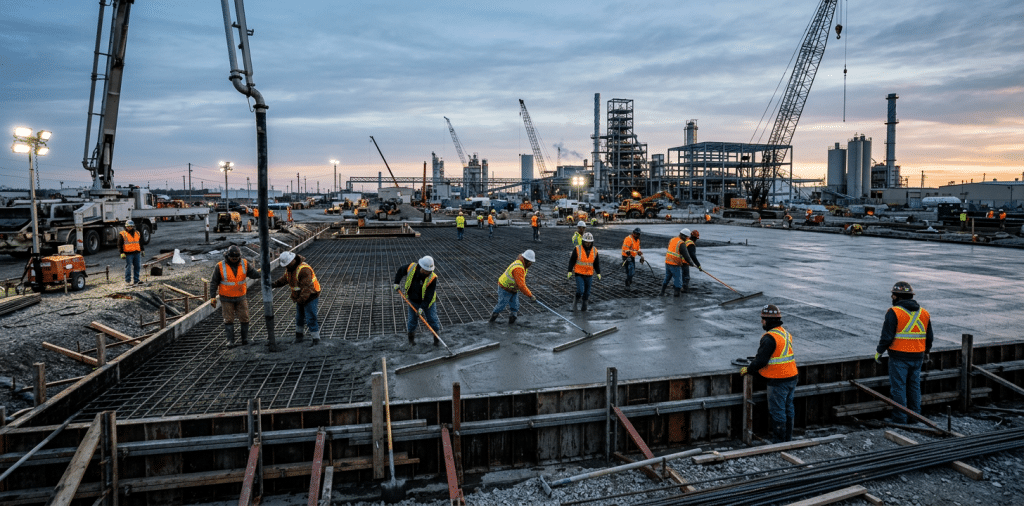
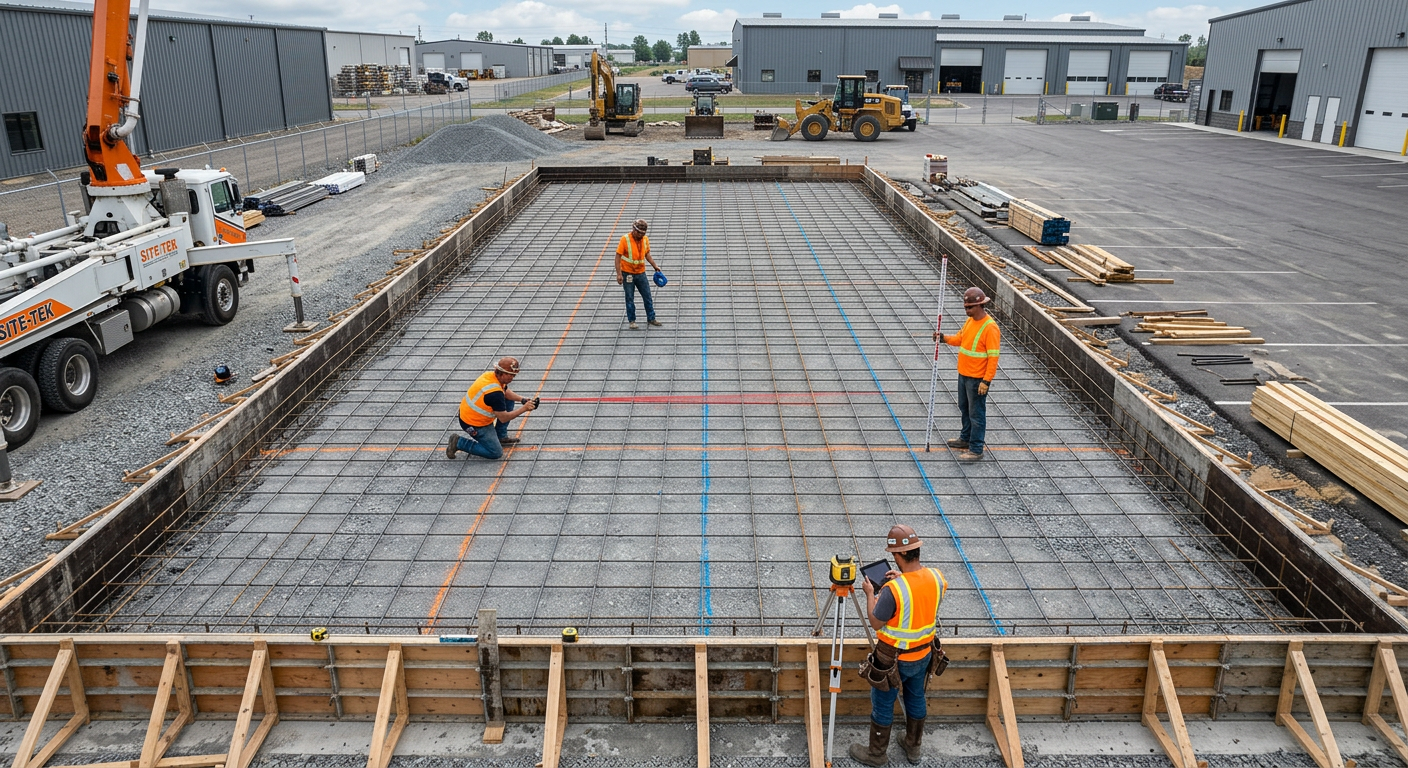
A commercial slab estimate normally bundles several major pieces of work. That can include excavation, grading, base material, formwork, reinforcement, concrete placement, finishing, curing, and cleanup.
For larger jobs, pricing also reflects access constraints, haul-off needs, pumping, laser screed use, and documentation requirements. If a project needs tighter tolerances or has special load demands, those items can move the price quickly.
Typical Price Ranges You Can Expect
For many commercial flatwork projects, a basic slab may land around $6 to $12 per square foot installed. More demanding slabs, such as thicker industrial floors, heavily reinforced areas, or projects with difficult site conditions, can run higher.
A few broad planning ranges:
- Basic commercial slab, light to moderate use, simpler site conditions, about $6 to $9 per square foot
- Reinforced slab for heavier loads, about $8 to $12 per square foot
- Industrial or specialty slab with thicker sections, tighter tolerances, or added prep, about $10 to $18+ per square foot
Those are planning numbers, not quotes. Local conditions in Central Iowa, especially freeze-thaw exposure, drainage concerns, and soil quality, can shift a bid significantly.
Main Factors That Change the Price
Slab Thickness
Thickness is one of the biggest cost drivers because it changes both concrete volume and labor. A 4-inch slab costs less than a 6-inch or 8-inch slab, but heavy vehicles, forklifts, or industrial loading often justify the extra material.
Reinforcement
Rebar, wire mesh, or fiber reinforcement adds upfront cost, but it also improves performance. If your project needs long-term durability and reduced cracking risk, reinforcement is usually money well spent.
Subgrade and Site Prep
Poor soils, drainage issues, and demolition all raise costs. If the base is soft or uneven, the crew may need extra excavation, compaction, aggregate base, or moisture management before any concrete is placed.
Access and Equipment
Tight job sites often need extra labor, smaller equipment, or pumping. That matters for multifamily podiums, parking structures, and urban commercial sites where staging space is limited.
Finish, Tolerances, and Curing
A broom-finish slab for general utility is simpler than a floor that needs flatter tolerances or a more refined finish. Moisture-control curing, sawcut timing, and reporting requirements can also add time and cost.
How Commercial Projects Differ From Residential Slabs
Commercial work usually has more variables. The design may need to support equipment loads, satisfy code requirements, or align with project schedules across multiple trades.
That is why contractors with the right tools matter. Laser screeds, pumps, fiber-reinforced mixes, and Procore reporting can help keep the job accurate, documented, and easier to manage from start to finish.
How to Read a Bid the Smart Way
Do not compare only the total number. Compare what is actually included.
Look for:
- Slab thickness and mix design
- Reinforcement type and spacing
- Base prep and compaction scope
- Vapor barrier or moisture-control details if needed
- Finishing method and curing plan
- Sawcut layout and control joint spacing
- Mobilization, pumping, and cleanup
- Warranty terms and documentation
If one quote is much lower, ask what was left out. Sometimes the missing item is the exact thing that protects the slab later.
Ways to Control Cost Without Cutting Corners
You can often save money by simplifying the design, improving site access, and getting the scope right the first time. Smart value engineering might mean optimizing thickness by load zone, staging pours efficiently, or resolving grading issues early.
The best savings usually come from planning, not from deleting critical durability items. In the Des Moines metro, freeze-thaw resilience and drainage are worth protecting.
FAQ
What is a fair commercial concrete slab cost per square foot?
A fair planning range is often about $6 to $12 per square foot for many standard commercial slabs, with thicker or more complex projects running higher.
Why do some bids look much cheaper than others?
Cheaper bids may exclude prep, reinforcement, curing, pumping, or finish requirements. Always compare the full scope, not just the base number.
Does slab thickness affect long-term value?
Yes. A thicker slab usually costs more upfront, but it can last longer under heavier loads and reduce the risk of premature damage.
Are fiber mixes worth the extra cost?
Often, yes. Fiber can help control shrinkage cracking and improve durability, especially when paired with proper placement and curing.
How do weather and Iowa winters affect slab pricing?
Freeze-thaw exposure can increase the need for better base prep, curing, and mix selection. That can raise cost, but it also supports long-term performance.
Should I choose the lowest bid?
Not automatically. The cheapest option can become the most expensive if it leads to repairs, delays, or failed performance.
Get a Clear Quote Before You Build
If you are planning a commercial slab, start with a detailed estimate that spells out thickness, reinforcement, prep, curing, and schedule expectations. That is the best way to protect your budget and your timeline.
For fast estimates, transparent pricing, and durable commercial concrete work in Central Iowa, visit Colin Concrete Des Moines to request a quote and talk through your project needs.
Final Takeaway
Commercial slab pricing is all about scope, strength, and site conditions. If you understand the factors behind the number, you can make a smarter decision and avoid costly surprises later. In commercial concrete, the right slab is not just the lowest price, it is the one built to perform.