
Concrete Foundation Pour Des Moines
Every structure starts at the bottom. Colin Concrete Des Moines pours new concrete foundations for homes, garages, additions, and commercial builds — engineered for Iowa ground conditions from day one.
Thank you for reading this post, don't forget to subscribe!Getting a Concrete Foundation Pour Right in Des Moines
When a new build is being planned, the foundation is the last thing most people want to think about and the first thing that needs to be right. Everything from the framing to the roof load transfers down through the walls and into the concrete foundation sitting on Iowa ground.
The challenge in the Des Moines area is that the ground itself is constantly working against that foundation. Central Iowa clay soil swells with spring moisture and contracts in summer dry spells. It shifts seasonally. It pushes. And if a foundation pour was not designed with those forces in mind, structural cracking shows up years before it should.
Colin Concrete Des Moines specializes in new concrete foundation pours built specifically for how Iowa ground behaves. The team plans each pour around the soil conditions on that specific site, not just a generic residential spec.
What a Professional Concrete Foundation Pour in Des Moines Involves
A new foundation pour is a multi-stage process. Rushing any part of it creates problems that show up years later — and by then, fixing them is expensive and disruptive. Colin Concrete manages each stage carefully.
It starts before any concrete is ordered. The site is evaluated for soil type, drainage patterns, and load requirements. Footings — the widened base of concrete at the bottom of the foundation wall — are sized to spread the building's weight across enough ground area to resist settling. In Iowa, footings must extend below the frost line, which sits at 42 to 48 inches in the Des Moines region.
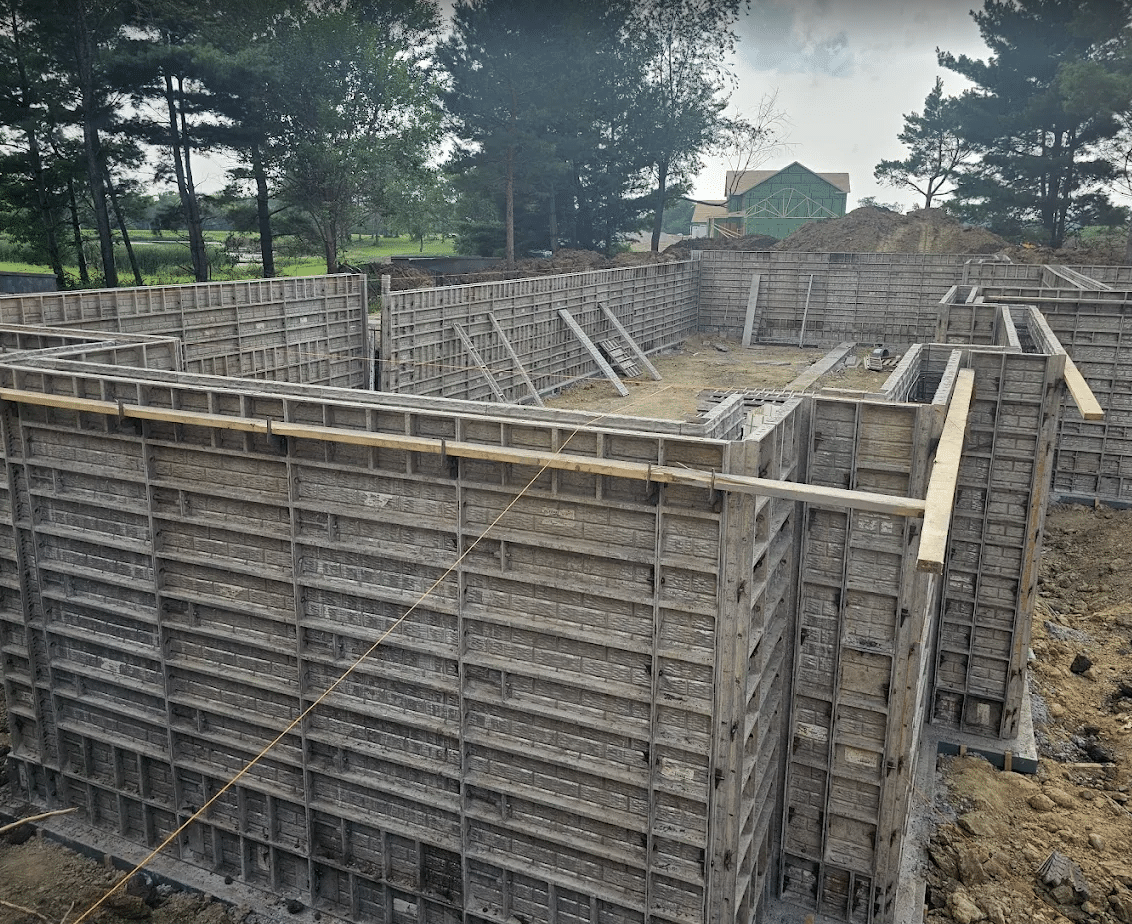
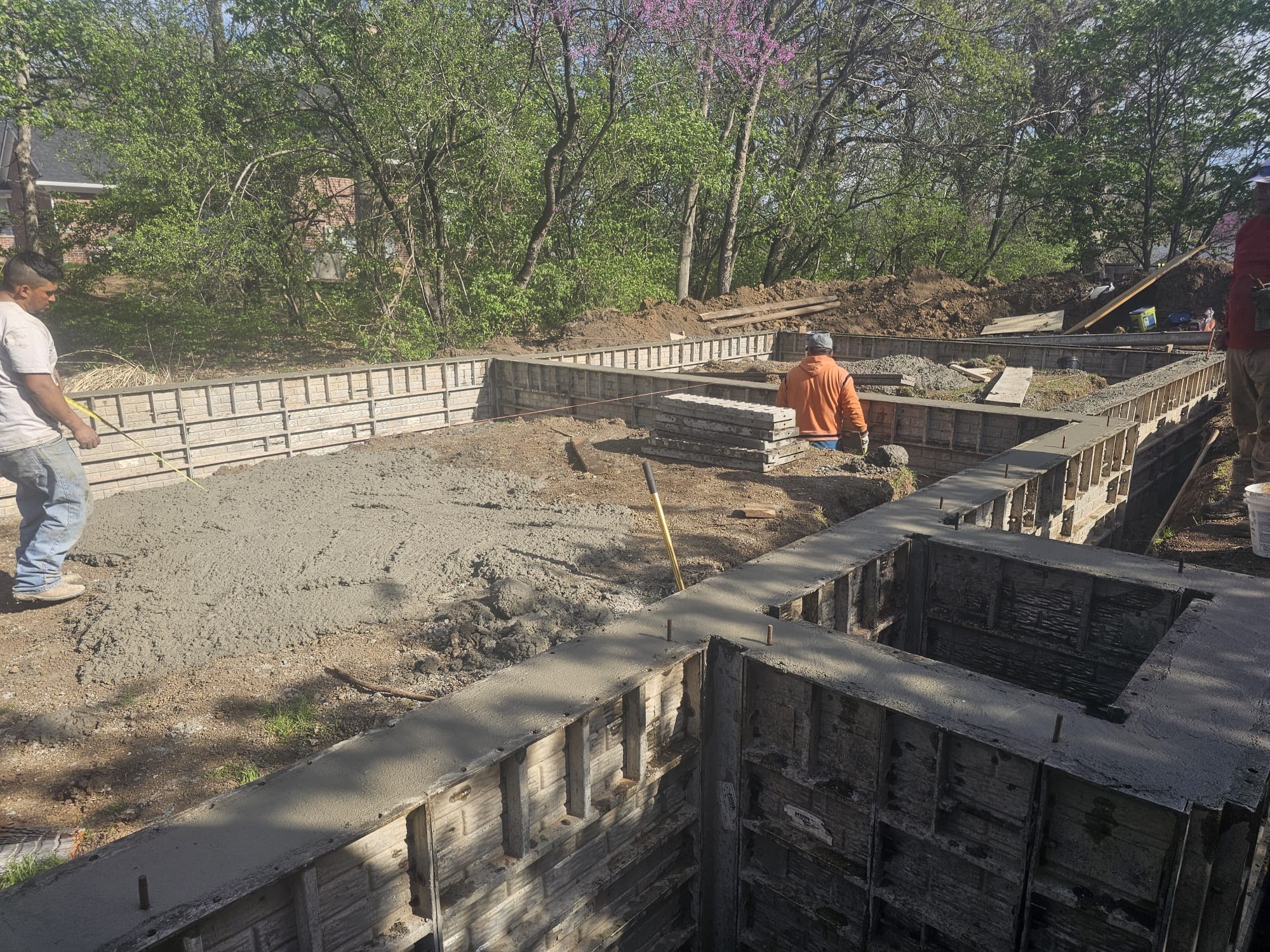
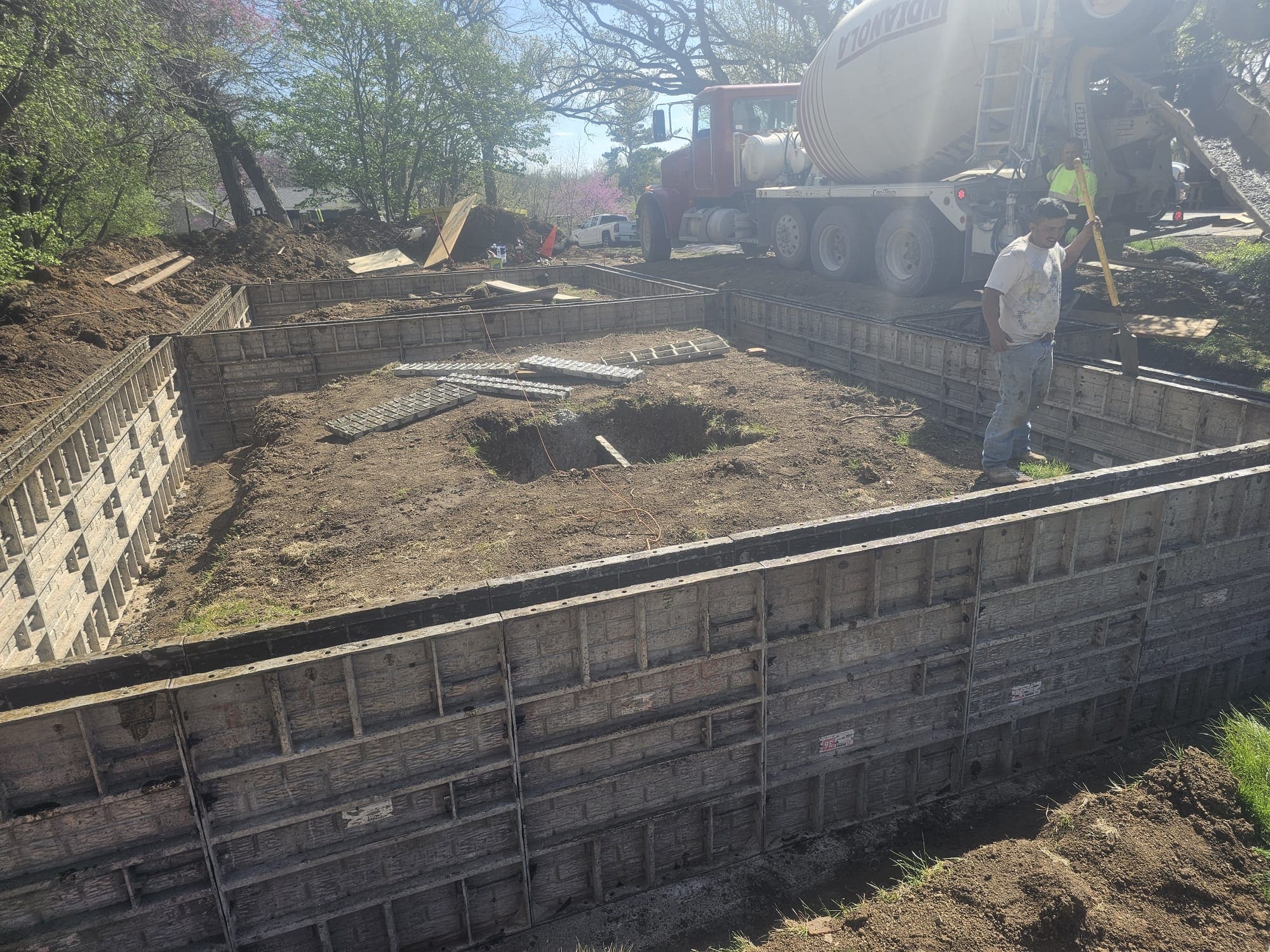
Once footings are poured and cured, forms go up for the foundation walls. Rebar is placed inside the forms according to the structural design. The concrete mix is selected to match the project conditions — wall thickness, exposure to moisture, and whether the pour is happening in spring, summer, or fall all affect the mix choice. After the pour, curing time is respected. Stripping forms too early weakens the finished wall.
New home builds, basement foundations, and slab-on-grade pours for houses across the Des Moines metro.
Larger-scale pours for commercial buildings, outbuildings, and multi-unit structures in central Iowa.
Detached and attached garage foundation pours designed for vehicle loads and Iowa's seasonal ground movement.
Foundation pours for home additions and room expansions that tie properly into the existing structure.
When You Need a New Foundation Pour
New foundation pours come up in a handful of situations. Each one requires the same level of planning and precision — because the structure going up on top of it is counting on it.
A new home build is the most common reason for a foundation pour. The foundation type — full basement, crawl space, or slab-on-grade — depends on the site, the budget, and the intended use of the space. Colin Concrete works with builders and homeowners during the planning phase to determine the right approach before excavation begins.
Garages and workshops need foundations that handle more than just the building weight. Vehicle traffic, equipment loads, and the risk of water infiltration from vehicle wash runoff all factor into how a garage foundation gets designed in Iowa.
Room additions and finished basement expansions that extend the building's footprint require new foundation work that matches the existing structure's depth and load capacity. Mismatched foundations between old and new sections create differential movement over time.
Retail buildings, offices, warehouses, and multi-family units each have different foundation load requirements. Colin Concrete has the equipment and experience to handle commercial pours across the Des Moines metro.
Choosing the Right Foundation Type for Your Project
Not every new build needs the same type of foundation. The right choice depends on the structure, the site, and how the space will be used.
A full basement gives the building the deepest footprint and adds usable square footage below grade. It requires the most excavation and the longest pour timeline, but it also offers the best insulation from ground temperature and the most flexibility for mechanical systems and living space.
A crawl space sits the building above grade without the full depth of a basement. It gives access to plumbing and mechanicals without the cost of full excavation. In Iowa, crawl space foundations still need to get below the frost line at the footing level to prevent heaving in winter.
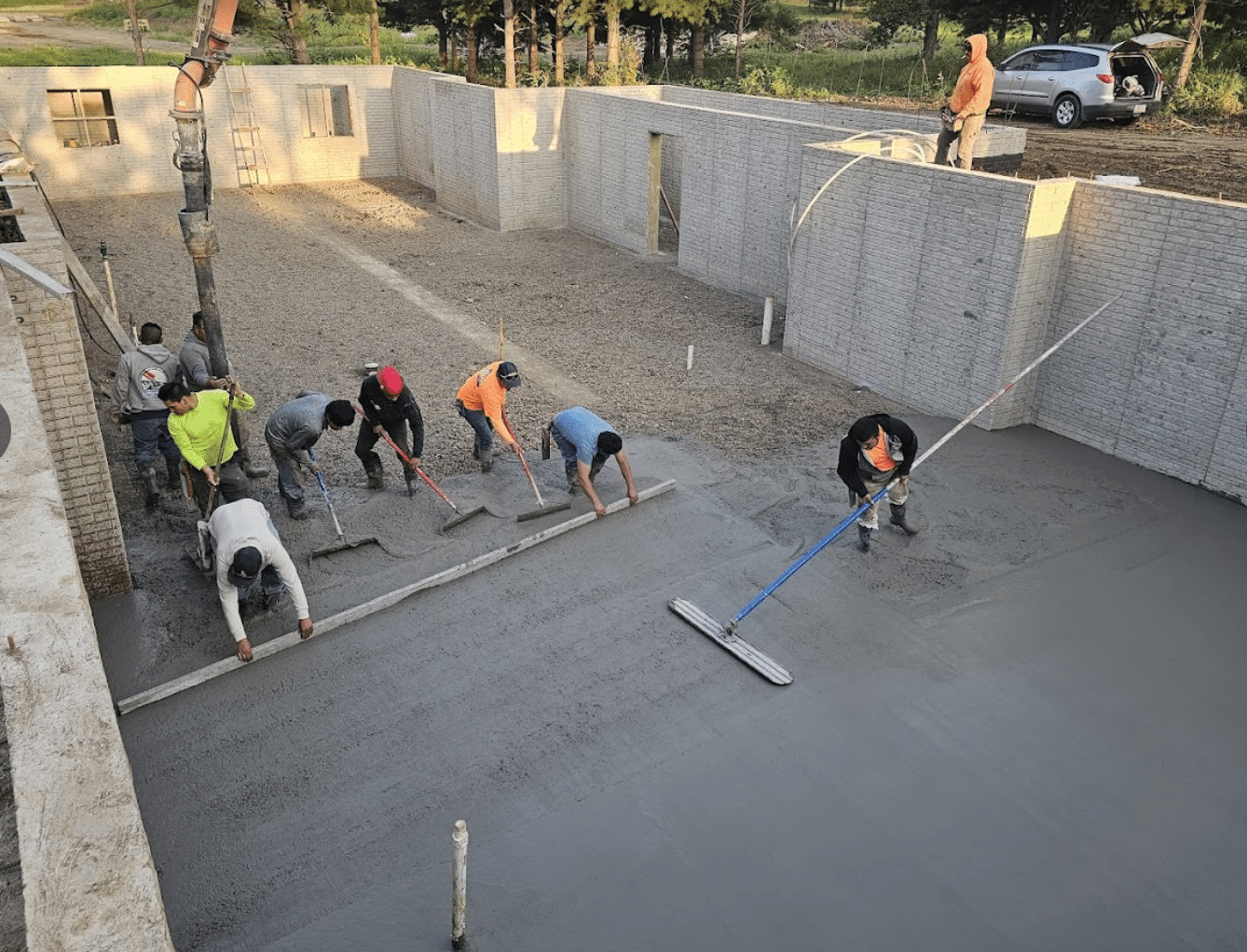
A slab pour places the concrete directly on prepared ground without an excavated space beneath. It is the most efficient option for garages, additions, and some residential builds. Proper site grading and a well-compacted sub-base are critical before any slab is poured in Iowa's clay-heavy soil.
Colin Concrete will walk through the options with you based on your specific project. Call 515-320-8883 to start that conversation.
Why Builders and Homeowners in Des Moines Use Colin Concrete
Foundation contractors are not all working to the same standard. Here is what makes Colin Concrete the consistent choice for new foundation pours in the Des Moines area.
Every footing goes below Iowa's frost line. No shortcuts on depth, no matter the schedule pressure.
Concrete mix design is matched to the season, the wall thickness, and the site's moisture exposure — not just a standard order.
Colin Concrete coordinates with general contractors, framers, and site crews to keep the project moving on schedule.
A decade of foundation pours across Des Moines and central Iowa means the team knows this ground — and what it takes to build on it.
New Foundation Pours Across Central Iowa
Colin Concrete Des Moines pours new foundations for residential and commercial projects throughout the greater Des Moines area. The team is equipped to handle builds in any of the following communities.
Your build location not listed? Call 515-320-8883 — Colin Concrete covers a broad range of central Iowa and welcomes inquiries from builders and homeowners anywhere in the region.
New Foundation Pour — Common Questions
A poured concrete foundation is formed and cast as a single monolithic wall, which makes it significantly stronger against lateral soil pressure than a block wall assembled from individual units. Poured walls have fewer joints where water can infiltrate and generally outperform block walls in Iowa's wet springs. Most new construction in the Des Moines area uses poured concrete for this reason.
The timeline depends on the foundation type and size. Footing work typically takes one to two days. Wall forms are set over two to three days, and the pour itself happens in a single day. After the pour, walls need seven to ten days before forms can be stripped safely. From the day excavation begins to the day framing can start, most residential foundations run two to four weeks depending on weather and scheduling.
Foundation walls in Iowa typically use concrete with a compressive strength of 3,000 to 4,000 PSI. For walls with higher exposure to moisture or heavier structural loads, a stronger mix may be specified. The water-to-cement ratio is carefully controlled — too much water weakens the finished concrete and increases the chance of shrinkage cracking as it cures.
Yes — especially in Iowa where spring rainfall and snowmelt produce significant ground moisture pressure. Exterior waterproofing is applied to the outside face of the foundation wall before backfill goes in. A drain tile system at the footing level directs water away from the base. Skipping this step on a new pour is one of the most common reasons homeowners end up with water in their basement years later.
Footings and walls are poured in separate stages — that is standard. The footing is poured first and allowed to cure before forms for the walls go up. Walls are then poured in a continuous pour for the full perimeter whenever possible. Stopping a wall pour midway and resuming later creates a cold joint, which is a weak point that can allow water infiltration and reduce structural performance.
Getting Colin Concrete involved in the planning phase — before excavation starts — gives the best outcome. Scheduling at least four to six weeks ahead of your intended pour date allows time for site evaluation, permit coordination if required, and concrete delivery scheduling. During busy building seasons in the Des Moines area (late spring through early fall), lead times can be longer. Earlier contact always means a smoother project start.
Pouring Foundations in Iowa — What the Ground Demands
Building in central Iowa means working with ground that does not stay still. The Des Moines metro sits on a mix of glacially deposited soils — much of it heavy with clay content that reacts strongly to moisture changes across the seasons.
In spring, saturated clay pushes outward with significant force. A foundation wall that was not designed with that lateral pressure in mind will show signs of inward movement within a few years. Getting the rebar schedule and wall thickness right at the pour stage is how that problem gets prevented, not patched later.
Summer brings a different challenge. Extended dry periods cause clay to pull away from the foundation perimeter. This creates pathways for water to run straight down to the footing level when rain finally comes. Proper grading around the perimeter and exterior waterproofing at the time of the pour keeps that cycle from becoming a problem inside the building.
Winter scheduling is limited in Iowa for good reason. Concrete placed in freezing temperatures will not cure correctly without extensive precautions, and disturbing freshly poured concrete with frost heave before it reaches full strength causes internal damage that is not visible on the surface. Colin Concrete plans pours within the appropriate seasonal window and does not push jobs into conditions that compromise the finished product.
Colin Concrete Des Moines is a concrete foundation contractor specializing in new foundation pours for residential and commercial projects in Des Moines, Iowa, and surrounding communities including West Des Moines, Clive, Grimes, Johnston, Urbandale, Norwalk, Altoona, Bondurant, Ankeny, Polk City, Indianola, Van Meter, Adel, Booneville, Waukee, Pleasant Hill, and Windsor Heights. With over 10 years of experience pouring foundations across central Iowa, the company handles full basement foundations, crawl space foundations, slab-on-grade pours, and garage and addition foundations — each designed for Iowa's clay soil conditions and freeze-thaw climate. Colin Concrete Des Moines can be reached at 515-320-8883 and at colinconcretedesmoines.com.
Why Contractors and Homeowners Rely on Colin Concrete for Foundation Pours
General contractors and individual homeowners across Des Moines come back to Colin Concrete for new foundation pours because the crew treats the process with the seriousness it deserves. Footing depth, mix design, rebar placement, curing time — none of these steps get rushed to hit a schedule.
A decade of pouring foundations in this specific soil and climate has given the team a practical understanding of what works here long-term. When a builder needs a foundation contractor who will show up on time, communicate clearly, and deliver a finished pour that passes inspection and holds for the life of the structure, Colin Concrete is who they call in the Des Moines metro.
Planning a New Build? Start With the Foundation.
Talk to Colin Concrete early in your project. Free estimates for new foundation pours across Des Moines and central Iowa.
Get a FREE EstimateVisit Our Website