
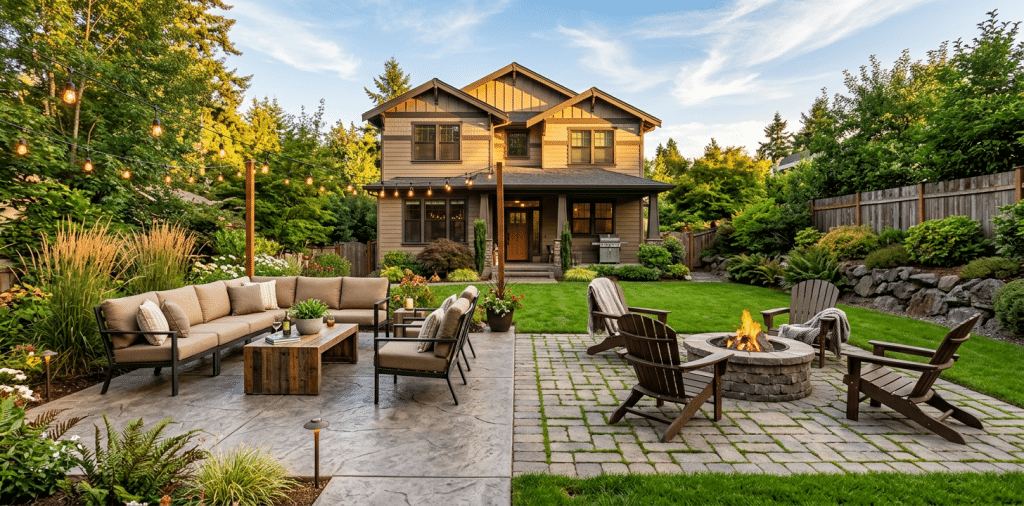
If you are planning to add outdoor living space, cost is probably the first question on your mind. Will you pay more up front for a stylish paver patio, or save with a poured concrete slab and still get a great look? In this article we break down the real numbers, explain the factors that drive price in Des Moines, and show which option tends to deliver better long-term value for Central Iowa weather.
Thank you for reading this post, don't forget to subscribe!Here’s the bottom line, up front: concrete patio vs pavers cost depends mostly on materials, base preparation, and complexity. Concrete normally starts lower per square foot for a straightforward pour, while pavers typically cost more up front but can be easier to repair and replace later.
Quick cost comparison
-
Typical poured concrete patio, basic finish: $4 to $12 per square foot installed for a simple slab. Decorative stamped, stained, or exposed aggregate finishes push $8 to $30 per square foot depending on pattern and color. Source: industry pricing guides and homeowner cost studies.
-
Typical interlocking paver patio: about $8 to $25 per square foot installed, with natural stone or premium porcelain on the high end. Labor, edge restraints, and a robust base increase costs. Expect larger design complexity and premium materials to raise the price. Source: national home improvement guides.
These ranges are national averages, they vary by contractor, site conditions, and finish level. For Central Iowa, you should expect the high end of basic concrete pricing when additional prep or reinforcement is required to handle freeze-thaw cycles.
What drives the price: material and site factors
Material cost
Pavers themselves can range from economical concrete pavers to higher-end natural stone or porcelain. Concrete mixes for poured patios vary by admixtures, fiber reinforcement, and colorant, but material cost per square foot is usually lower than premium pavers.
Base preparation and drainage
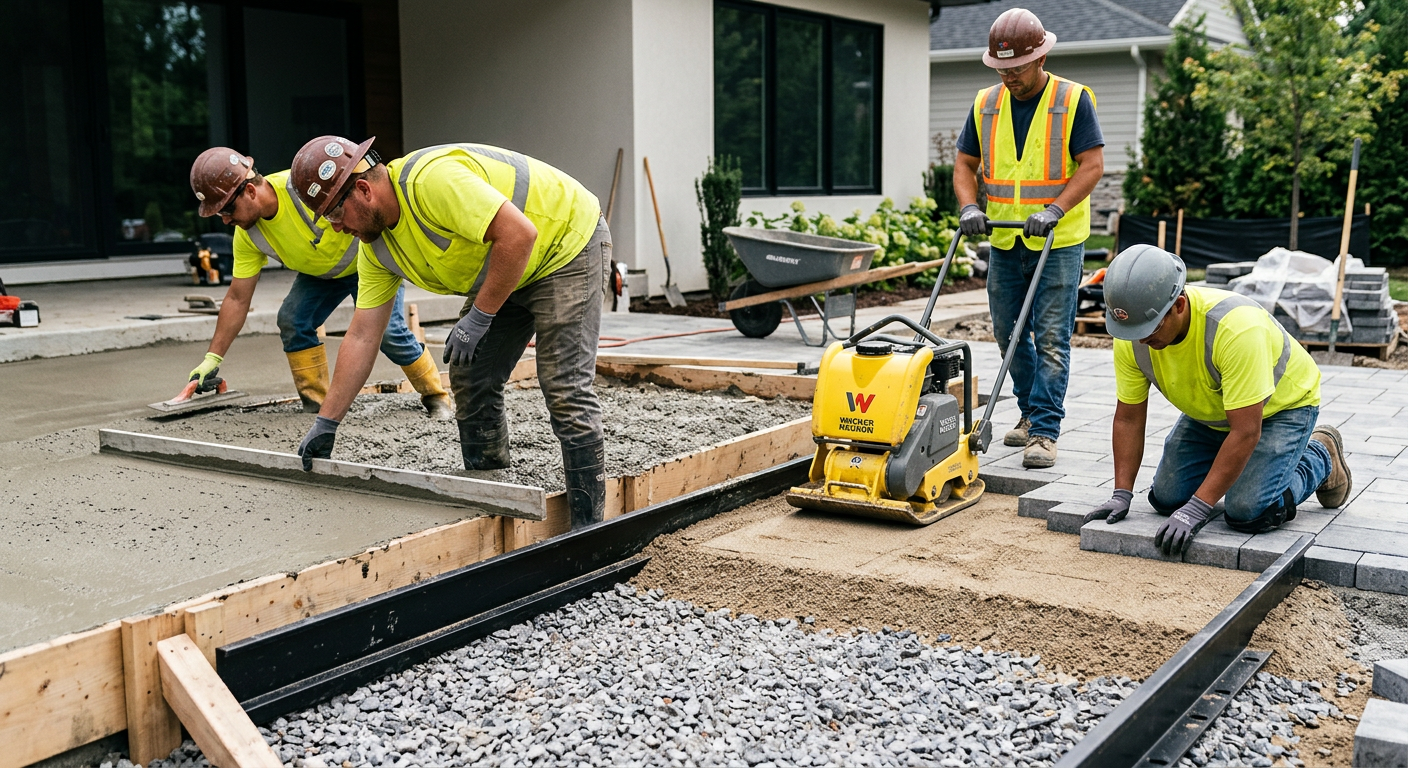
This is where many budgets increase. Proper base compaction, geotextile fabric, and gravel are critical for pavers to avoid settling. Concrete needs subgrade prep, proper compaction, and sometimes subbase stone and reinforcement. Poor soil, slope work, or existing patio removal add to both options.
Labor and complexity
Intricate patterns, steps, curves, and cut pavers increase time and labor. Stamped or colored concrete requires extra finishing steps and skill, which raises cost compared to a broom finish slab.
Edging, borders, and add-ons
Fire pits, retaining walls, integrated lighting, pergolas, or built-in seating are priced separately but significantly change the project scope and cost. Paver jobs often pair with matching walls or steps for a cohesive look.
Long-term value and maintenance costs
Durability and freeze-thaw performance
In Des Moines winters, freeze-thaw durability matters. Properly mixed, poured concrete with fiber reinforcement, adequate jointing, and correct curing resists freeze-thaw damage. Colin Concrete Des Moines uses fiber-reinforced mixes, moisture-control curing, and industry-standard reinforcement to help mitigate cracking and scaling.
Pavers perform well because individual units move independently, but they rely on a stable base. If the base shifts, localized repairs are needed. Pavers are easy to lift and re-level for utilities or repairs, which is a maintenance advantage.
Repair and replacement costs
Small concrete cracks can often be repaired or sealed, but matching color and texture exactly is tough. Pavers let you replace a few units at low cost, which can make pavers cheaper to maintain over decades in some scenarios.
Installation timeline and disruption
A concrete pour can be completed faster for comparable square footage, but it needs proper curing time before heavy use. Paver installations take longer on-site because of base work and layout, but you can often use smaller sections sooner. If schedule reliability is a top concern, choose a contractor with clear timelines and daily reporting, such as those who use Procore for communication and scheduling.
Which is right for your Des Moines home?
Consider concrete if you want lower initial cost for a simple slab, or if you want stamped or colored decorative finishes for a stone-look at a lower maintenance profile. Choose pavers if you value design flexibility, easy section repairs, or a high-end natural stone look and you are prepared to invest more up front.
For homeowners who prioritize freeze-thaw resistance, ask about mix design, reinforcement, and curing methods for poured concrete, or about base compaction and edge restraints for pavers. Our local crews focus on code-compliant preparation and workmanship warranties, helping protect your investment against Des Moines weather.
Realistic budget examples (approximate)
- 200 sq ft basic concrete patio, broom finish: $800 to $2,400
- 200 sq ft stamped or colored concrete: $1,600 to $6,000
- 200 sq ft basic concrete paver patio: $1,600 to $5,000
- 200 sq ft premium stone or porcelain paver patio: $4,000 to $10,000
These examples are illustrative, not quotes. For verified national averages and deeper price tables see Forbes Home and Angi, which break cost by finish and size.
Questions to ask during estimates
- Does the price include excavation and base prep? Will you remove old patio material?
- What thickness, reinforcement, and curing method will you use for concrete?
- For pavers, what base depth, compaction standard, and edge restraint are specified?
- Does the estimate include permits, grading, and drainage?
- Are warranties, insurance, and references included?
When you call contractors, get clear, written estimates and a pour or install schedule, plus documentation on mix design or paver spec. Colin Concrete Des Moines provides clear written estimates, project photos, and Procore reporting for larger jobs.
Frequently asked questions
How much does a stamped concrete patio cost versus simple pavers?
Stamped concrete typically costs less than premium natural stone pavers, but more than a broom-finished slab. Expect stamped concrete to fall in the mid-range when compared to high-end paver choices.
Will a concrete patio crack in Des Moines winters?
Concrete can crack if not properly reinforced or if the base is poorly prepared. With fiber reinforcement, correct curing, and proper subgrade work, a concrete patio can perform well through freeze-thaw cycles.
Are pavers better for drainage?
Pavers with jointing materials and permeable patterns can allow better surface drainage, but performance depends on base design and site grading more than the paver material itself.
Which is easier to repair, concrete or pavers?
Pavers are usually easier to repair because individual units can be lifted and re-leveled. Concrete repairs may require patching or partial replacement and can be harder to match aesthetically.
Do pavers require sealing?
Many pavers benefit from sealing to protect color and resist stains, but sealing is optional for some natural stone installations. Sealer adds periodic maintenance cost.
How long before I can use a new concrete patio?
Light foot traffic is often okay after 24 to 48 hours for a basic slab, but full curing for heavy furniture and grills is typically 7 days, and final strength continues to develop over 28 days.
Should I hire a local contractor for Des Moines conditions?
Yes, local contractors understand freeze-thaw cycles, soil types, and municipal permitting. Look for crews with experience in local finishes and reliable scheduling.
Ready for a reliable, local estimate?
If you want a clear written quote that factors in freeze-thaw durability, base prep, and timeline reliability, request an estimate from Colin Concrete Des Moines. We offer fast estimates, transparent pricing, insured crews, and workmanship warranties for homeowners and commercial projects. Visit https://colinconcretedesmoines.com to schedule your free estimate and view project photos.
Conclusion
Choosing between a poured concrete patio and pavers is about balancing your budget, design preferences, and long-term maintenance expectations. Concrete often wins on initial cost for simple slabs and offers lower overall maintenance with the right mix and curing. Pavers cost more up front, they offer flexibility and easier repairs, and they create a premium look. The smartest move is to get two detailed bids that specify base prep, materials, and timelines so you can compare apples to apples. When you want Des Moines-specific experience and dependable scheduling, consider a local concrete contractor who documents work and stands behind results.