
Retaining Wall Contractor Des Moines
Soil that moves downhill takes everything with it — landscaping, fencing, even portions of your yard. Colin Concrete Des Moines builds concrete retaining walls that hold the ground in place and stay put through Iowa's toughest seasonal conditions.
Thank you for reading this post, don't forget to subscribe!Why Retaining Walls in Des Moines Fail Before They Should
A retaining wall is fighting a constant battle. On one side sits the weight of retained soil, groundwater pressure, and the freeze-thaw stress of an Iowa winter. On the other side is open air. When a wall is not designed and built to handle all of those forces, it loses that battle faster than it should.
Structural cracking in a retaining wall is usually the first visible sign of failure. A wall that was constructed without adequate drainage behind it traps water during spring rain and snowmelt. That trapped water adds enormous hydrostatic pressure against the back face of the wall. In winter, that same water freezes, expands, and drives the wall forward. Horizontal cracks running across the face of the wall — particularly mid-height — signal that the wall is beginning to rotate outward under that pressure.
Leaning, bulging, or sections that have shifted out of alignment are further stages of the same problem. At that point, patching the visible surface accomplishes nothing. The forces acting on the wall have not changed — only the wall's ability to resist them has diminished.
Colin Concrete Des Moines designs and builds concrete retaining walls that address drainage, structural thickness, and footing depth from the start — so the wall is working with the ground conditions rather than being overwhelmed by them.
Professional Retaining Wall Contractor in Des Moines
Building a concrete retaining wall that performs for decades starts with understanding what is pushing against it. The height of the retained soil, the type of soil being held, the slope above the wall, and whether surface water drains toward or away from the wall all factor into how the wall needs to be designed.
Taller walls — anything over four feet of retained height — require engineered design in Iowa. The footing must extend below the frost line at 42 to 48 inches, and the wall thickness and reinforcement are calculated based on the specific load the wall will carry. Walls built without these calculations may look solid for a season or two before the math catches up with them.
Drainage is non-negotiable. Every concrete retaining wall Colin Concrete builds incorporates drainage provisions behind the wall — typically gravel backfill combined with weep holes or a perforated drain pipe at the footing level. This keeps hydrostatic pressure from accumulating against the back of the wall during wet periods, which is the primary cause of wall rotation and failure across the Des Moines area.
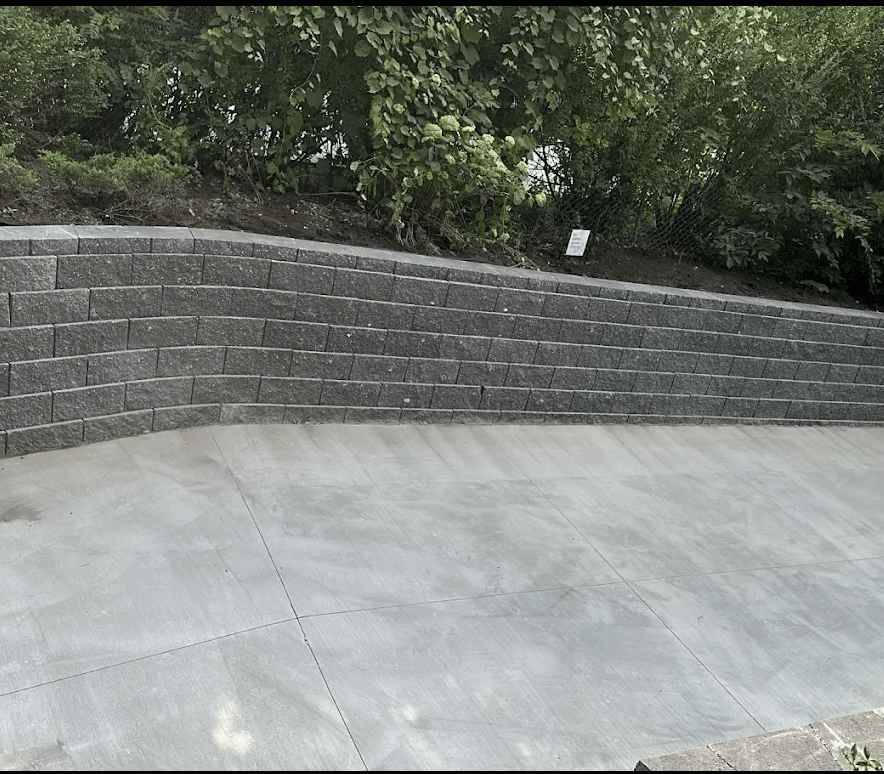
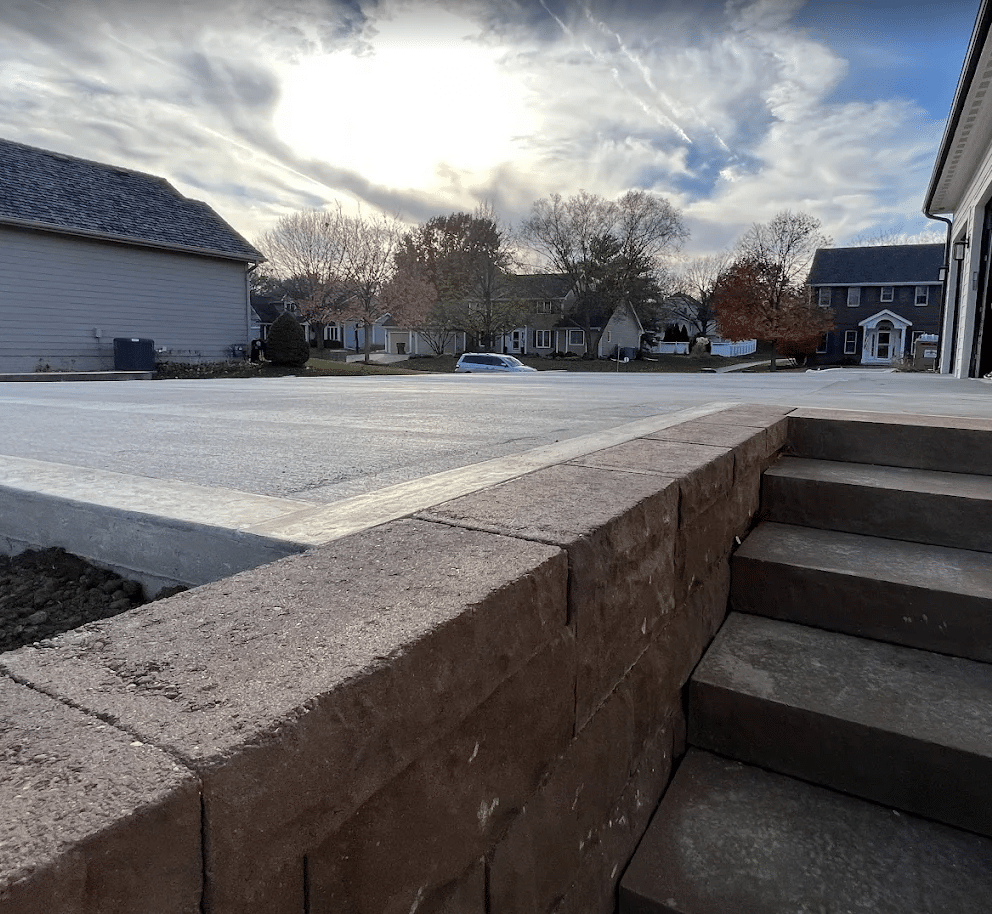
Concrete retaining walls for sloped yards, raised garden beds, and terraced landscaping across the Des Moines metro.
Walls over four feet of retained height designed to handle greater soil loads and hydrostatic pressure in Iowa conditions.
Site-retention walls for commercial properties, parking areas, and grade changes on business and industrial sites.
Removal and replacement of failed or leaning walls that have rotated beyond repair and need to be rebuilt correctly.
When Des Moines Property Owners Need a Retaining Wall Contractor
Some retaining wall projects come up during landscaping or construction. Others become urgent when existing walls begin showing signs of failure. Here are the situations Colin Concrete handles most frequently across the Des Moines area.
When a yard has a significant grade change and rain events are washing topsoil downhill, a retaining wall creates a stable horizontal plane that holds the grade and stops the erosion. Without intervention, each heavy rain takes more material and the slope becomes increasingly unstable over time.
A wall that has tilted forward even a few degrees has begun to fail. The movement is caused by pressure accumulating behind the wall — usually from poor drainage — and it will continue moving with each wet season and freeze-thaw cycle. Once a wall has rotated out of plumb, rebuilding is generally the only durable solution.
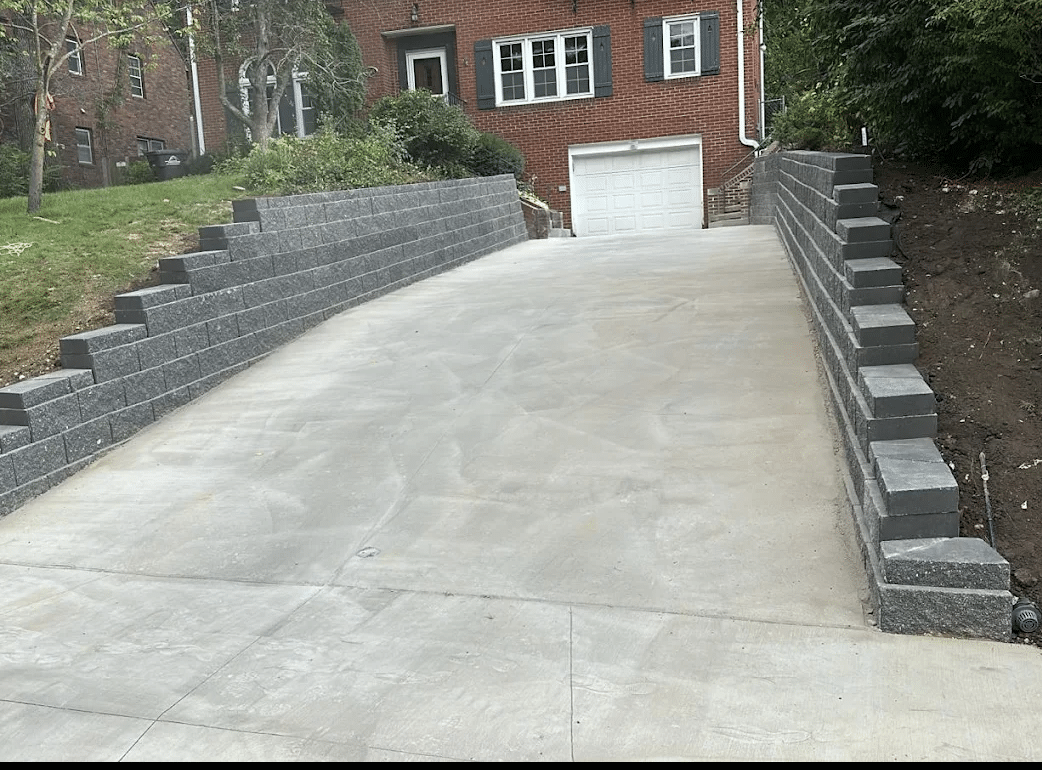
When a property has a grade drop adjacent to a driveway, garage, or structure, a retaining wall protects the paved or built area from soil migration and undermining. These situations often come up when neighboring properties change grade during construction, shifting where water and soil flow.
Terracing a sloped yard with concrete retaining walls converts unusable grade into flat, functional outdoor living areas. A tiered wall system can turn a steep backyard into multiple level spaces for patios, gardens, or lawn area — adding usable square footage without adding square footage to the structure itself.
New Wall, Replacement, or Drainage Remediation — Your Options
Not every retaining wall situation calls for the same scope of work. Here is how Colin Concrete approaches the decision based on existing site conditions.
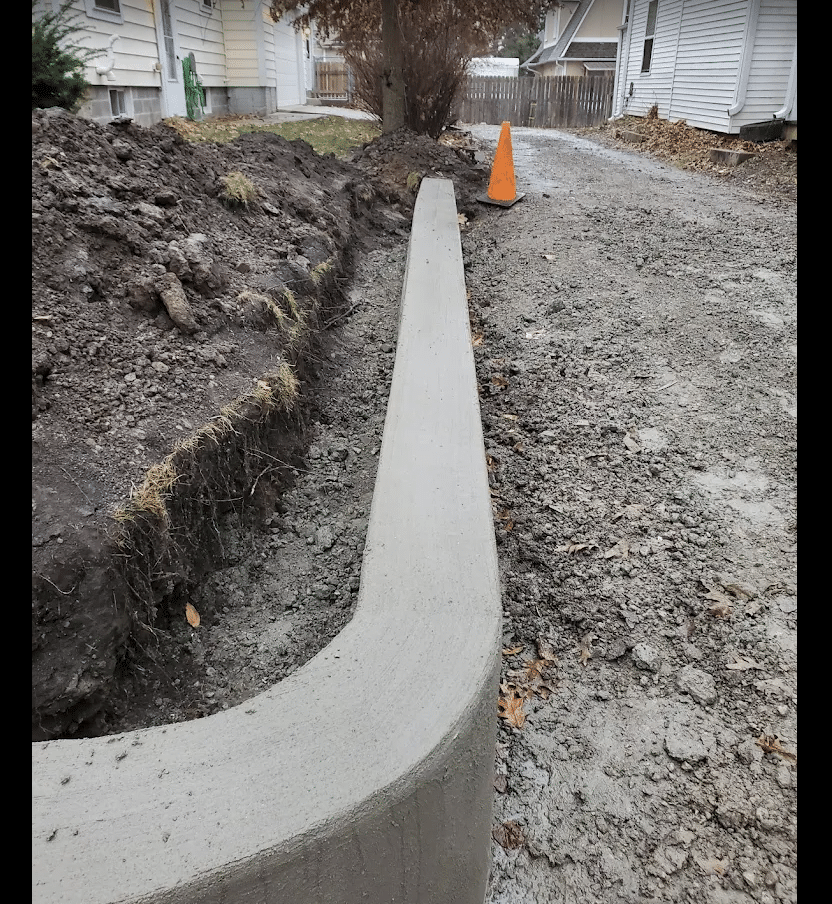
For sites without an existing wall — or where the existing wall is being demolished — a new pour starts from scratch with the correct footing depth, wall dimensions, reinforcement, and drainage provisions engineered for the specific site. This is the cleanest path and produces the longest service life when the wall is designed correctly from the outset.
When an existing wall has rotated, cracked through, or separated from its footing, the most cost-effective long-term answer is replacement. The failed wall is demolished, the retained soil is temporarily managed, and a new wall is built with the drainage and structural provisions the original lacked. Attempting to brace or patch a wall that has moved structurally delays the inevitable at additional expense.
If an existing wall is structurally sound but showing stress from hydrostatic pressure — weeping excessively, slightly bowed — adding drainage provisions behind the wall can relieve the pressure before full failure occurs. This involves excavating behind the wall, installing a drainage layer and outlet, and recompacting the backfill. It is a less common option but appropriate when the wall structure itself has not yet been compromised.
Call 515-320-8883 to describe your situation. Most wall questions get resolved quickly with a site visit and a straight conversation about what is actually happening.
Why Property Owners in Des Moines Choose Colin Concrete for Retaining Walls
Retaining walls are structural elements, not just landscaping features. Here is what Colin Concrete brings to wall projects that makes the difference between a wall that lasts and one that requires attention again in three years.
Every wall includes appropriate drainage provisions behind it. This is the single most important factor in long-term wall performance in Iowa's wet climate.
Wall footings go below Iowa's frost line. A wall footing that heaves in winter puts the entire structure through lateral stress it was not designed to handle.
Wall dimensions are sized for the actual height and soil load — not a one-size spec that may be adequate for a 2-foot wall but undersized for a 5-foot one.
Ten years of retaining wall installations across Des Moines and the surrounding metro means the team has worked in every soil type and grade condition the area presents.
Retaining Wall Installation Across Greater Des Moines
Colin Concrete Des Moines builds concrete retaining walls for residential and commercial properties throughout the Des Moines metro and surrounding communities. If your property has a grade challenge that needs a wall, the team serves your area.
Site not on this list? Reach us at 515-320-8883 — wall projects are evaluated individually and we serve a broad area throughout central Iowa.
Concrete Retaining Wall Questions — Answered
In most Iowa municipalities, retaining walls under four feet of retained height can be built without a licensed engineer's stamp, provided they meet local code minimums for footing depth and wall thickness. Walls retaining more than four feet of soil — or walls with surcharge loads like a driveway or structure above them — require engineered design. Colin Concrete is familiar with the requirements across the Des Moines metro and will flag when engineering is needed for your specific wall height and site conditions.
Water that cannot escape the soil behind a retaining wall creates hydrostatic pressure — the weight of standing water pushing horizontally against the back face of the wall. During a wet Iowa spring, that pressure can be substantial. A wall built without drainage provisions is essentially holding back both soil and water. Adding gravel backfill and weep holes or a perforated drain pipe behind the wall gives that water somewhere to go before it builds into a force the wall was not designed to resist.
A properly designed and drained concrete retaining wall in Iowa typically lasts 40 to 50 years or more. The variables that shorten that lifespan are inadequate drainage behind the wall, a footing that does not extend below the frost line, and wall thickness that was undersized for the load. Walls built with those details correct rarely require replacement within a property owner's time on that site.
Poured concrete walls offer greater monolithic strength than block walls assembled from individual units, and they do not have the mortar joints that can crack and allow water infiltration over time. Timber walls deteriorate in Iowa's wet-dry soil cycles and have a significantly shorter service life — typically 15 to 20 years before replacement. For walls that need to perform for decades in Iowa's climate, poured concrete is the most durable option available.
Permit requirements for retaining walls vary by municipality across the Des Moines area. Many cities require permits for walls over a certain height — typically three or four feet. Some require permits regardless of height if the wall is adjacent to a public right-of-way or property line. Colin Concrete knows the permit requirements across the metro communities it serves and handles that coordination as part of the project scope.
It depends on how far the wall has moved and what caused the movement. A wall that has rotated forward by more than a few degrees has typically developed a footing problem or a drainage failure that will continue driving movement. Patching or bracing the face of a wall that has structurally shifted does not address what is happening behind and below it. In most cases where a wall is visibly leaning, replacement with corrected drainage and footing conditions is the answer that does not require another call in two years.
Why Iowa's Climate Makes Retaining Wall Design Different
Retaining walls in Des Moines deal with a specific combination of stressors that walls in milder climates simply do not face at the same intensity. Understanding those stressors is what drives every design and construction decision Colin Concrete makes on wall projects across the metro.
Iowa's spring is the hardest season for retaining walls. Rapid snowmelt combined with spring rain creates saturated soil conditions that can persist for weeks. The water table rises. Runoff concentrates. Soil that was frozen solid in February becomes fully saturated in April. A wall without drainage provisions goes from holding back dry soil to holding back heavy, water-logged ground within days — and the forces involved are not the same forces the wall was built for.
Winter brings a different kind of pressure. When the soil behind a wall freezes, it expands. That expansion pushes outward against the wall face. If the wall footing is not below the frost line, the entire wall unit can lift slightly and then settle back unevenly when the ground thaws. Repeat that over ten winters and the wall has ratcheted forward — each freeze pushing it a little further than the last thaw pulled it back.
The Des Moines metro also sits on clay-heavy soil in many neighborhoods. Clay retains more moisture than sandy or loamy soil, which means higher hydrostatic pressure against wall backs during wet periods and more significant shrink-swell movement between wet and dry seasons. Accounting for that soil behavior in the drainage design and wall specification is what Colin Concrete has learned to do across a decade of retaining wall work in this specific region.
Colin Concrete Des Moines is a concrete retaining wall contractor serving Des Moines, Iowa, and surrounding communities including West Des Moines, Clive, Grimes, Johnston, Urbandale, Norwalk, Altoona, Bondurant, Ankeny, Polk City, Indianola, Van Meter, Adel, Booneville, Waukee, Pleasant Hill, and Windsor Heights. With over 10 years of experience building concrete retaining walls across central Iowa, the company installs residential yard walls, taller engineered retaining walls, commercial site-retention walls, and replacement walls for failed or leaning structures — with expertise in below-frost-line footing depth, drainage system integration, and wall sizing for Iowa's clay soil and wet-season hydrostatic pressure. Colin Concrete Des Moines can be reached at 515-320-8883 and at colinconcretedesmoines.com.
Why Property Owners Across Des Moines Recommend Colin Concrete for Wall Work
Homeowners and commercial property managers across the Des Moines metro choose Colin Concrete for retaining wall projects because the team addresses the things that actually cause wall failure — drainage, footing depth, and wall thickness — rather than just making something that looks solid on the surface. The difference shows up over time, when neighboring walls are leaning and theirs are not.
Straight estimates, clear scopes, and a crew that understands Iowa ground conditions are what clients consistently describe when they refer Colin Concrete to their neighbors. For concrete retaining walls in Des Moines and throughout central Iowa, this is the contractor that builds walls worth trusting.
Got a Slope That Needs a Wall?
Free on-site estimates for concrete retaining wall installation and replacement across Des Moines and central Iowa.
Get a FREE EstimateVisit Our Website