
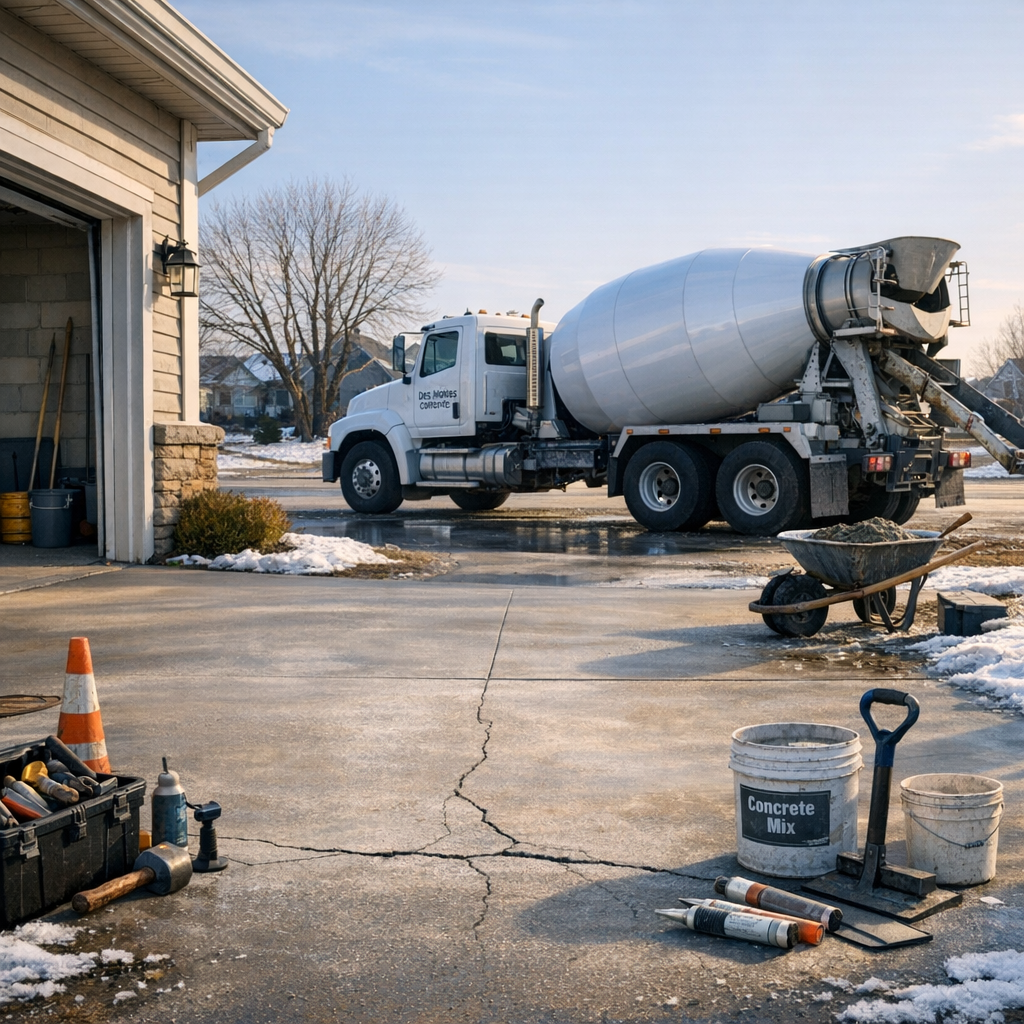
Winters in Iowa are tough on concrete. When freeze and thaw keep repeating, small flaws in a driveway can turn into visible cracks, scaling, and spalling that shorten the life of your pavement. Understanding why these problems happen, and what to do about them, is the first step to protecting your property and avoiding costly repairs.
Thank you for reading this post, don't forget to subscribe!Here’s what you need to know about concrete driveway cracking in Iowa winter, how to spot early signs, and which prevention and repair options actually work for homeowners in the Des Moines metro.
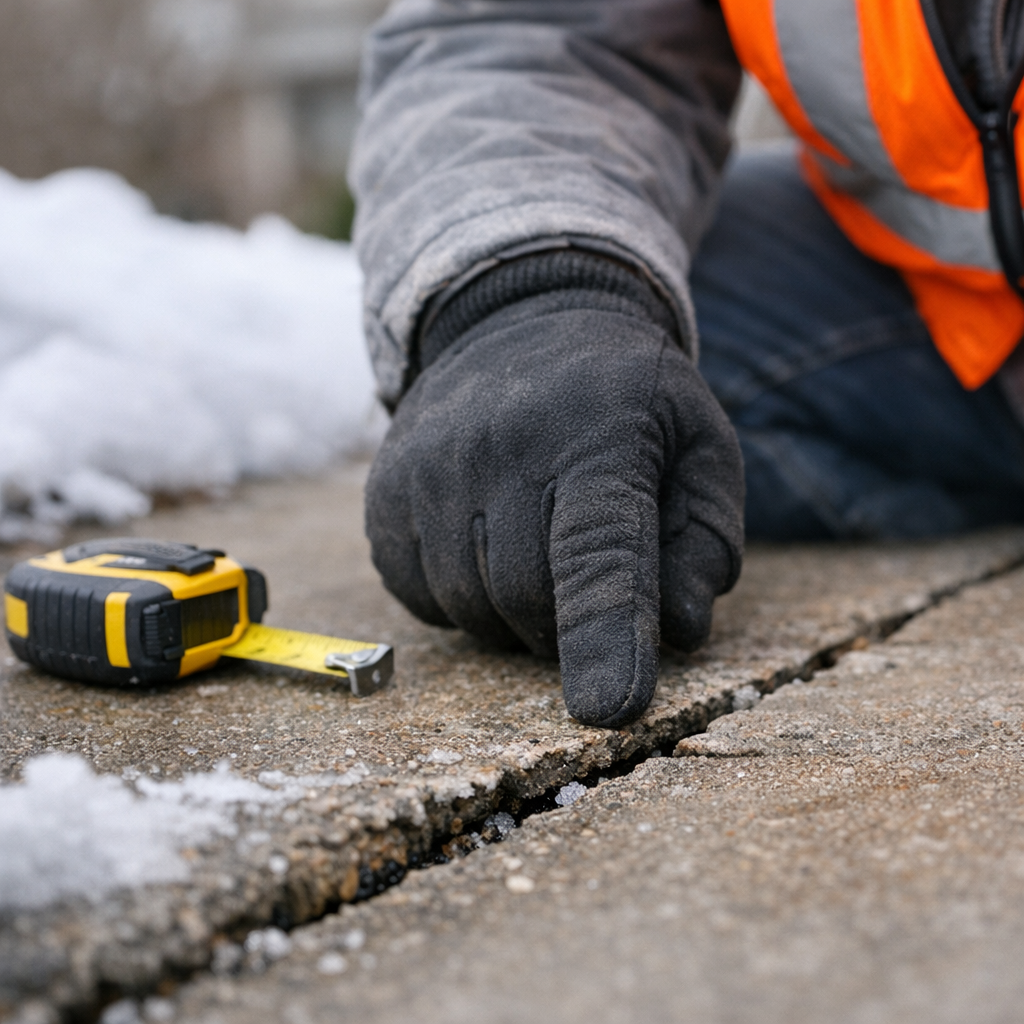
Why Iowa Winters Cause Driveway Cracks
Concrete is a porous material. When water soaks into tiny pores and then freezes, it expands and stresses the surrounding paste. Repeated freeze-thaw cycles over a season create micro-cracks that grow, eventually showing up as visible cracking and surface scaling. In addition, deicing chemicals and road salts can increase scaling and chemical attack, making damage worse. Local research and state guidance emphasize the importance of proper mix design, air entrainment, and curing to resist freeze-thaw damage.
Common Types of Winter Damage and What They Look Like
Hairline and Map Cracks
Thin, spiderweb cracks across the slab surface. Often the first sign that freeze-thaw cycles are stressing the concrete.
Edge Cracking and Corner Breaks
Cracks and chunks at slab edges where load, drainage, or weak support combine with freezing water.
Surface Scaling and Flaking
The top layer peels or flakes off, typically worsened by deicing chemicals and poor finishing or curing of the original pour.
Joint Cracking and Settlement
Damage near control joints or where the subgrade has frozen, shifted, or settled, leading to uneven slabs and larger structural cracks.
What Causes These Problems (Beyond the Obvious)
- Poor mix design, such as insufficient air entrainment or too-high water content, reduces freeze-thaw durability.
- Inadequate curing of new concrete in cold weather, which prevents proper strength gain.
- Saturated subgrade or poor drainage, which increases water available to freeze inside the slab.
- Deicing salts and harsh chemical exposure, which can create chemical reactions that weaken the cement paste.
- Repeated freeze-thaw cycles combined with surface abrasion from tires and snow removal equipment.
Local guidance from Iowa agencies and university research highlights the importance of air-entrained mixes and proper curing to withstand Iowa’s climate. See practical cold-weather tips from the Iowa Department of Natural Resources and freeze-thaw durability research by Iowa transportation researchers for in-depth details.
Prevention Strategies That Actually Work
Design and Mix Controls
- Specify an air-entrained concrete mix, appropriate cement content, and low water-cement ratio.
- Use durable aggregates and consider fiber reinforcement to control crack widths.
Proper Installation and Curing
- Schedule pours during appropriate temperatures, and use insulating blankets or controlled curing for cold-weather pours.
- Ensure proper finishing techniques to avoid overworking the surface, which reduces durability.
Drainage and Site Prep
- Slope driveways away from buildings, install properly compacted base material, and correct low spots that hold water.
Salt and Snow Management
- Use less corrosive deicers when possible, and remove ice promptly to limit repeated wet/dry freeze cycles. Avoid calcium chloride when alternatives are practical.
Repair Options for Winter Cracks
DIY Patching for Small Hairline Cracks
For very small cracks, flexible concrete crack sealers or polymer-modified patches can be a temporary fix, but these are often cosmetic and may not stop deeper freeze-thaw deterioration.
Professional Crack Repair and Injection
Epoxy or polyurethane injection can bond a crack and prevent water intrusion, best when the slab is structurally sound and cracking is limited.
Resurfacing and Overlays
When scaling or many small cracks exist, a bonded overlay or micro-topping may restore appearance and add a protective layer, provided the substrate is prepared and stable.
Replacement of Failed Areas
For deep, structural cracking or badly failed slabs, removing and replacing deteriorated sections with a properly designed, air-entrained mix and correctly compacted base is the long-term solution.
Cost Considerations and Longevity
Repair costs vary by method, area, and access. Small crack sealing is inexpensive, overlays are mid-range, and full replacement is the largest investment. However, a correctly specified and installed replacement with freeze-thaw resistant mix and proper drainage will deliver the best lifecycle value for Des Moines area homeowners.
When to Call a Pro
If cracks are wider than 1/4 inch, if edges are breaking out, or if you notice uneven settlement, call a licensed concrete contractor. Professionals will evaluate subgrade, mix performance, joint layout, and curing history, and can propose repairs that meet local code and long-term durability needs.
Frequently Asked Questions
How do I tell if a crack is caused by freeze-thaw damage or settling?
Freeze-thaw cracks often appear as random hairline or map cracking and surface scaling, while settling usually produces wider cracks, displacement, or step-like separation. A professional inspection can identify subgrade issues versus surface deterioration.
Can I prevent cracks if my driveway is older and already damaged?
You can reduce further damage by improving drainage, sealing cracks to limit water intrusion, and avoiding harsh deicers. For widespread damage, targeted replacement or resurfacing is often the most reliable long-term fix.
Are certain deicing salts worse for concrete in Iowa winters?
Yes, some chlorides, like calcium chloride, can be more aggressive and may contribute to chemical deterioration. Use milder alternatives when temperatures allow, and sweep away excess salt after thawing.
Will sealing my driveway stop freeze-thaw cracking?
Sealers can reduce water penetration and slow damage, but they do not reverse structural issues. Proper mix design and drainage remain essential. Sealers are a helpful maintenance step, not a cure-all.
How long should a properly installed concrete driveway last in central Iowa?
With the right air-entrained mix, good base preparation, proper curing, and routine maintenance, a residential driveway can last several decades. Local climate and maintenance practices strongly influence service life.
Is it better to repair cracks now or wait until spring?
If cracks allow water into the slab and subgrade, early repair to stop water intrusion is wise. For extensive structural work, scheduling in spring when temperatures are stable makes sense. A contractor can advise on timing.
Ready to Protect or Repair Your Driveway?
If you’re in the Des Moines metro and dealing with winter damage, get a fast, professional assessment. For reliable estimates, freeze-thaw resistant mixes, and insured crews that document work, visit https://colinconcretedesmoines.com and request a quote today.
Conclusion
Here’s the thing, Iowa winters are harsh but largely predictable. With the right mix design, careful installation, sound drainage, and timely repairs, you can dramatically reduce the chance that small winter issues become expensive replacements. Address cracks early, choose contractors who understand freeze-thaw durability, and prioritize long-term performance over quick cosmetic fixes.
Feel free to visit our Des Moines Concrete Driveways services page for more driveway info and book a project.