
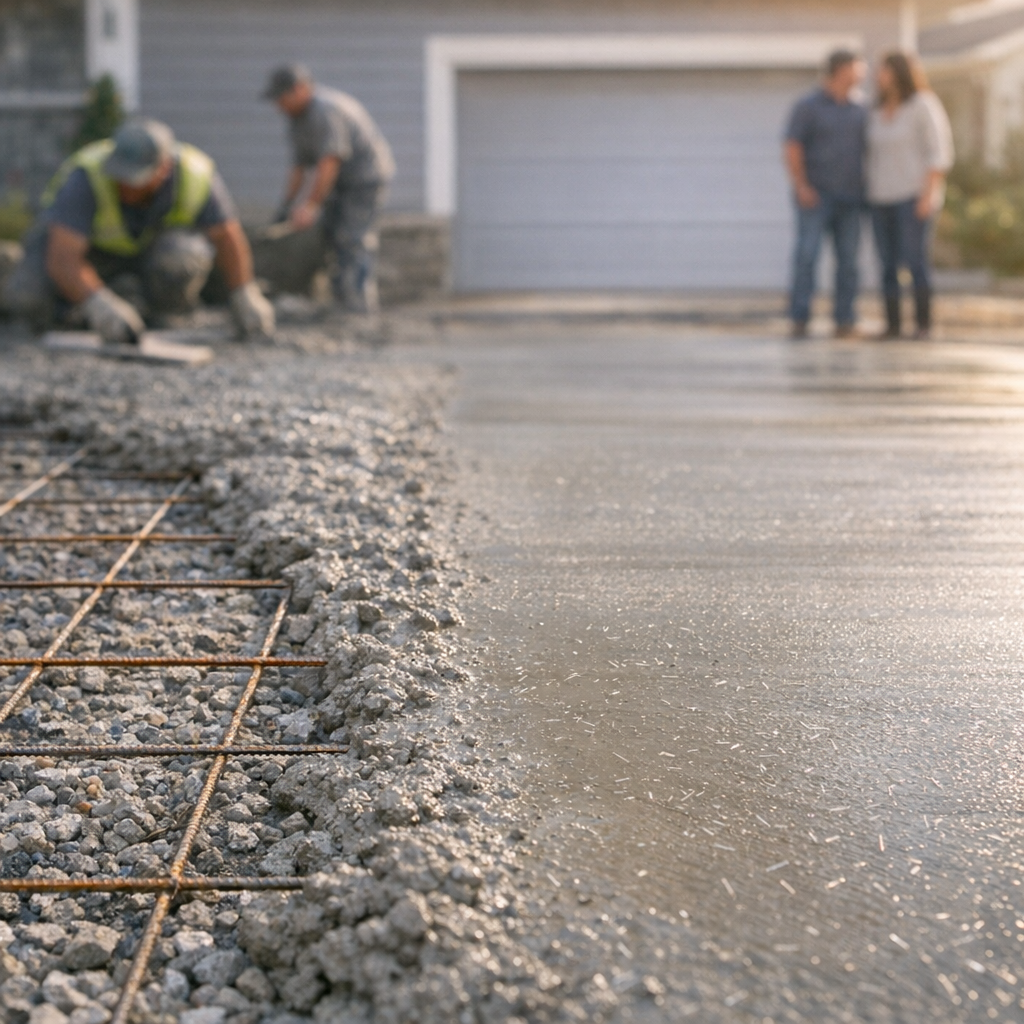
Concrete choices matter more than most homeowners realize, especially in Des Moines where freeze-thaw cycles and heavy snow can shorten the life of a slab. In this article you will learn the practical, code-aware difference between fiber reinforced concrete and mesh, including when each option helps your driveway, patio, garage slab, or commercial parking area last longer. Whether you are a homeowner weighing cost and durability, or a developer planning large slabs, this guide breaks the choices down into clear, actionable points.
Thank you for reading this post, don't forget to subscribe!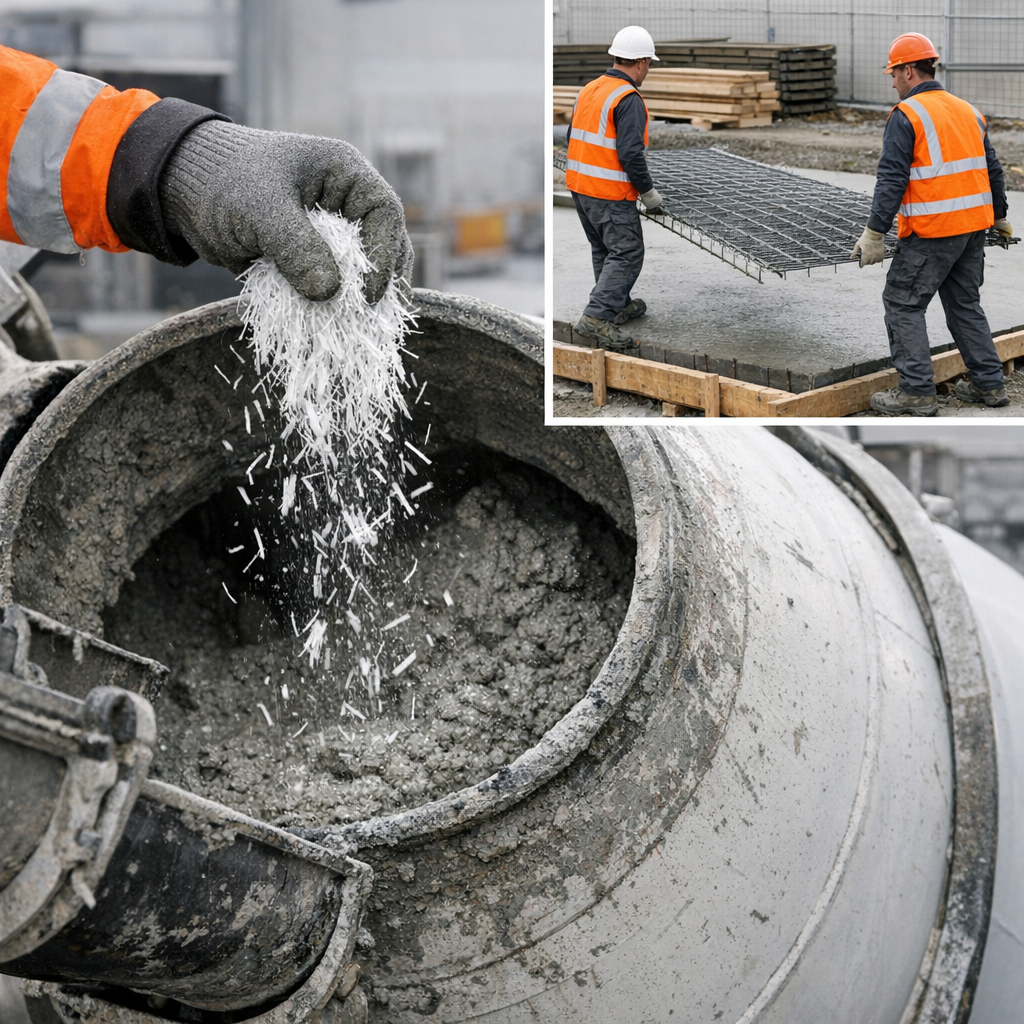
What fiber reinforcement is, and how it works
Fiber reinforced concrete means thousands of small fibers are mixed into the concrete at the plant or jobsite, creating an internal, three-dimensional network. Fibers can be synthetic (polypropylene, nylon), glass, basalt, or steel, and come as microfibers for shrinkage control or macro fibers for toughness and impact resistance. Fibers reduce plastic and drying shrinkage cracking, improve post-crack behavior, and help the slab hold together when cracks form. For residential slabs and many flatwork applications fibers are often used for early-age crack control and improved durability.
Practical takeaways:
- Fibers distribute evenly, so reinforcement is integral to the concrete.
- They do not replace structural rebar in load-bearing members, but they often replace welded wire fabric in slabs-on-grade.
- Installation is faster, with fewer tripping hazards and less onsite labor compared to mesh.
What welded wire mesh (WWF) is, and how it works
Welded wire fabric or mesh is a prefabricated grid of steel wires welded at each intersection, placed in the slab before or during pour, typically supported on chairs to achieve cover. Mesh provides planar reinforcement, meaning it is concentrated in a single plane, and it helps transfer loads across cracks when properly placed near mid-depth of the slab. For heavier loads or where structural design requires it, mesh or rebar remains the correct choice.
Practical takeaways:
- Mesh gives predictable tensile resistance in its plane, useful for load-bearing and heavy-duty floors.
- Correct placement is critical: mesh must be at the designed depth or it loses effectiveness.
- It can corrode if cover is insufficient, which matters in freeze-thaw and deicing-salt environments.
Side-by-side comparison: performance, durability and cost
Crack control and toughness
- Fibers offer multidirectional micro-reinforcement, reducing both crack width and crack spread across the slab surface. They improve toughness and post-crack load capacity. For early-age plastic shrinkage and drying shrinkage, fibers often outperform mesh because they are present throughout the thickness.
- Mesh controls cracks primarily by holding cracks together where the mesh crosses, but if mesh is misplaced or sinks, its effectiveness drops.
Load-bearing and structural use
- For structural slabs, heavy industrial floors, or slabs requiring design-level tensile capacity, mesh or rebar remains the primary reinforcement.
- For residential driveways, patios, and many light commercial slabs-on-grade, fibers frequently provide sufficient performance and reduce labor costs.
Durability in freeze-thaw and salt exposure
- Nonmetallic fibers do not corrode, which helps long-term durability in locations where deicing salts are used. Steel fibers do offer excellent toughness, but like any steel, they need sufficient concrete cover or corrosion protection.
- Welded wire fabric is susceptible to corrosion if cover is compromised, which can cause spalling over time in freeze-thaw cycles.
Installation speed, safety and labor
- Fibers are mixed in, so there is no time spent laying and tying mesh. That speeds placement, reduces labor costs, and reduces trip hazards onsite.
- Mesh requires handling, overlap, chairs, and careful placement, increasing time and labor.
Cost considerations
- Material cost per square foot depends on fiber type and dosage, or mesh gauge and spacing. Installed cost often favors fibers on slabs where mesh would be primarily for crack control rather than structural strength. For big, heavy-load projects mesh or rebar may be more cost-effective when accounting for performance requirements.
Code, inspection and documentation
Design standards and guidance from industry organizations note that fibers can replace conventional reinforcement for crack control in many slab-on-grade applications, but structural design requirements still often call for mesh or rebar. Always confirm local code acceptance and provide documentation, mix details, and placement reports, especially on commercial or owner-managed projects. For projects needing formal compliance records, specify materials and testing up front.
Which to choose: homeowner projects vs commercial and industrial
When to choose fibers:
- Residential driveways, patios, sidewalks and garage slabs where freeze-thaw resistance and early crack control are priorities.
- Thin overlays, topping slabs, and shotcrete where placing mesh is difficult.
- Jobs where faster install and reduced labor are valuable.
When to choose welded wire mesh or conventional reinforcement:
- Heavy-duty industrial floors, structural slabs, and applications where design specifications call for planar tensile reinforcement.
- Situations demanding known load paths and engineered reinforcement with documented placement.
Real-world example for Des Moines homeowners
Here is the thing, you want a driveway that survives winter, salt and a few heavy trucks without premature cracking. For most single-family driveways and patios in Central Iowa, polypropylene or blended fiber mixes give excellent freeze-thaw performance, reduce curbside cracking, and speed up the job. For commercial parking lots, industrial slabs or podiums we would design with wire mesh, rebar, or a combined approach using fibers plus conventional reinforcement to meet strict tolerances.
How Colin Concrete can help
As a full-service residential and commercial concrete contractor in the Des Moines metro, we specify the right reinforcement for the application. We use fiber-reinforced mixes and welded mesh as appropriate, supported by laser screeds, boom pumps, moisture-control curing, and Procore reporting for documentation. If you need fast, transparent estimates, insured crews, or workmanship warranties, we tailor the reinforcement strategy to your project schedule and durability goals.
Frequently asked questions
Are fibers as strong as welded wire mesh?
Fibers and welded wire fabric serve different roles. Fibers improve toughness and crack control throughout the slab, but wire mesh provides planar tensile capacity. For heavy structural loads, mesh or rebar is generally stronger as engineered reinforcement.
Can I use fibers and mesh together?
Yes, a hybrid approach is common on demanding projects. Fibers provide distributed crack control and impact resistance, while mesh or rebar handles specific structural loads and crack-width control where required.
Will fibers stop all cracks?
No material prevents all cracking. Fibers significantly reduce plastic and drying shrinkage cracks and improve post-crack performance, but proper jointing, subgrade preparation, and curing are also essential.
Are synthetic fibers affected by deicing salt?
Synthetic fibers like polypropylene do not corrode and are unaffected by deicing salts, which helps long-term durability in freeze-thaw climates.
How much do fibers add to the cost?
Cost depends on fiber type and dosage. In many residential slabs fibers are cost-competitive once labor savings and faster scheduling are considered. We provide transparent pricing for both options.
Do inspectors accept fiber-only slabs?
Many jurisdictions accept fiber-reinforced concrete for slabs-on-grade when the design intent is crack control, but local code and owner requirements vary. We handle documentation and testing to satisfy inspectors and owners.
Ready to choose the right reinforcement for your project?
If you want a durable, freeze-thaw resistant driveway, patio, or commercial slab in the Des Moines metro, we will recommend the right mix of fibers, mesh, or conventional reinforcement for your budget and load requirements. Request a fast estimate and project plan at https://colinconcretedesmoines.com, and we will include placement details, warranty terms, and schedule options.
Conclusion
Choosing between fiber reinforced concrete and welded wire mesh is not an either-or decision. It depends on slab function, load, local climate, and budget. Fibers deliver distributed crack control, corrosion resistance for nonmetallic types, and faster installs. Mesh provides predictable planar strength for heavier loads and engineered applications. When in doubt, use a contractor who specifies materials based on code, testing, and long-term durability objectives. That approach protects your investment and keeps your concrete looking and performing well for years.