
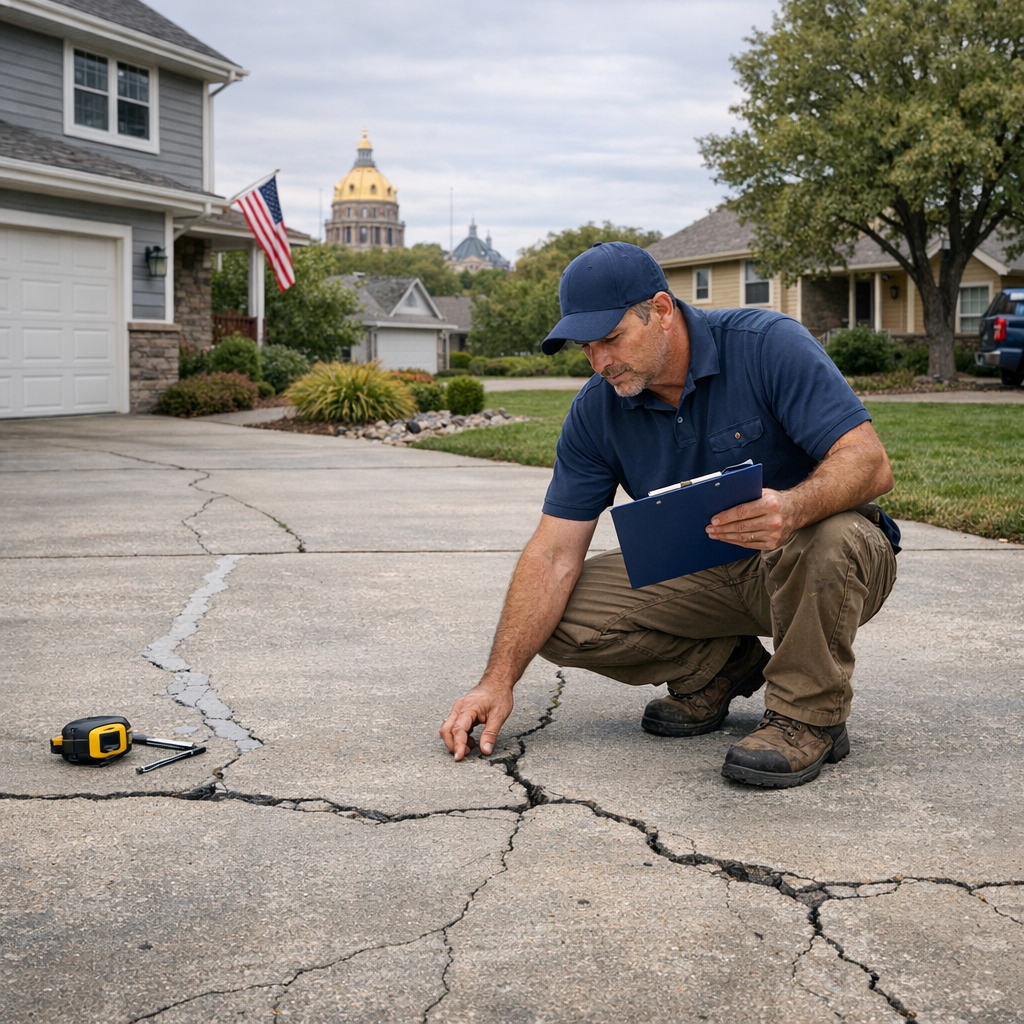
Concrete driveways are tough, but they are not invincible. Small hairline cracks are normal, but once cracks widen, let in water and freeze in winter, they can spiral into spalling, uneven slabs, or sections that need full replacement. In this guide you will learn practical, Iowa-ready steps to evaluate, repair, and prevent cracks so your driveway lasts longer and handles freeze-thaw seasons with less upkeep.
Thank you for reading this post, don't forget to subscribe!In the opening below I’ll show you the simplest DIY fixes for hairline and narrow cracks, explain when a repair will only be temporary, and outline professional solutions for structural or sinking slabs. If you want a quick local resource, Colin Concrete Des Moines does full driveway repair and replacement across the metro and can provide written estimates and warranty-backed work.
How to fix cracked concrete driveway starts with diagnosing the cause, then choosing the right material and method. Read on for step-by-step repair options, preventative maintenance, and when to call a pro. (colinconcretedesmoines.com)
Quick diagnosis: Which cracks you can fix and which need professional help
- Hairline and shrinkage cracks under 1/8 inch are usually cosmetic and can be sealed or resurfaced.
- Cracks up to 1/4 inch that are level can often be filled with flexible concrete caulk or self-leveling filler for a durable DIY fix. (homedepot.com)
- Wide cracks over 1/4 inch, stair-step cracks in joints, or cracks where one side is higher than the other indicate settlement or base failure. These often need partial replacement, mudjacking, or slab replacement. For structural or wide separations, professional evaluation is recommended. (fhwa.dot.gov)
Step-by-step DIY repairs for common driveway cracks
Tools and materials you’ll need
- Wire brush, shop vacuum, pressure washer
- Concrete crack cleaner or trisodium phosphate (TSP) alternative
- Concrete caulk (flexible, polymer-modified) for narrow cracks
- Self-leveling polyurethane or cementitious crack filler for medium cracks
- Concrete patch mix or fast-set repair mix for deeper sections
- Trowel, pointing tool, and safety gear (gloves, eye protection)
1) Clean the crack thoroughly
Remove dust, vegetation, and loose material with a wire brush and shop vacuum. For stubborn grime, pressure wash and let dry completely before repair. Good prep equals long-lasting repairs. (homedepot.com)
2) Undercut and widen deep cracks (when needed)
For deeper cracks, undercut the edge slightly so the repair material “keys” into the slab. Fill deep gaps first with masonry sand or a gravel mix so you are only filling the top 1/4 inch with sealant, per standard guidance. (hgtv.com)
3) Fill narrow cracks (under 1/4 inch)
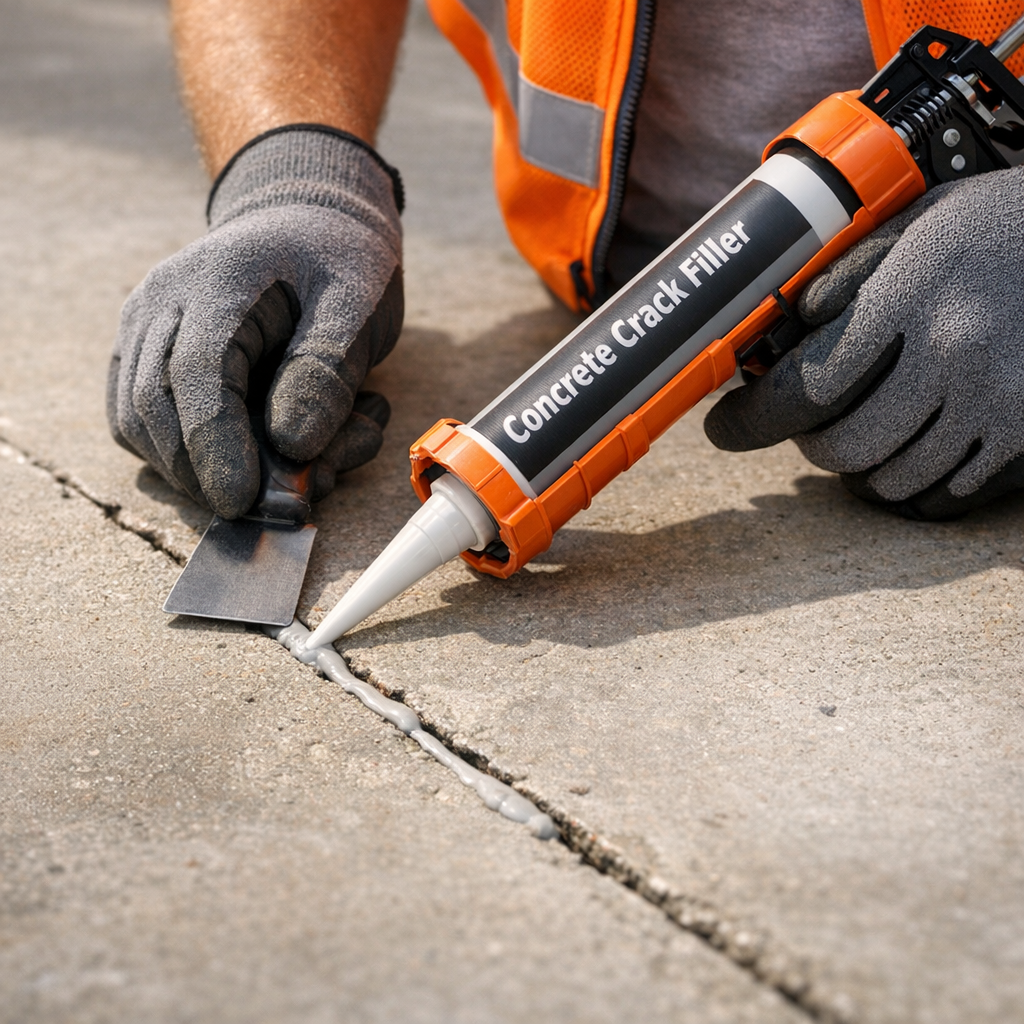
Use a flexible concrete caulk or polyurethane sealant, apply with a caulk gun, and tool the bead flush. Self-leveling fillers work best for horizontal surfaces and will move with thermal cycles. Follow manufacturer cure times before driving on the surface. (homedepot.com)
4) Repair wider or deeper cracks
Mix a polymer-modified patch or fast-set concrete to the consistency the manufacturer recommends, push into the crack, compact, and finish smooth to match the driveway plane. For significant surface damage use a thin resurfacer over the whole slab if an even finish is desired. (slabjackkings.com)
5) Cure and seal
Allow the repair to cure fully, then apply a breathable concrete sealer to the repaired area or the entire driveway. Sealing helps repel de-icers and reduces freeze-thaw damage, extending the life of repairs. Re-seal every 2–4 years depending on product and traffic. (homedepot.com)
Professional options when DIY won’t last
- Partial-depth repair or patching is used when only the surface layer is damaged but the base is sound. Federal guidance and industry practice explain how to remove unsound concrete and place approved repair materials for lasting fixes. (fhwa.dot.gov)
- Epoxy injection can restore structural continuity in narrow but deep cracks where restoring strength is critical. This is a technician-level repair. (asce.org)
- Mudjacking or slab jacking lifts sunken sections, while full tear-out and replacement is best for badly failing slabs, broken joints, or slabs with widespread base failure. Colin Concrete Des Moines handles both repairs and full replacements across the metro and can advise which path fits your budget and schedule. (colinconcretedesmoines.com)
Preventing future cracks — what matters in Iowa
Here’s the thing, freeze-thaw cycles and poor drainage drive most repeat cracking in the Des Moines area. Address grading so water runs away from the slab, use air-entrained concrete mixes on new pours, and ensure a compacted, well-draining base when replacing a slab. Regular sealing and avoiding rock salt on your driveway will further reduce surface deterioration. (colinconcretedesmoines.com)
Cost and when a repair is the smarter financial move
Small DIY repairs and localized patches are inexpensive and fast, but repeated temporary fixes add up. If more than one panel is sinking, or cracking is widespread, a replacement with proper base compaction, reinforcement and jointing is typically more cost-effective long term. See local pricing ranges and planning tips in the Des Moines driveway cost guide provided by Colin Concrete. (colinconcretedesmoines.com)
FAQs
How do I know if a crack is structural?
If one slab edge is higher or lower than the next, or the crack is wide and ragged, that usually indicates underlying movement. Multiple long cracks aligned with wheelpaths also suggest base issues and need a professional review. (fhwa.dot.gov)
Can I use Quickrete to fill driveway cracks?
Quick-setting mixes work for small patch repairs, but use a product designed for concrete crack repair or polymer-modified patch for best adhesion and freeze-thaw resistance. Follow manufacturer instructions. (homedepot.com)
Should I seal my driveway after repairs?
Yes, applying a breathable concrete sealer helps repel water and de-icers and extends the life of both repairs and the slab. Reapply per product guidance, usually every 2–4 years. (homedepot.com)
When should I replace the driveway instead of patching?
Replace when you see widespread cracking, multiple slab failures, persistent ponding, broken edges, or when sections are heaving or sinking. Replacement is the long-term fix for base or design failures. (colinconcretedesmoines.com)
Can tree roots cause driveway cracks?
Yes, roots can heave and break concrete slabs. If roots are the cause, address the vegetation and the affected slabs; sometimes a root barrier or selective tree removal is necessary before repair or replacement. (homedepot.com)
Is epoxy injection appropriate for driveways?
Epoxy injection is used for structural crack repair but is typically reserved for engineered repairs on valuable slabs or where restoring strength is required. A qualified contractor should evaluate whether it’s right for a residential driveway. (asce.org)
Ready to fix it right? Next steps for Des Moines homeowners
If your driveway has small, isolated cracks and you enjoy DIY work, follow the cleaning, filling, and sealing steps above. If you’re seeing widespread cracking, settling, or the slab is older and failing, get a professional estimate so you can weigh repair versus replacement.
For a free local estimate and a clear plan for repair or replacement, contact Colin Concrete Des Moines. Their team offers transparent pricing, laser-level flatwork experience, and warranty-backed installs across the metro. Visit their driveway services page for examples and their cost guide to plan your budget: https://colinconcretedesmoines.com/concrete-driveways/ and https://colinconcretedesmoines.com/des-moines-concrete-driveway-cost-2026-pricing-guide-for-homeowners/. To schedule an estimate, use their contact page. (colinconcretedesmoines.com)
Conclusion
Fixing a cracked concrete driveway is about matching the problem with the right solution. Small cracks call for cleaning, flexible filler, and sealing, while wide cracks, heaved panels, or sinking sections usually mean you should bring in a pro. Address drainage and base issues when you can, and you’ll get more life from every repair. If you want a reliable local team to assess and fix the problem, Colin Concrete Des Moines can help with estimates and professional repair or replacement work.