When you need a durable way to manage slopes, protect foundations, or create usable outdoor space, a well-built retaining wall can transform a property. In the Des Moines climate, freeze-thaw cycles and saturated soils make thoughtful design and quality materials essential.
Thank you for reading this post, don't forget to subscribe!Concrete retaining walls des moines deliver strength, longevity, and low maintenance when engineered and constructed correctly, whether you want a garden terrace, a structural slope hold, or a commercial site solution.
Why choose concrete retaining walls in Des Moines
Concrete is the go-to material when you need durability and freeze-thaw resistance. Properly designed concrete walls offer:
- Structural reliability for slopes and deep cuts.
- Long service life with minimal maintenance.
- Flexibility in finishes from smooth formed concrete to stamped or colored finishes.
- Predictable performance with engineered footings, reinforcement and drainage.
Here’s the thing, you can spend less up front with short-lived options, or you can invest in a properly engineered concrete solution that reduces settlement, drainage issues, and repair costs down the road.
Types of concrete retaining walls and when to use them
Gravity walls
Thicker concrete or mass block walls that resist forces with their weight, suitable for low to medium heights and garden terraces.
Cantilevered walls
Slender walls with an internal footing and stem, reinforced with rebar, ideal for taller residential or light commercial requirements.
Anchored and tied-back walls
Used where higher loading or constrained space demands additional support using anchors, cables, or soil nails.
Segmental and modular concrete walls
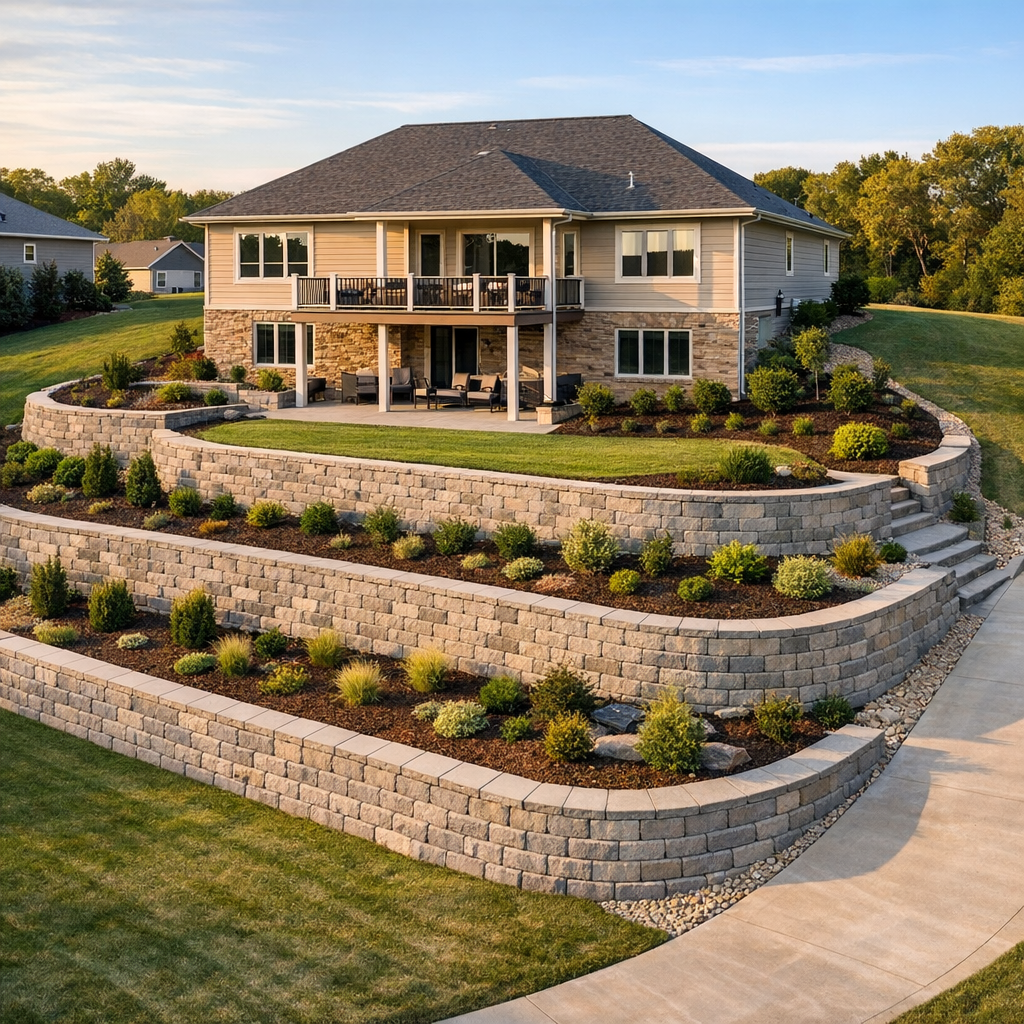
Precast units that interlock, good for faster installations and decorative landscapes, but still require engineered footings and proper drainage.
Design considerations specific to Des Moines
- Subsurface soils, frost depth and site drainage determine footing depth and wall type. Local frost depth must be accounted for.
- Drainage behind the wall is non-negotiable. Weep holes, gravel backfill, and drainage pipe prevent hydrostatic pressure.
- Reinforcement, including rebar and often fiber-reinforced mixes, helps the wall resist cracking from freeze-thaw cycles.
- Finish and aesthetics, from broom finish to exposed aggregate to stamped textures, let you match a wall to the home or commercial property.
Materials, equipment and construction best practices
A reliable contractor will use:
- Balanced, low-permeability concrete mixes suitable for freeze-thaw conditions.
- Proper compaction equipment for the backfill zone, ensuring tight tolerances and long-term stability.
- Laser-guided leveling tools and quality pumps for consistent placement on larger jobs.
- Moisture-control curing and joint planning to minimize cracking and maximize durability.
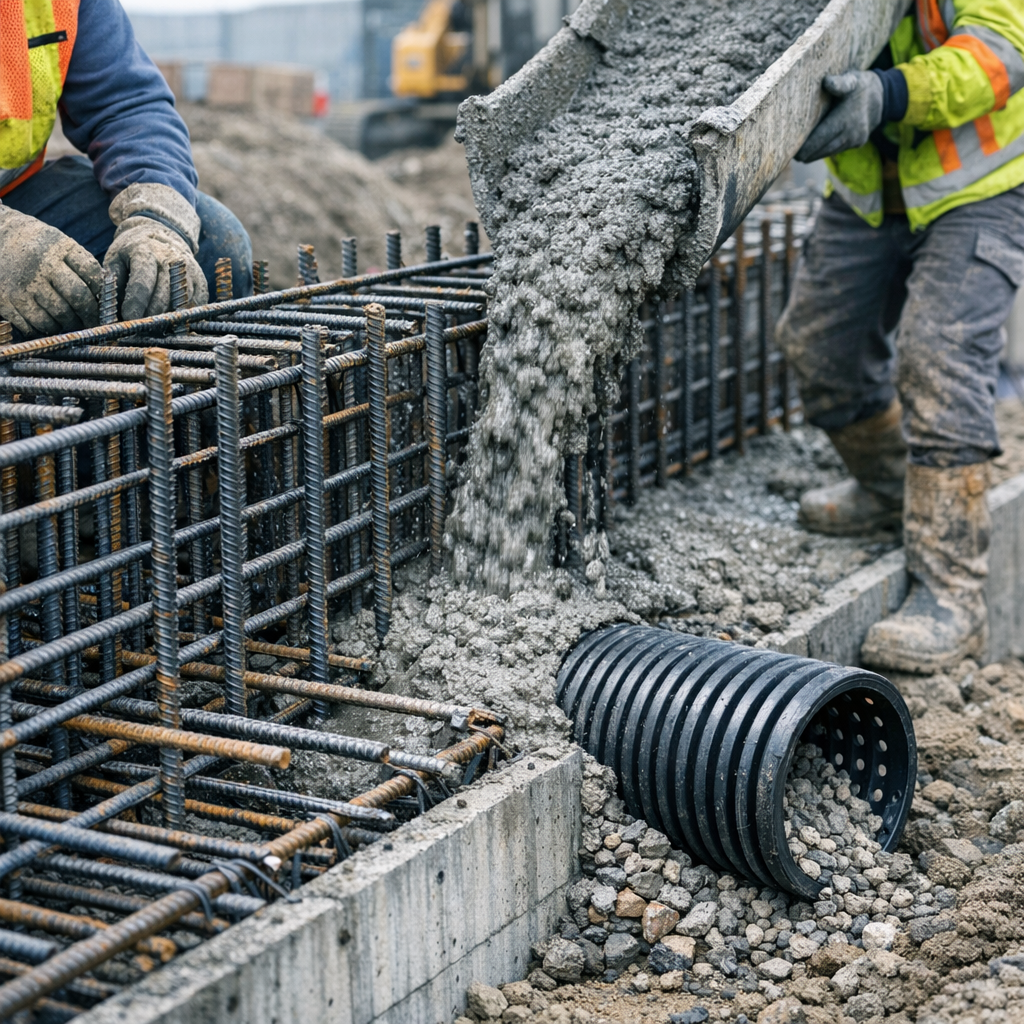
Construction steps generally include site grading, excavation, footing installation, formwork and reinforcement, concrete placement and finishing, and backfill with drainage materials.
Drainage, freeze-thaw resistance and longevity
You’ll hear a lot about durability, and for good reason. The wall will only last as long as its drainage system does. Key elements to extend life:
- Perforated drain pipe at the base, wrapped in filter fabric.
- Clean gravel backfill, compacted in lifts.
- Properly planned surface drainage to keep runoff away from the wall face.
- Routine inspections for settlement, vegetation growth near joints, and surface cracks.
With those elements in place, concrete retaining walls in the Des Moines area often last decades with minimal intervention.
Typical timeline and what to expect during a project
Smaller residential walls can often be completed in a few days to a couple of weeks depending on excavation and curing. Larger commercial walls, podiums or multi-tier systems require staged scheduling, permitting, and coordination with subcontractors. A transparent contractor will provide a clear schedule, scope, and Procore-style reporting or similar documentation so you know where the project stands.
Cost factors and return on investment
Wall cost depends on height, length, site access, soil conditions and finish. While a simple modular unit may cost less up front, cast-in-place concrete with proper reinforcement and drainage often reduces long-term repair costs and raises property value, especially when integrated into a hardscape or parking area.
Consider lifecycle cost, not just initial price. A well-built wall reduces erosion, protects foundations, and creates usable land, giving you measurable returns over time.
Maintenance tips
- Inspect twice yearly after spring thaw and late fall for movement or drainage issues.
- Keep irrigation and plant roots from compromising backfill zones.
- Clear surface runoff channels and maintain gravel drains.
- Address small cracks with polyurethane injection or epoxy before they grow.
Frequently Asked Questions
How long do concrete retaining walls last in central Iowa?
With correct design and drainage, concrete retaining walls typically last 30 to 75 years or more. Life expectancy depends on freeze-thaw exposure, drainage, and how well the wall was built.
Do I need a permit to build a retaining wall in Des Moines?
Permit requirements vary by height and location. Many municipalities require permits for walls above a certain height or when they affect drainage. Check local codes or ask your contractor to handle permit coordination.
Can I use decorative finishes on structural walls?
Yes, structural cast-in-place walls can be finished in various decorative ways, including colored concrete, stamped patterns, exposed aggregate, and form-liner textures while still meeting structural requirements.
What causes retaining wall failures, and how can I prevent them?
Failures usually stem from poor drainage, inadequate footings, or undersized reinforcement. Prevention comes from proper geotechnical evaluation, engineered design, and quality construction practices.
Is a segmental block wall as strong as poured concrete?
Segmental block systems can perform very well when installed per manufacturer specifications with correct reinforcement and geogrid, but for high loads, deep foundations, or very tall walls, poured concrete with engineered footings is often preferred.
How does freeze-thaw affect wall design?
Freeze-thaw cycles increase the importance of low-permeability mixes, air entrainment in the concrete, proper drainage and regular inspections to prevent water from freezing inside the structure.
When should I call an engineer?
If your wall will retain more than a few feet of soil, support loads from a driveway or parking lot, or is adjacent to structures, consult a licensed structural or geotechnical engineer.
Ready to start your retaining wall project?
If you’re in the Des Moines area and want a durable, code-compliant retaining wall that stands up to our climate, reach out for a fast estimate and transparent pricing. Learn more about professional concrete services at Concrete retaining walls Des Moines and get a clear timeline, workmanship warranty, and documentation for permitting.
Conclusion
Concrete retaining walls in Des Moines are a long-term solution when engineered and built right. They protect structures, create usable land, and can be finished to enhance curb appeal. Focus on drainage, proper reinforcement, and local code compliance, and you’ll get a wall that lasts for decades. If you want a reliable partner who understands local soils, scheduling realities, and freeze-thaw durability, choose a full-service contractor who provides clear estimates and documented project reporting.