
Concrete for large industrial floors is unforgiving when details are missed. You need systems, sequencing, and materials that work together so your slab holds up under forklifts, heavy racking, thermal swings, and Iowa freeze‑thaw cycles. That’s why following proven steps from subgrade through curing matters more than cutting costs on day one.
Thank you for reading this post, don't forget to subscribe!These guidelines summarize the essential rules and on‑site checks you should require on every warehouse, manufacturing, or large commercial pour. Use best practices for industrial concrete slabs as a checklist to reduce callbacks, avoid movement disorders in floor coverings, and keep operation downtime to a minimum.
Planning and design: get the spec right before you pour
Involve structural and slab consultants early
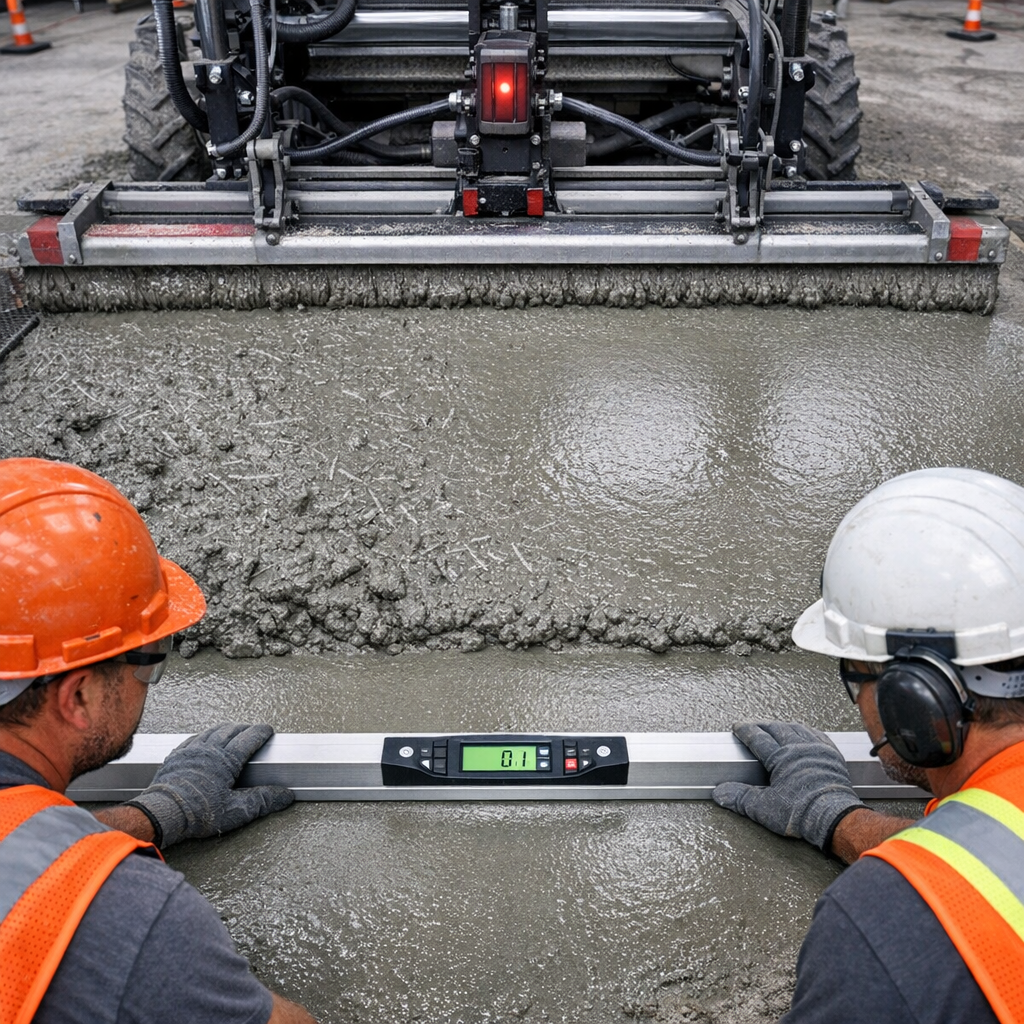
Start with the load map, joint layout, slab thickness, and flatness/levelness targets. Confirm FF/FL and tolerances required for racking, conveyors, or automated vehicles. Good coordination up front prevents costly saw cut rework and equipment misalignment later.
Subgrade and drainage
A well‑prepared subgrade is the single biggest performance driver. Compact to engineered density, install a stable, well‑graded granular base, and add geotextile where fines or soft spots exist. Design positive slopes and perimeter drainage to keep water away from the slab.
Specify the right mix
For heavy industrial work use a mix designed for reduced shrinkage and high early and long‑term strength, often 4,000–6,000 psi with supplementary cementitious materials and synthetic fibers. Air entrainment is essential in cold climates to resist freeze‑thaw scaling.
Reinforcement and jointing: control cracking, don’t chase it
Reinforcement strategy
Use fiber reinforcement for shrinkage control and a rebar or welded wire fabric design sized to the slab loads. For heavy loads or crane rails, coordinate slab sections with engineered dowels and isolation joints.
Joint planning and saw scheduling
Lay out contraction and isolation joints to match structural bays and equipment locations. Schedule early‑entry saw cutting to create joints before random cracks form. Consider dowel bars at load transfer joints in warehouse aisles with heavy wheel loads.
Equipment and placement: speed with control
Laser screeds and pumps
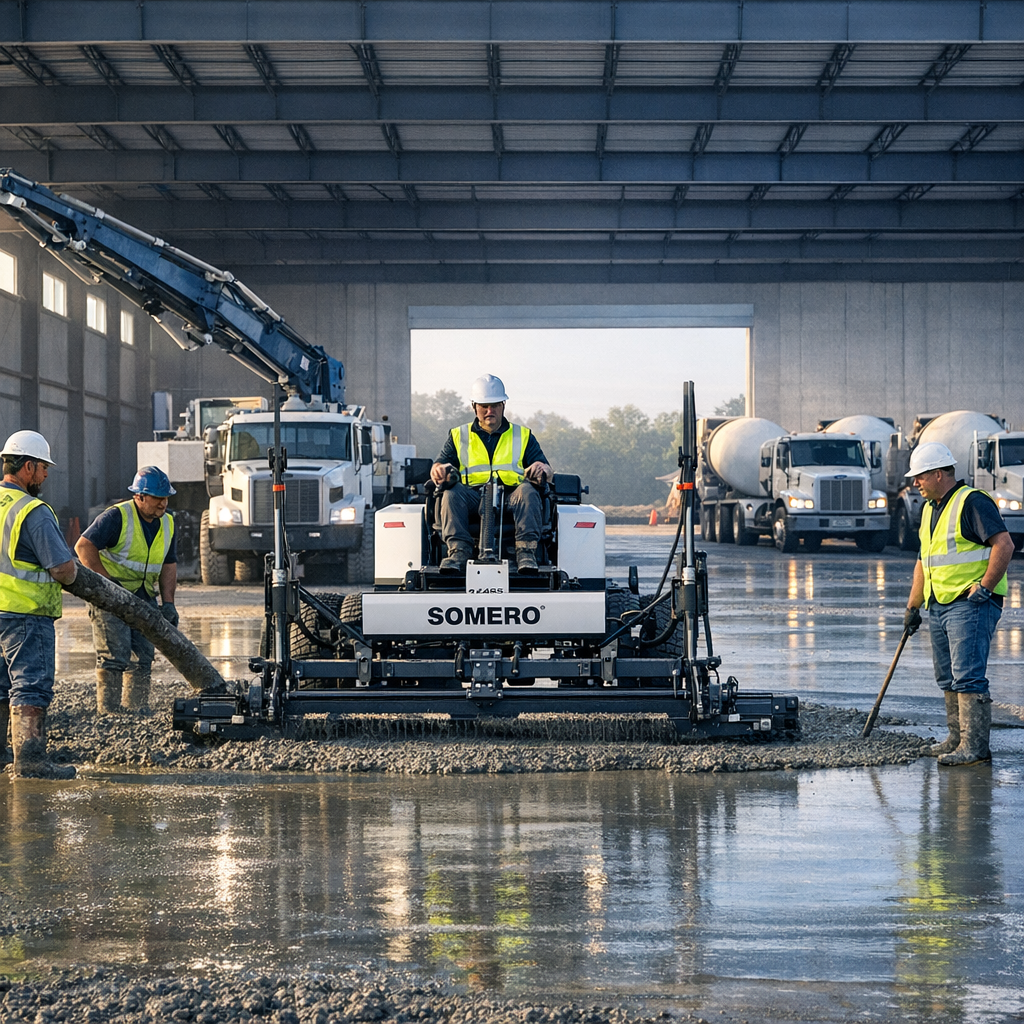
Laser screeds deliver consistent flatness and finish rates on large pours, while boom pumps reduce handling time and segregation. Use ride‑on trowels after initial set for a dense, smooth surface that reduces dusting.
Pour sequencing and logistics
Stage pours to maintain continuous production while controlling cold joints. Pre‑place hardscape embeds, anchors, and sleeves. Keep trucking cadence steady and have contingency plans for delays, weather, or truck shortages.
Finishing and surface treatments
Finish selection by use case
Broom, trowel, or power‑float finishes should be chosen based on traffic, slip resistance needs, and final operations. For areas destined for floor coatings, prepare surface profiles to manufacturer specs to ensure adhesion.
Surface densifiers and sealers
Apply penetrating densifiers to minimize dusting and wear. Where chemical resistance or stain control is required, use epoxy or polyurethane sealers per product specs and tolerance for traffic return times.
Curing and moisture control: the make‑or‑break stage
Moisture‑aware curing
Moisture retention is critical. Use wet curing, curing compounds, or moisture control systems tailored to the mix and weather. For slabs receiving floor coatings or adhesives, test in situ relative humidity and follow coating manufacturer RH limits.
Temperature management
In cold weather use heated enclosures, warm water in the mix, or accelerating admixtures as allowed by the engineer. In hot weather, fogging, evaporative cooling, and admixtures that slow set can prevent plastic shrinkage cracking.
Quality control and documentation
- Daily pour maps and QC logs protect owners and installers. Keep slump, air content, and strength test reports on file.
- Use Procore or similar daily reporting tools so GCs and owners can track placement, test data, and nonconformances.
- Schedule independent QA testing for critical projects where finish flatness or long‑term performance is mission critical.
Common pitfalls and how to avoid them
- Skipping base compaction checks, which leads to differential settlement. Always require density tests.
- Underspec’ing joints or delaying saw cuts, which causes random cracking and expensive patching.
- Rushing curing to get equipment on floor, which causes early shrinkage and bond failures for coatings. Plan turnover windows into the schedule.
Maintenance and lifecycle considerations
- Implement a maintenance plan for joint seal replacement, resealing schedules, and cleaning to control abrasive debris.
- For long service life in cold climates, schedule periodic inspections for scaling and joint integrity and reseal before major deterioration begins.
- When specifying overlays or coatings, verify moisture vapor emission rates and adhesion testing to avoid delamination.
Best practices checklist (quick reference)
- Confirm structural loads and FF/FL tolerances up front
- Prepare and test subgrade, use engineered granular base
- Specify mix with fibers and SCMs, air entrainment for freeze‑thaw
- Use laser screed, pumps, and planned pour sequencing
- Reinforce with rebar or wire mesh where required, detail dowels
- Saw joints early and according to plan
- Cure thoroughly and test slab moisture for coatings
- Keep daily QC records and pour maps
Frequently Asked Questions
How thick should an industrial slab be
Typical warehouse slabs range from 4 to 6 inches for light use, but industrial floors commonly require 6 to 8 inches or more depending on wheel loads and storage racking. Always follow the structural engineer’s design.
What mix strength is best for heavy forklift traffic
Most industrial floors use mixes in the 4,000 to 6,000 psi range combined with fiber reinforcement. For especially heavy loads or forklift traffic, consult a structural engineer for local design and joint detailing.
When should saw cuts be scheduled
Saw cuts should occur during the early entry window, often within 4 to 24 hours depending on ambient conditions and the mix. Early entry saws reduce random cracking by controlling where contraction occurs.
Do fiber reinforcements replace rebar
Synthetic fibers help control shrinkage and reduce microcracking but usually do not replace structural rebar or dowels where design loads demand them. Use fibers as part of a holistic reinforcement strategy.
How do I know the slab is dry enough for coatings
Conduct in situ relative humidity tests and calcium chloride tests as required by the coating manufacturer. Many modern adhesives require RH under 75 percent for proper adhesion.
How long before light traffic and heavy equipment can return
Light foot traffic may be allowed in 24–48 hours depending on cure; light forklifts may wait 7 days. Heavy equipment and full design loads typically require 28 days or the strength specified by the engineer.
What special steps are needed for freezing climates
Use air‑entrained mixes, insulated curing, properly designed subgrade drainage, and schedule pours to avoid freeze/thaw during early hydration. Penetrating sealers and timely maintenance also help long‑term performance.
Ready to build a slab that lasts
For clear expectations, tight tolerances, and surety on schedule, partner with a contractor who documents pours, uses laser screeds and modern mix designs, and communicates daily. Review the project specification with your GC and engineer early, then hold the slab to the checklist above.
Work with a local, experienced team
If you need commercial or industrial slabs in Central Iowa, our team handles projects from parking lots to 80,000+ square foot warehouse floors with laser‑screed precision and full documentation. See examples in our Portfolio and learn more about our Commercial Concrete services in Des Moines. Get a free estimate or schedule a site visit at Colin Concrete Des Moines by visiting https://colinconcretedesmoines.com/contact-us/.
Conclusion
A durable industrial slab is the product of disciplined planning, correct materials, precise execution, and conscientious curing and maintenance. Follow the pragmatic steps above, insist on tested mixes and documented quality control, and you will save time and money over the building life cycle. When in doubt, bring in the concrete pros early and use the checklist to hold the team accountable to lasting performance.