
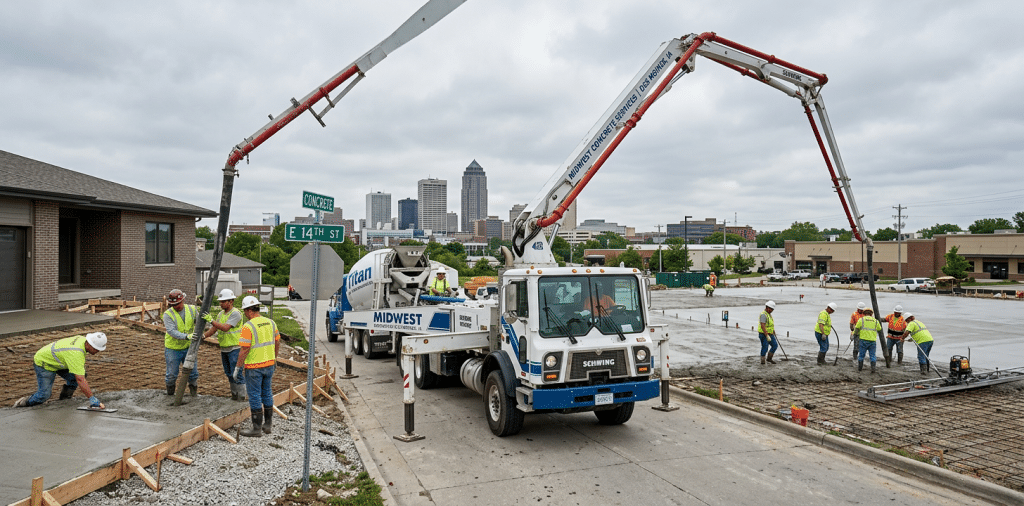
Concrete projects move fast in Central Iowa, and the difference between a smooth pour and a stressful one often comes down to access, timing, and equipment. That is where concrete pumping services Des Moines homeowners and builders rely on can make a real difference.
Thank you for reading this post, don't forget to subscribe!If you have ever looked at a tight backyard, a long driveway, or a commercial slab with limited truck access, you already know the problem. Getting concrete where it needs to go, cleanly and on schedule, is not just convenient, it is often the key to better finish quality, less labor strain, and fewer delays.
Why Pumping Matters On Real Job Sites
Concrete pumps help move fresh mix efficiently when wheelbarrows, chutes, or direct truck access are not practical. For residential work, that can mean patios behind a fence, garage slabs with narrow access, or decorative concrete in spaces where cleanliness matters. For commercial work, pumping supports larger placements, faster crew movement, and more consistent pours.
In the Des Moines metro, this is especially valuable because site conditions can vary a lot from project to project. Tight lots, weather swings, and demanding schedules all favor a contractor who can control the placement process instead of improvising it.
When pumping is the smarter choice
- Long driveway runs or backyard patios
- Foundations with limited equipment access
- Commercial slabs that need steady placement
- Multifamily or podium pours with tight tolerances
- Parking lots and industrial slabs where efficiency matters
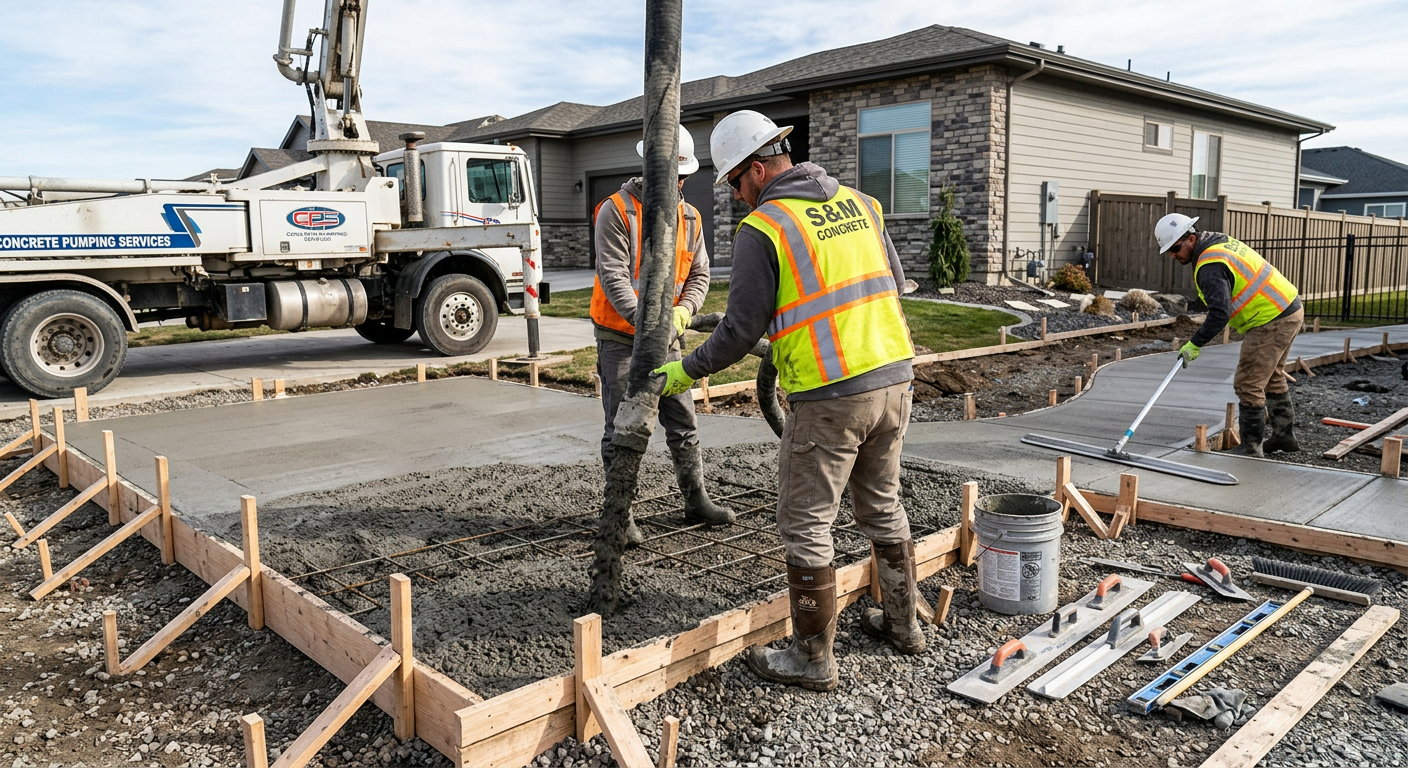
What A Good Concrete Pumping Setup Looks Like
A strong pumping plan starts before the truck arrives. The crew should know the access route, hose length, pour sequence, form layout, and finishing needs. On bigger jobs, that planning helps protect schedule windows and reduces waste.
For homeowners, that means fewer surprises and less mess around landscaping or existing hardscape. For developers and property managers, it means better coordination with inspections, deliveries, and other trades.
Features that signal a professional operation
- Clear estimate and scope before work begins
- Right-sized pump for the job
- Experienced crew coordinating placement and finishing
- Fiber-reinforced or reinforced mix options when needed
- Moisture-control curing and proper joint planning
- Documentation and reporting for commercial projects
Colin Concrete Des Moines highlights several of these capabilities across its residential and commercial work, including flatwork, foundations, parking lots, and multifamily projects, along with Procore-based reporting for larger jobs. That kind of workflow is especially useful when schedule reliability matters. (colinconcretedesmoines.com)
Where Pumping Helps The Most In Des Moines
The best use of pumping depends on the project, but a few situations stand out in the metro.
Residential driveways and patios
If your lot is narrow, your backyard is fenced, or your patio sits far from the street, pumping can save time and reduce damage to the yard. It also gives the finishing crew a more predictable placement pace, which can improve surface quality.
Foundations and garage slabs
Foundations and slabs need consistency. A pump helps deliver concrete evenly, which matters when you are trying to maintain elevations, minimize cold joints, and keep the pour moving on schedule.
Commercial and multifamily work
For larger buildings, garages, and podiums, pumping is often the most practical way to keep a placement moving. It supports tighter coordination across multiple trades and helps the contractor manage large volumes without losing control of finish quality.
Why Local Experience Matters In Central Iowa
Concrete in Iowa has to handle freeze-thaw cycles, moisture, and seasonal temperature changes. That means the job is not just about getting concrete in place, it is about placing it correctly, finishing it well, and curing it properly so it lasts.
Local crews that understand these conditions usually make better decisions about reinforcement, mix design, and curing methods. Colin Concrete Des Moines says it uses fiber-reinforced mixes, laser screeds, moisture-control curing, and transparent pricing, all of which support better long-term performance on both residential and commercial jobs. (colinconcretedesmoines.com)
What To Ask Before You Hire
Before you choose a contractor, ask a few direct questions. The answers will tell you a lot about how your project will run.
- Do you provide pumping as part of the placement plan?
- How do you handle tight-access residential sites?
- What reinforcement or mix options do you recommend?
- How do you document commercial pours and inspections?
- What curing process do you use for durability?
If a contractor can answer those clearly, you are probably dealing with a team that understands both the technical side and the scheduling side of the job.
FAQ
What are concrete pumping services used for?
Concrete pumping is used to place fresh concrete into hard-to-reach or large areas faster and more efficiently than manual hauling methods. It is especially useful for driveways, patios, foundations, slabs, and commercial placements.
Is pumping better than using a chute?
In many cases, yes. A pump gives you better control over placement, especially on tight sites or longer pours. It can also reduce mess and lower the risk of delays when access is limited.
Do homeowners in Des Moines need concrete pumping?
Not every project needs it, but many do. If your driveway, patio, or foundation site has limited access, pumping can make the job cleaner, faster, and easier on the rest of your property.
Does pumping work for decorative concrete?
Yes, pumping can work well for decorative and stamped projects when the contractor plans the placement and finishing sequence carefully. The key is using the right mix and timing so the finish stays consistent.
What makes pumping important for commercial pours?
On larger jobs, pumping helps maintain flow, reduce labor strain, and keep the placement moving on schedule. That matters for flatwork, parking lots, industrial slabs, and multifamily podiums.
How do I know if a contractor is the right fit?
Look for clear estimates, proven local experience, quality reinforcement options, and good communication. For commercial work, ask about documentation, reporting, and schedule management as well.
Ready To Plan Your Pour?
If you need a contractor who can handle placement, pumping, finishing, and long-term durability together, Colin Concrete Des Moines is built for that kind of work. Whether you are a homeowner planning a new patio or a developer coordinating a large slab, a fast estimate and a clear plan can save time from day one.
Visit Colin Concrete Des Moines to request your estimate and talk through the best placement strategy for your project.
Conclusion
Concrete pumping is not just about moving material, it is about making the whole job smoother, safer, and more reliable. In a market like Des Moines, where weather, access, and schedule pressure all matter, the right pumping setup can help your project finish better and last longer.
If you want a durable driveway, a clean patio pour, or a large commercial placement done with less friction, start with a contractor who understands both the equipment and the local conditions.