
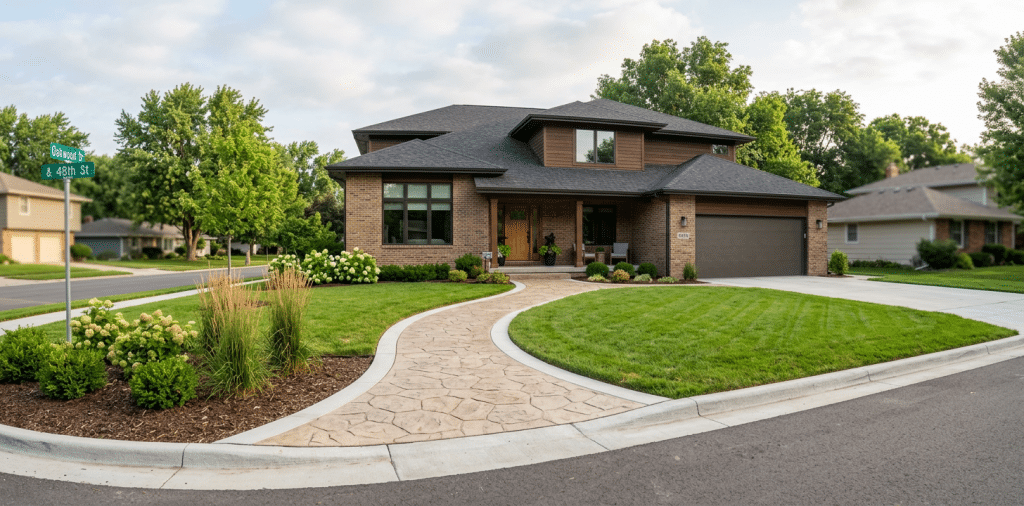
A plain walkway does the job. A well-designed one does more, it shapes how your property feels the moment someone pulls up. That is why decorative concrete walkways and curbs have become such a smart choice for homeowners, remodelers, and small property owners who want a clean, durable look without sacrificing performance.
Thank you for reading this post, don't forget to subscribe!Here’s the thing, curb appeal is not just about appearance. In a climate like Central Iowa, the right concrete details also need to stand up to freeze-thaw cycles, deicing salts, and heavy seasonal use. When walkways and curbs are built correctly, they can deliver both style and long-term durability.
Why Decorative Concrete Works So Well
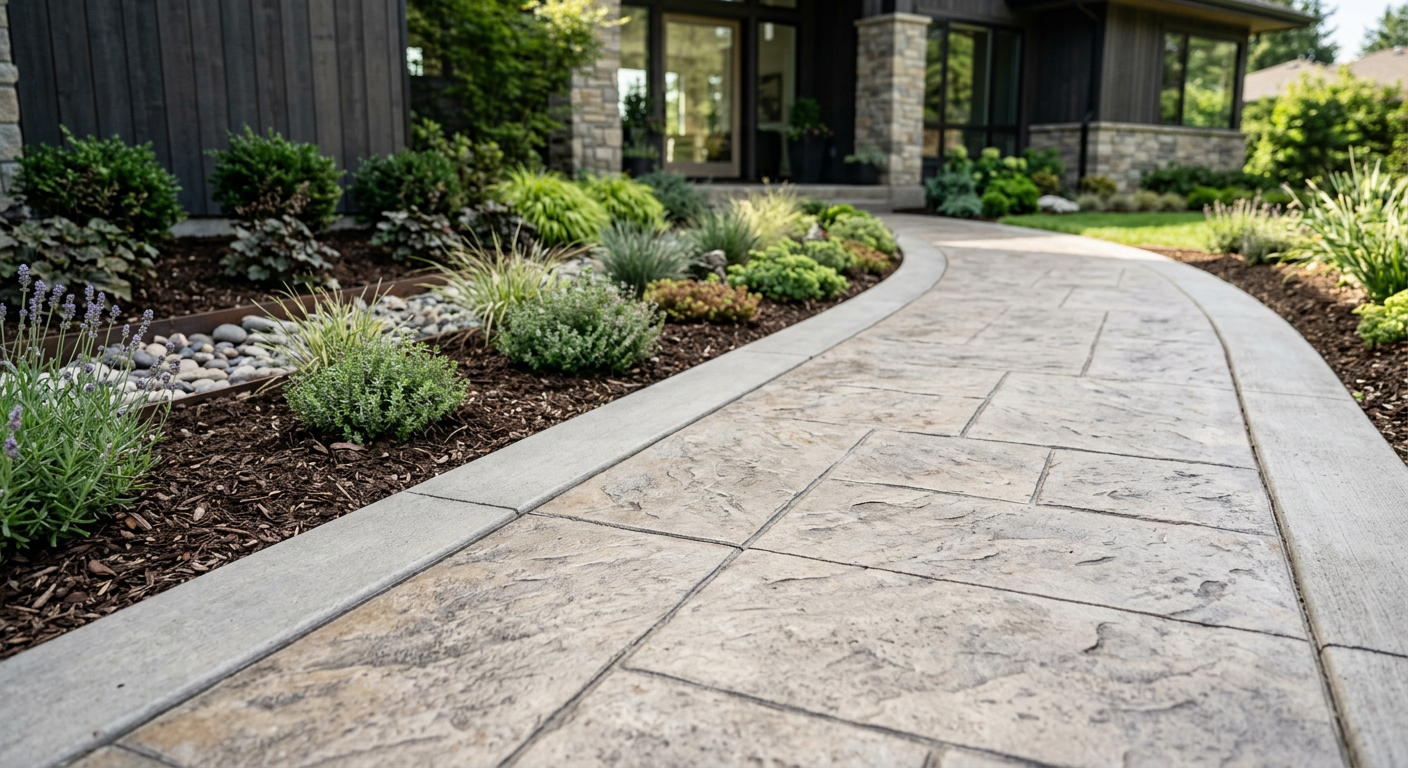
Decorative concrete gives you more than a gray slab. It can be stamped, textured, colored, or edged to create a finished look that fits traditional, modern, or transitional properties.
For homeowners, that means a walkway that matches the home instead of looking like an afterthought. For commercial and multifamily properties, it means a cleaner site presentation, better pedestrian flow, and a more polished first impression.
Style without giving up strength
Concrete is already a strong material for exterior flatwork. Decorative finishes simply add design flexibility. You can mimic stone, brick, slate, or a refined broom finish while still benefiting from a surface built for real-world use.
Better fit for the Des Moines climate
In the Des Moines metro, exterior concrete has to handle cold snaps, thaw cycles, and moisture. That is why proper base prep, drainage, reinforcement, and curing matter just as much as the finish. Decorative concrete only pays off when the structure underneath is built to last.
Where Walkways and Curbs Make the Biggest Impact
Decorative walkways and curbs are not just for front entries. They can improve nearly every part of a property.
Front entries and approach paths
A custom walkway sets the tone for the whole exterior. It guides guests naturally, improves accessibility, and creates a more upscale feel than a basic straight pour.
Garden edges and landscape transitions
Curbs help separate lawn, planting beds, gravel, and hardscape areas. That cleaner transition can make landscaping easier to maintain while giving the yard a more intentional look.
Multifamily and commercial properties
For property managers and developers, curbs and walkways help organize foot traffic, define safe routes, and keep projects looking finished. They also support code-conscious site planning when installed with the correct elevations and slopes.
Design Options That Add Value
Decorative concrete is flexible, but the best results come from choosing a finish that suits both the property and the environment.
Popular finish choices
- Stamped patterns for the look of natural stone or pavers
- Colored concrete for subtle contrast or stronger visual definition
- Exposed aggregate for texture and traction
- Broom finishes for a simple, practical surface with good slip resistance
- Decorative borders or saw-cut accents for a cleaner layout
Matching the architecture
A walk-up in a newer subdivision usually calls for a different finish than a historic remodel or multifamily courtyard. Good design blends the concrete with the home, building, and surrounding landscape so it looks intentional from every angle.
What Makes a Decorative Walkway Last
Looks matter, but performance matters more. A beautiful walkway that cracks early or drains poorly becomes a liability fast.
The foundation beneath the finish
Durability starts with site preparation. That includes proper subgrade compaction, the right base material, accurate grading, and attention to drainage. Without those steps, even the best finish can fail prematurely.
Reinforcement and mix design
Fiber-reinforced mixes, steel reinforcement where appropriate, and the right concrete design all help improve strength and crack resistance. In freeze-thaw regions, curing and air entrainment can be just as important as decorative detail.
Curing and protection
Moisture-control curing helps concrete achieve stronger long-term performance. It also reduces the chance of surface issues that can affect appearance. For decorative work, curing is one of the easiest places to lose quality if the crew rushes.
Why Curbs Matter More Than Most People Think
Curbs may seem minor, but they play a major role in how a site functions. They help define edges, manage water, and protect adjacent surfaces from wear.
Clean separation and better drainage
A properly placed curb can help channel water away from problem areas and keep mulch, gravel, and soil where they belong. That means fewer maintenance headaches and a neater exterior over time.
Stronger visual lines
Curbs frame a walkway, driveway, or landscape bed in a way that makes the whole project feel finished. On larger properties, they also help create order and consistency across the site.
Choosing the Right Contractor Matters
Decorative concrete is part craftsmanship, part engineering. You want a contractor who understands both the visual goals and the technical requirements.
A strong concrete team should offer:
- Clear estimates and transparent pricing
- Experience with residential and commercial flatwork
- Reliable scheduling and communication
- Proper forming, finishing, and curing practices
- Documentation and job tracking for larger projects
- Workmanship warranties and insured crews
For larger installations, tools like laser screeds, pumps, and Procore reporting can make a big difference in schedule reliability and quality control. That matters whether you are building a private walkway or managing a multifamily site.
FAQ
How long do decorative concrete walkways last?
With proper installation, drainage, and curing, a decorative concrete walkway can last for decades. The surface finish may need periodic sealing or maintenance, but the structure itself can provide long-term service.
Are decorative curbs only for commercial properties?
No. Decorative or finished curbs work well for homes too, especially around landscape beds, garden borders, and front-entry paths. They can make a residential property look much more refined.
Is stamped concrete slippery?
It can be if the finish is too smooth or the surface is poorly maintained. The right texture, sealant, and finish choice can help improve traction while keeping the decorative look.
What is the best concrete finish for Iowa weather?
That depends on the project, but finishes with good traction and strong curing practices tend to perform best. Broom finishes, exposed aggregate, and well-executed stamped surfaces are all common choices when durability matters.
Can decorative concrete be repaired if it cracks?
Minor cracking can sometimes be repaired or minimized, but prevention is always better than repair. Good base prep, reinforcement, control joints, and curing reduce the risk significantly.
How do I maintain decorative concrete walkways and curbs?
Keep surfaces clean, reseal when recommended, avoid harsh deicers when possible, and watch for drainage issues. Regular maintenance helps preserve both the appearance and the life of the concrete.
Ready to Upgrade Your Property?
If you want a walkway or curb system that looks sharp and holds up in Central Iowa weather, it pays to work with a contractor who knows both decorative detail and structural performance. At Colin Concrete Des Moines, you can get help with residential and commercial concrete projects built for durability, clean execution, and long-term value.
Whether you are planning a front-entry update, a landscape border, or a larger site improvement, the right concrete partner can help you get it done on time and done right.
Final Thoughts
Decorative concrete walkways and curbs are a practical way to improve curb appeal while adding real function. When the design is matched with proper installation, you get a finished look that stands up to weather, traffic, and everyday use.
If you want your property to look better and perform better, decorative concrete is a smart place to start.