

Finding the right team to pour your commercial slab or multiunit podium is more than price and availability. You want a contractor who understands tight tolerances, inspection-ready documentation, and modern project controls. That is where finding a commercial contractor with procore experience becomes a real advantage for owners, developers, and general contractors in the Des Moines metro.
Thank you for reading this post, don't forget to subscribe!Procore competence means the contractor can deliver timely daily logs, photo documentation, RFIs, submittals and clear communication without you having to chase paperwork. Below I walk you through why Procore experience matters, exactly what to ask, how to verify skills, and a practical hiring checklist tailored to commercial concrete and large residential projects.
Why Procore Experience Matters for Concrete Projects
Clear, inspection-ready documentation
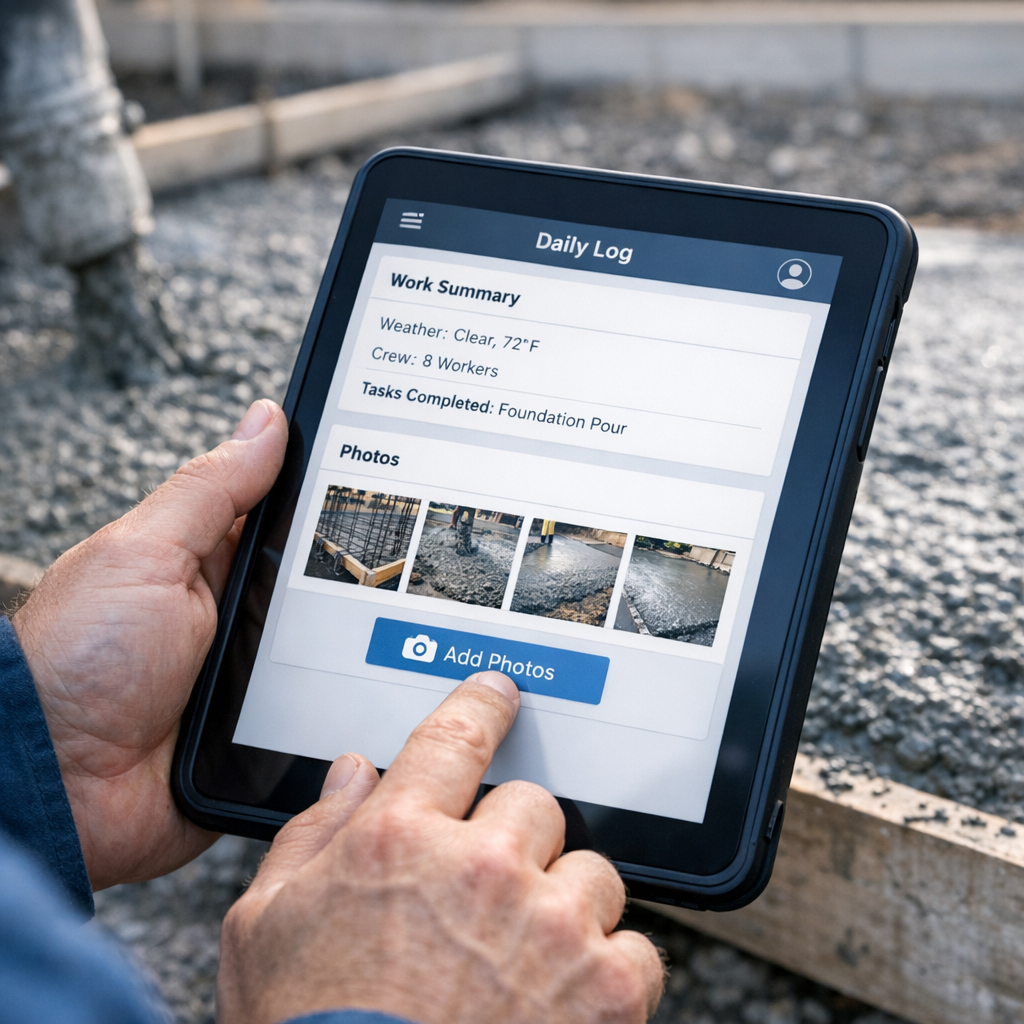
Procore centralizes daily logs, photos, tests and submittals so inspectors and owners get a consistent record. For concrete pours where temperature, slump, and curing are time sensitive, digital logs reduce disputes and speed approvals.
Schedule reliability and fewer surprises
When a contractor uses Procore well, RFIs, change orders and schedule updates are visible to the entire team. That reduces delays on multi-trade jobs and protects critical pour windows during Iowa’s freeze-thaw seasons.
Quality control and traceability
Procore makes it easier to attach test results, mix designs, and MSDS files to each pour. For owners and property managers, that traceability is invaluable when evaluating long-term slab performance.
Key Questions to Ask Prospective Contractors
- Do you use Procore on projects of this size, and who on your team is a Procore daily user? Ask for the name and role of the person who will manage project entry.
- Can you show a sanitized sample of a Procore daily log, photo register, or submittal package from a completed job?
- How do you handle RFIs and submittal responses when schedule changes happen?
- Who will be invited to your Procore project as the owner, architect, and GC contacts?
- Are you Procore certified or have team members who completed Procore training for subcontractors?
How to Verify Procore Experience Quickly
- Request a short screen share or recorded walkthrough of a live project dashboard.
- Ask for examples of daily logs with weather, manpower, and photo attachments.
- Confirm they can export and share PDF reports or custom 360 reports on demand.
- Check for documented process: who creates the daily log, who uploads photos, and who approves submittals.
If they decline or offer vague answers, treat that as a warning flag for larger, documentation-driven jobs.
What Procore Will Actually Improve on Your Concrete Job
- Faster dispute resolution with timestamped photos and logs.
- Better schedule coordination for pumps, laser screeds, and inspections.
- Centralized QA/QC: on-site slump, air, and temperature test records tied to each pour.
- One-click submittal packages for inspectors and owners, reducing rework and re-inspections.
For a deep dive on how digital daily logs work, see Procore’s daily log tool for more context: https://www.procore.com/quality-safety/daily-log
Red Flags and What To Avoid
- No willingness to share sanitized project examples or demonstrate the software.
- Reliance on spreadsheets and photo texts instead of a centralized platform.
- Inconsistent record keeping, missing daily logs, or photos without timestamps.
- Staff turnover with no documented handover process in the project management system.
Hiring Checklist: Procore-Focused Interview Items
- Team Procore roles listed on the proposal.
- Example daily log, photo log, and submittal delivered before contract.
- Commitment to upload tests (slump, cylinders) within 24 hours of pour.
- Clear permission structure, with owner and GC added as viewers or collaborators.
- Warranty and QA expectations written into the scope and tied to documentation standards.
How Procore Fits With Colin Concrete Des Moines’ Services
If you want a local contractor who pairs modern field systems with heavy-duty flatwork equipment, consider vendors who document pours and QA in Procore. Colin Concrete Des Moines uses Procore to streamline RFIs, submittals and daily reporting while delivering laser-screed flatwork, pumps, and fiber-reinforced mixes for large slabs. Learn more about their commercial capabilities and QA process here: https://colinconcretedesmoines.com/commercial-concrete-des-moines/ and read practical slab best practices at https://colinconcretedesmoines.com/best-practices-for-industrial-concrete-slabs-design-pour-cure/.
Pricing, Estimates and What Documentation Should Come With Your Bid
Ask for a bid that includes: schedule windows, pump and equipment needs, anticipated pour durations, required inspections, and a sample documentation package. A Procore-savvy contractor will include a sample daily log, submittal list and a timeline for uploads as part of the proposal.
Negotiation Tips When Procore Is a Requirement
- Make access rights explicit in the contract, including who can download and archive records.
- Tie a portion of final payment to receipt of complete and organized Procore project documentation.
- Require the contractor to provide training or a short orientation for owner/GC stakeholders on how to access project data.
FAQ: How quickly can a contractor get me access to Procore project data?
Most contractors can add you as a viewer within 24 hours of project setup. Expect an orientation or a one-page guide on where to find daily logs, photos and submittals.
FAQ: Can I require Procore use in the subcontract?
Yes. Owners and GCs can require Procore usage and specify required fields such as daily logs, photo uploads and RFI response times in the contract.
FAQ: Does Procore guarantee accuracy of field entries?
Procore centralizes entries, but accuracy depends on field discipline. Ask the contractor about their daily log process and who is accountable for entries.
FAQ: What Procore features matter most for concrete work?
Daily logs, photo registers, submittals, RFIs, and 360 reporting for testing data are most relevant to concrete pours and QA/QC.
FAQ: Is Procore expensive for subcontractors to use?
Procore licensing is usually purchased by the GC or owner for project-level access, and many contractors include access costs in their overhead. Small firms can also train staff on Procore’s free or low-cost learning materials.
FAQ: How do I protect proprietary mix designs and pricing in Procore?
Use permission settings in Procore to limit who can view confidential documents. Contractors should label sensitive files and share only necessary attachments with owner-level collaborators.
Ready to Hire a Procore-Savvy Contractor?
If documentation, schedule certainty and freeze-thaw durability matter for your project, prioritize contractors who demonstrate Procore competency. For a prompt, inspection-ready proposal and a transparent project dashboard, contact Colin Concrete Des Moines to schedule a free estimate and see their Procore workflow in action: https://colinconcretedesmoines.com/contact-us-2/.
Conclusion
Choosing a commercial concrete contractor with Procore experience reduces risk, speeds communication and creates a clear audit trail for every pour. Ask for examples, verify access, and make documentation requirements part of the contract. With the right partner, you get on-time pours, inspection-ready records and long-lasting slabs that stand up to Des Moines’ seasons. When you need precision, modern reporting and dependable crews, focus on process as much as price and you will protect your schedule and investment.