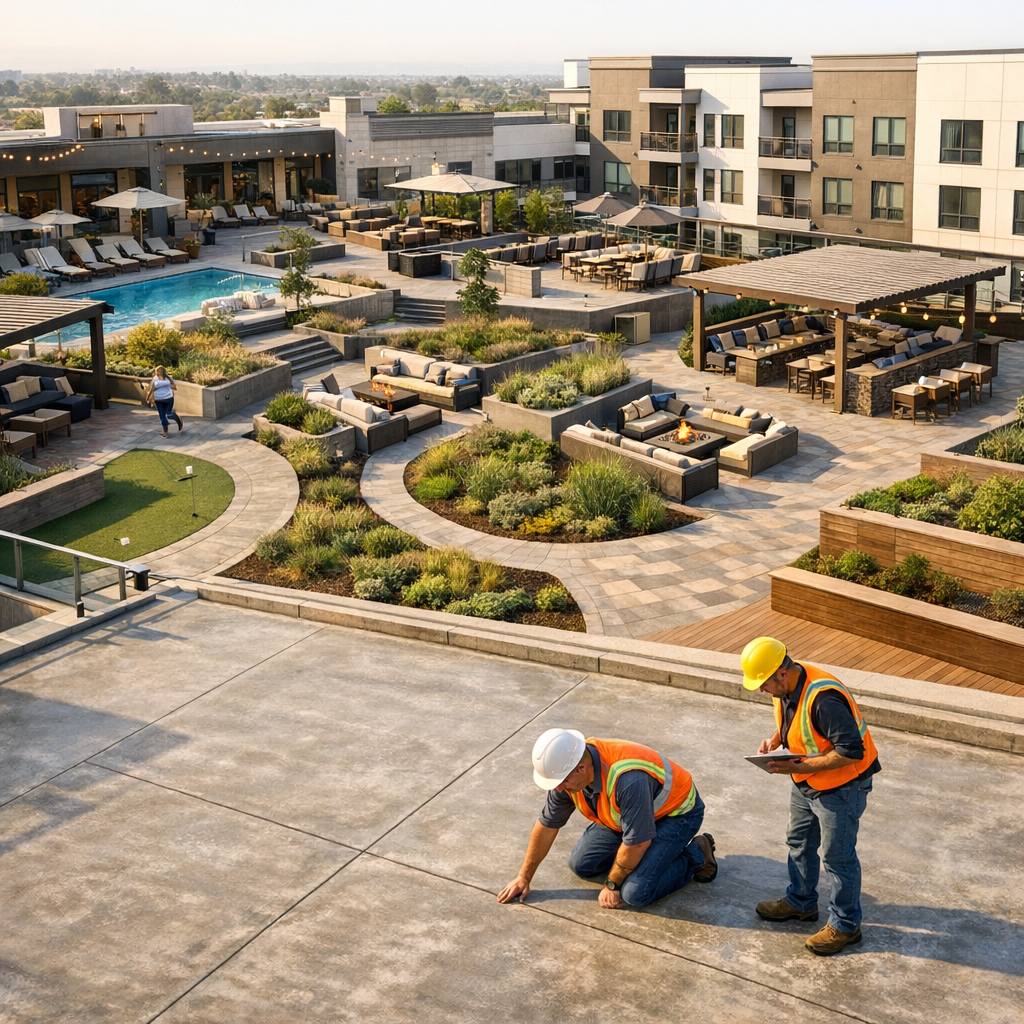
Podium decks link living spaces to open-air amenities, and getting the concrete right is the difference between a costly repair and a long-lasting asset. In this article you will learn how modern materials, placement methods, waterproofing and quality controls come together to produce reliable, code-compliant podiums that stand up to freeze-thaw cycles and heavy use.
Thank you for reading this post, don't forget to subscribe!Here’s the thing: podium projects are complex because they combine structural slab work, waterproofing, drainage, and finishes on a single plane. When you prioritize the right mix design, fiber reinforcement and precise placement, you reduce cracking, extend service life, and protect the building below. In short, multifamily podium construction concrete requires contractor experience, good coordination, and modern tools.
Why podium decks are different from typical slabs
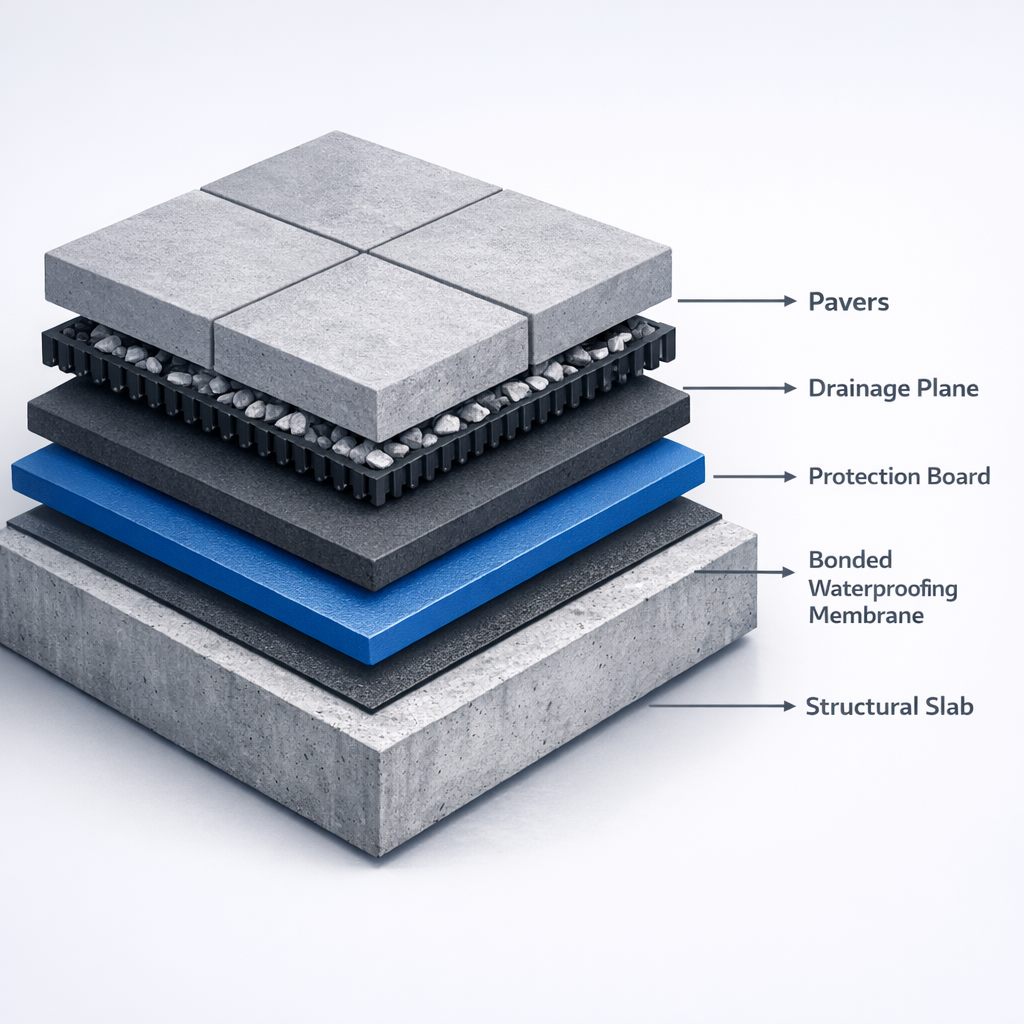
Multifamily podium decks aren’t just larger slabs, they’re a system. A typical podium includes a structural slab, a primed substrate, a fully bonded waterproofing membrane, protection board, drainage plane, and finished surface treatments or pavers. That stack creates interdependencies where a concrete crack or missed detail can lead to leaks, interior damage, and expensive remediation.
Key drivers that make podiums unique:
- Structural coordination with post-tension or rebar systems, depending on design
- Waterproofing compatibility and strict detailing at penetrations and upturns
- Drainage and slope control to outlets
- Load and occupancy considerations for amenity areas and planters
Core materials and methods that improve durability
Mix design and fiber reinforcement
High-performance mixes with 4,000–6,000 psi strength, low water-cement ratio, and polypropylene or steel fiber reinforcement reduce shrinkage cracking and improve toughness. Fibers help control plastic and drying shrinkage cracking and can reduce the need for dense welded wire mats in some slab conditions. For research on fiber benefits, manufacturers and engineering studies provide guidance on dosage and performance.
Laser screeds and precision placement
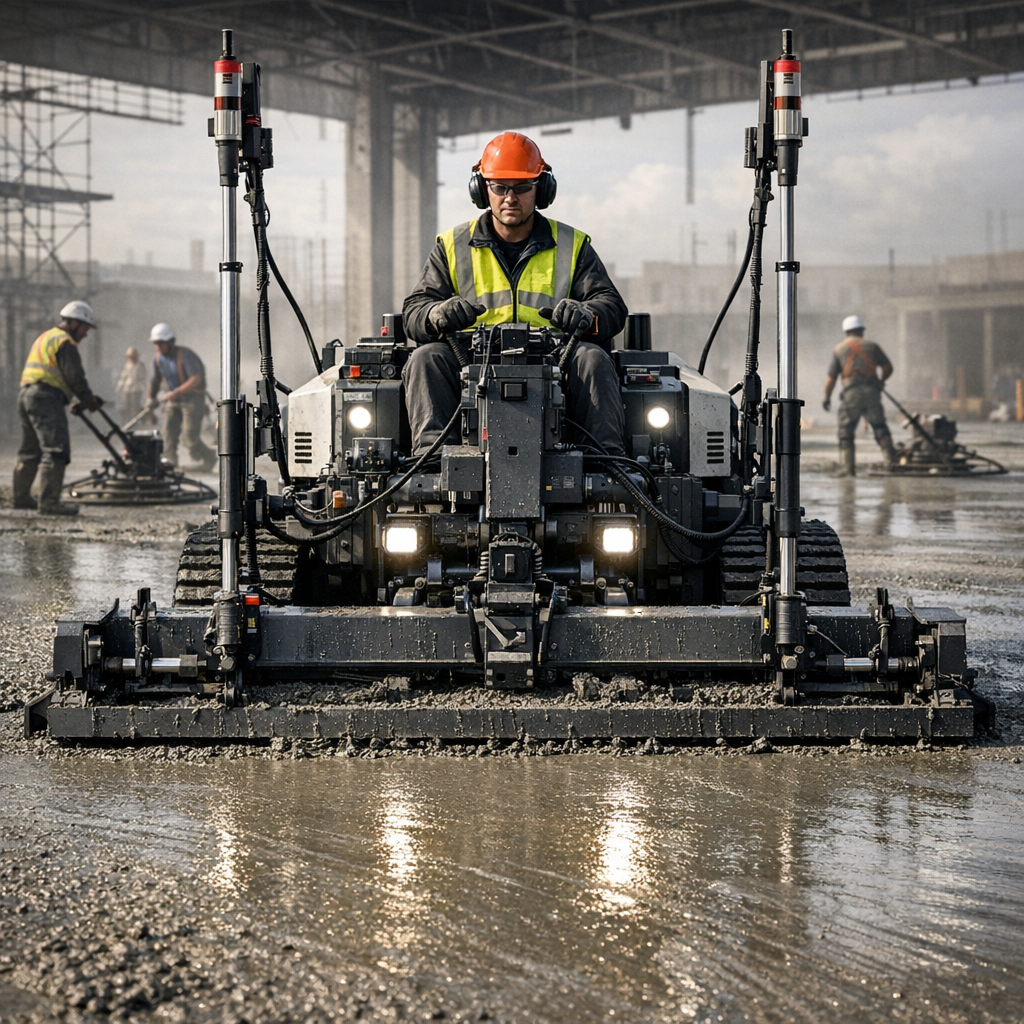
Laser screed systems and automated screeding deliver extremely flat, uniform slabs with consistent elevation control. That precision simplifies waterproofing installation and ensures plan slope to drains is accurate, minimizing ponding and premature membrane stress. Using modern laser screeds also speeds placement and reduces rework.
Curing, moisture control, and surface prep
Proper curing — including moisture-control techniques and curing compounds — is essential to limit early-age shrinkage and improve long-term durability. Surface prep before waterproofing must be clean and within tolerance, and all saw-cut schedules should be planned to control crack locations.
Waterproofing and membrane detailing
Waterproofing is the podium’s protection for everything below it. A fully bonded membrane with tested product compatibility is the industry standard. Critical details include:
- Waterproofing extended and tied into vertical upstands at least 150mm above finished level
- Integration with cavity trays and building DPC
- Membrane protection using coverboards before follow trades
- Third-party integrity testing before closing up assemblies
Guidance on podium waterproofing and best practices is available from industry warranty and standards groups and should be followed to avoid future failures.
Construction sequencing and coordination
Successful podium projects are about rhythm and communication. Typical sequencing highlights:
- Structure, rebar/post-tension, and embeds verified
- Rough slab pour with controlled mix and fibers
- Saw cut control and initial curing
- Surface prep and testing
- Waterproofing and protection boards
- Drainage/flow tests and membrane verification
- Final finish or paver installation
Daily reporting, pour maps, and Procore-style documentation reduce surprises and help with inspections and owner sign-off. If you want examples of contractor documentation and commercial service offerings, see Colin Concrete Des Moines’ commercial services page and portfolio for project examples.
Common failure modes and how to avoid them
- Inadequate waterproofing overlap at upstands, fixed by strict upstand height and adhesive specification
- Poor slab tolerance causing uneven drainage, solved with laser screed placement and FF/FL checks
- Early-age thermal or shrinkage cracking, mitigated by fiber dosing and proper curing
- Improper coordination with penetrations, corrected through pre-pour embedded scheduling and sleeve flashing details
Cost and value considerations
Podium solutions cost more up front than a simple slab because of the waterproofing, protection boards, and coordination with multiple trades. However, the lifecycle cost is usually lower because well-built podiums avoid interior water intrusion, tenant disruption, and large repairs.
Where appropriate, designers and contractors can value-engineer material choices, but never at the expense of membrane continuity or structural requirements. For a contractor who offers clear documentation, warranty options, and experience on podiums and garages, check out the commercial services offered by Colin Concrete Des Moines.
FAQs
What is a podium deck and why use concrete for it?
A podium deck is a slab that typically sits above a parking garage or grade and supports apartments, landscaping, and amenities. Concrete provides structural capacity, durability, and the ability to accept bonded waterproofing membranes and finishes.
How long should a properly built podium last?
With correct design, waterproofing and maintenance, a podium can last many decades. Early failures are almost always due to waterproofing or detailing errors rather than concrete strength alone.
Are fibers a substitute for rebar or mesh on podium slabs?
Fibers help control cracking and can reduce secondary reinforcement in some slabs, but they do not always replace structural rebar or engineered reinforcement. Design should follow structural engineer requirements.
When should waterproofing be tested on a podium?
Waterproofing should be integrity tested after installation and before protection boards and finishes. Leak testing and third-party verification are common warranty conditions.
How do you control slope and drainage on large podiums?
Laser screeds and careful form control ensure the specified slope. Drainage details should be reviewed during preconstruction to place outlets and scuppers where they perform best.
Can planters be placed directly on the slab?
Planters require special detailing, including monolithic kicker curbs, root barriers, and separate drainage to avoid concentrated loads and water intrusion into the membrane.
What warranty terms should owners expect?
Warranties vary by product and contractor, but owners should expect clear workmanship and material warranty terms, and documentation of daily logs, mix designs, and membrane test results.
Ready to move your podium project forward?
If you need experienced crews who understand podium sequencing, waterproofing coordination, laser-screed flatness tolerances, and Procore-style documentation, Colin Concrete Des Moines works with developers and GCs across Central Iowa. View our portfolio to see similar projects or contact our commercial team to schedule a project review and estimate.
- Portfolio and past podium project examples: https://colinconcretedesmoines.com/portfolio/
- Commercial services and podium capabilities: https://colinconcretedesmoines.com/commercial-concrete-des-moines/
- Contact our team to schedule a review: https://colinconcretedesmoines.com/contact-us/
Conclusion
Podium work is high-stakes concrete — get the mix, placement, waterproofing, and coordination right and you protect the building for decades. Prioritize experienced crews, laser-guided placement, appropriate fiber-reinforcement, and tested waterproofing systems. If you manage or own a multifamily project in the Des Moines metro, aligning your team around those technical pillars saves money, time and tenant headaches in the long run.