
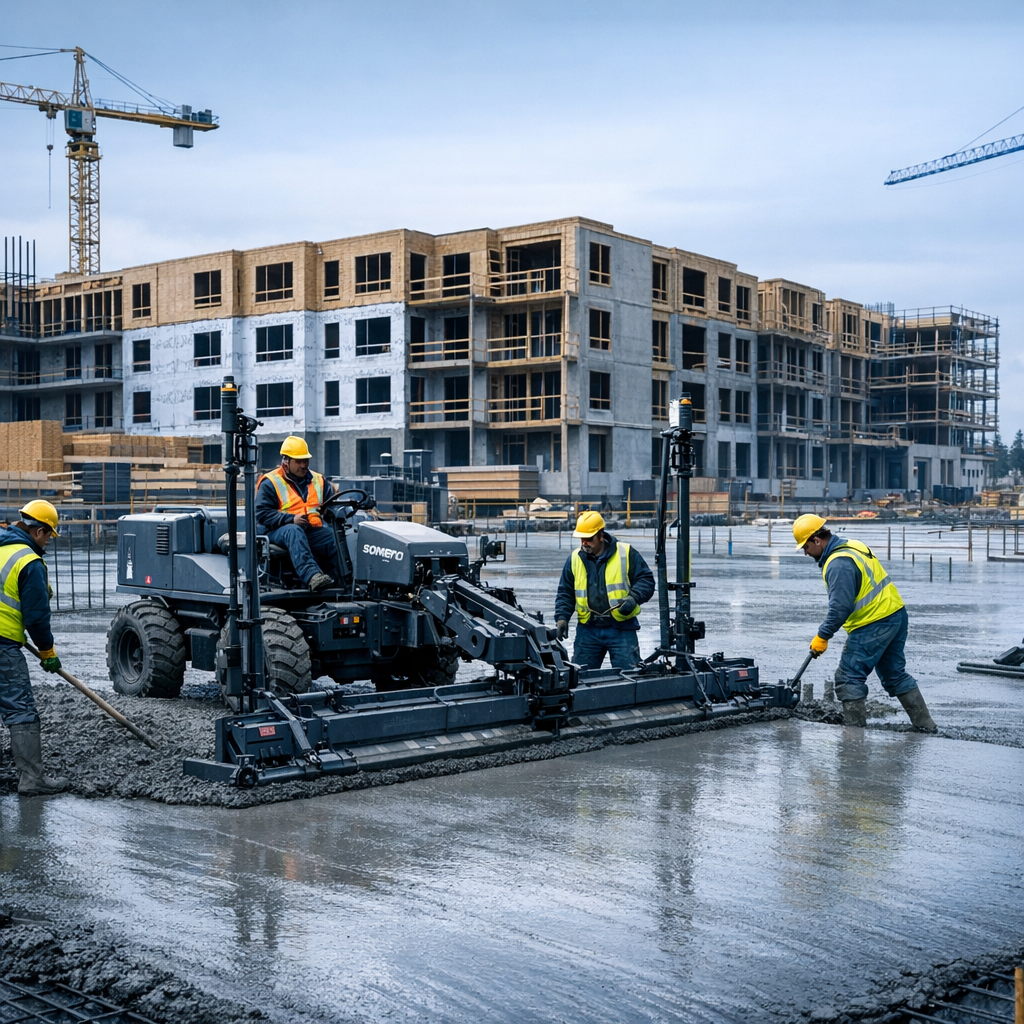
Multifamily podium slabs are a high-stakes part of urban apartment and mixed-use projects, where structure, waterproofing, and schedule must come together without surprises. If you are a developer, general contractor, or property manager in Central Iowa, understanding how a porcelain-grade podium pour gets planned and executed will protect budgets and avoid costly rework.
Thank you for reading this post, don't forget to subscribe!multifamily podium slab construction des moines is a specialty discipline that blends structural concrete skill, tight tolerances, and careful coordination with waterproofing, framing, and MEP trades. Below I break down what makes modern podium work succeed in the Des Moines market and how to pick a concrete partner that protects your schedule and long-term durability.
Why podium slabs matter for multifamily projects
Podium slabs are elevated structural decks that carry apartments, amenity spaces and often parking above a ground-level podium. These slabs combine structural demands with finish expectations, making them different from plain ground-level slabs. Get them right and you avoid water intrusion, squeaky floors, cracking, and expensive repairs later.
Key risks owners and GCs face on podium projects:
- Water intrusion at the slab/wall/curb interface
- Curling and differential settlement that ruin finishes
- Tolerance failures that slow framing and MEP work
- Logistics and staging challenges on constrained urban lots
Here’s the thing, successful podium pours are not an afterthought, they are a planning exercise. Good crews arrive with a work plan, documented QC steps, and the right equipment to hit flatness and elevation specs the first time.
How modern methods reduce risk and speed schedules
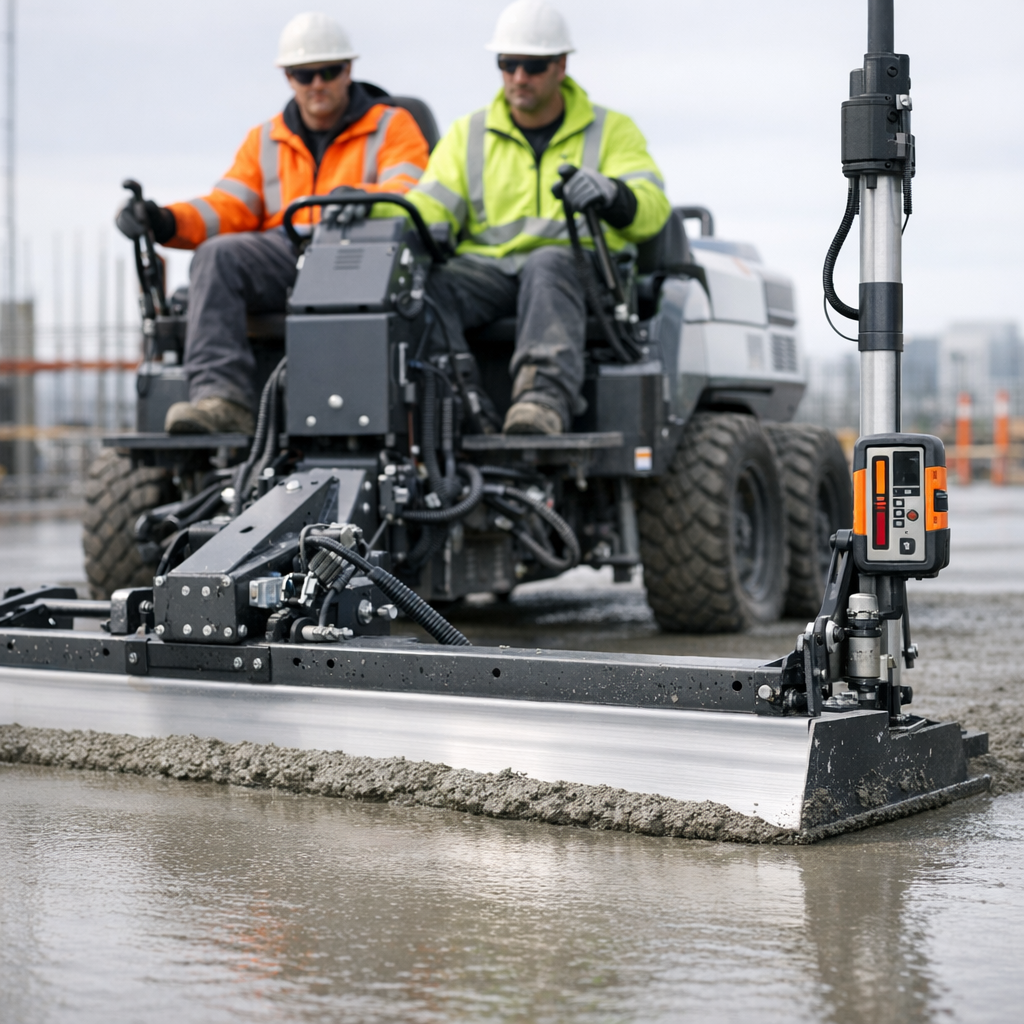
Precision grading and laser screeds
Laser screeds let crews maintain elevation across large podium areas with millimeter-level accuracy. That precision reduces rework and helps framing crews start on schedule. For tight FF/FL requirements, laser screeds are often the only practical solution on large podium pours. See how laser screeding improves flatness and productivity in industry resources.
Fiber-reinforced mixes and mix design
Using fibers plus engineered cementitious blends reduces plastic shrinkage and early cracking, improving long-term durability for amenity areas and parking decks. Mix design tuned for freeze-thaw resistance is essential in Iowa’s seasonal climate.
Moisture-control curing and surface protection
Moisture-control curing methods, from wet curing to membrane curing, reduce surface crazing and improve durability. Combined with temporary protection and sequencing, they keep finishes intact through trade work.
Documentation and daily reporting
Proactive reporting, photo logs, and Procore daily reports cut disputes and keep the owner and GC aligned. Deliverables should include pour maps, slump and temperature records, and QC test results.
Typical podium construction sequence (high level)
- Subgrade and drainage prep, vapor barrier and insulation where required.
- Forming and reinforcing, with attention to rebar cover and deflection criteria.
- Pour sequencing using laser screeds and controlled trucks or pumps.
- Curing, temporary protection, and sawcut/jointing per engineer specs.
- Handoff documentation, including test cylinders and as-built elevations.
Cost drivers and where owners get the best value
- Access and logistics, staging lifts, and pump time
- Complexity of waterproofing and insulation systems
- Required flatness and finish tolerances
- Schedule compression and overtime pours
Value comes from a contractor who reduces unknowns, sequences work to protect critical trades, and documents compliance. That is exactly the sort of coordination developers expect from an experienced local concrete firm.
Local considerations for Des Moines projects
- Freeze-thaw durability matters here, choose mixes and air-entrainment strategies tailored to Central Iowa climate. The science of freeze-thaw resistance and proper mix selection is well documented by pavement and concrete research groups.
- Urban multifamily jobs often have tight staging and late deliveries, so crews that bring pumps, laser screeds, and a multi-crew rotation minimize schedule risk.
Choosing the right concrete partner
Look for a contractor who offers:
- Proven podium experience on multifamily projects, documented portfolios and references. (Example portfolio of local podium work is useful.)
- Modern equipment, including laser screeds, pumps, and ride-on trowels.
- Transparent, itemized bids, daily Procore reporting, and QC documentation.
- Proper insurance, workmanship warranties, and OSHA-trained crews.
If you want to verify a contractor’s experience, ask for recent podium project photos, pour logs, and a walk-through of QA procedures before you sign.
Frequently asked questions
How long does a typical podium slab pour take for a 100-unit building?
A single long pour for a large podium can take from one to several days depending on area, staging, and weather. The full sequence, including prep, pour, curing and protection before trades begin, often spans 2 to 3 weeks on a typical mid-rise project.
What flatness (FF/FL) numbers should I expect for a podium deck that will receive finishes?
Spec values vary, but many projects call for FF/FL targets consistent with ACI guidance to avoid finish issues. Higher FF/FL values reduce leveling work for finishes and racking for parking decks.
Can a podium slab be poured in cold weather in Des Moines?
Yes, with proper cold-weather procedures: heated enclosures, insulated formwork, admixtures, and controlled curing. Scheduling and temporary protection are critical to avoid freezing of fresh concrete.
What waterproofing or topping system should I use for amenity decks and pools?
Waterproofing choices depend on the design. Typical solutions include bonded waterproof membranes, positive-draining deck designs, and decoupling membranes under tile. Coordination between the concrete contractor and the waterproofing installer during slab finish and slope control is essential.
Does using fiber reinforcement replace conventional rebar?
No, fibers supplement reinforcement and help control micro-cracking. Structural reinforcement requirements set by the engineer must still be followed.
How do you avoid loud slab curling or long-term cracking?
Control joint layout, uniform mix design, proper curing, and careful sawcut timing all reduce curling and long-term cracking. Engineered mix design tuned to local aggregates also helps.
Ready To Start Your Podium Project?
If you are planning multifamily podium work in the Des Moines metro and want a partner who brings laser screeds, detailed Procore reporting, and experience with fiber-reinforced mixes and moisture-control curing, reach out for a free estimate and project review. Visit Colin Concrete Des Moines to view commercial services, portfolios, and contact information: https://colinconcretedesmoines.com
Conclusion
Multifamily podium slab construction in Des Moines demands more than just a crew and a truck, it requires planning, modern equipment, and documentation that protects schedules and long-term performance. Focus on contractors who demonstrate podium experience, bring laser screed precision, offer engineered mixes for freeze-thaw resistance, and use transparent reporting. When these elements are in place you reduce risk, save time, and deliver a lasting structure for residents and owners.