City sidewalks take a beating in Iowa winters, and when concrete crumbles it creates trip hazards, code issues, and curb appeal problems. For homeowners, property managers, and developers, understanding when a sidewalk needs repair, what the repair will cost, and how long it takes removes guesswork and prevents recurring damage. In this guide you will learn practical steps to assess, prioritize, and professionally repair crumbling sidewalks in Des Moines, plus ways to prevent repeat problems.
Thank you for reading this post, don't forget to subscribe!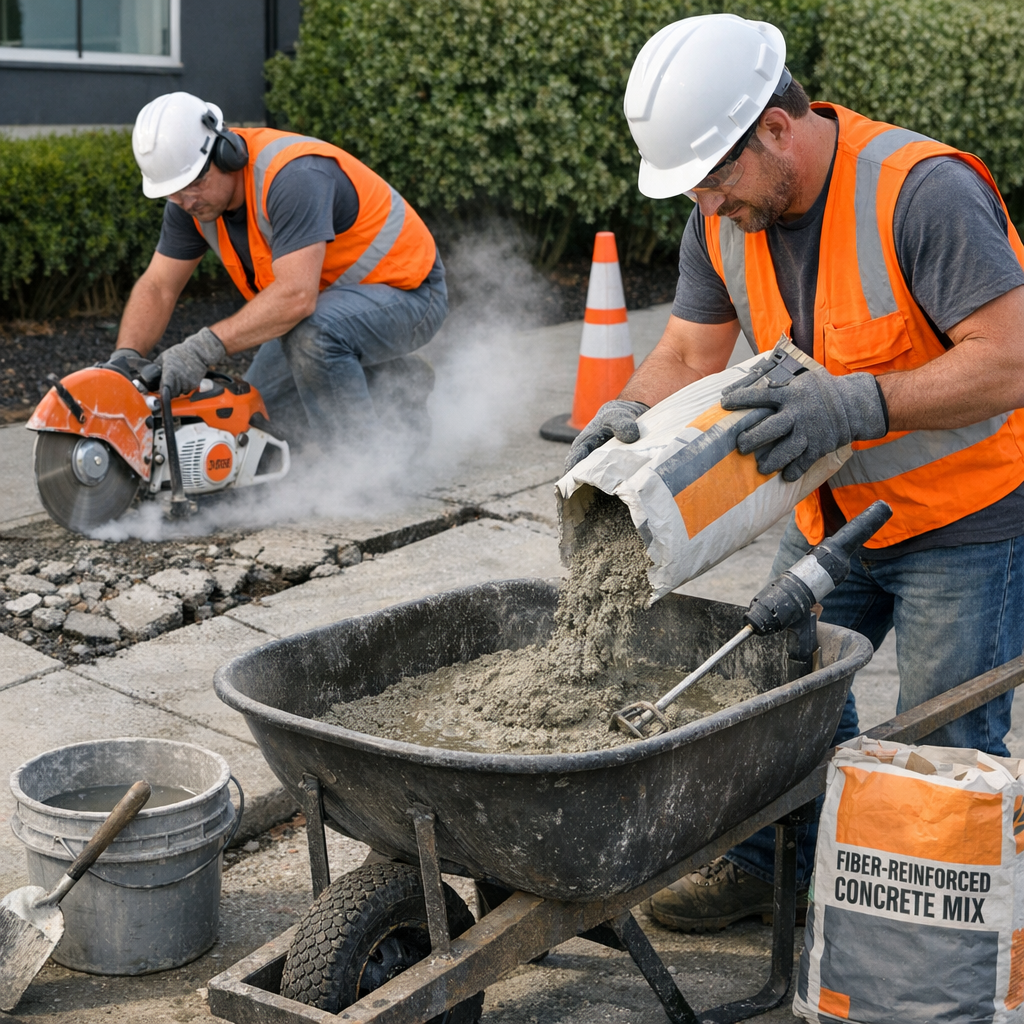
Why Sidewalks Crumble in Des Moines
Des Moines faces freeze-thaw cycles, heavy snow and ice control chemicals, and tree roots, all of which accelerate concrete deterioration. Common causes include:
- Freeze-thaw damage and spalling, where water infiltrates microcracks and expands when frozen
- Uneven settlement from poor subgrade compaction or erosion under the slab
- Tree root heave lifting joints and cracking slabs
- Corrosion and washout at control joints and edges
- Surface wear from salt, de-icing chemicals, and years of foot traffic
Knowing the cause matters because the right fix depends on it. Surface patching treats symptoms, while full-depth replacement addresses structural failures.
How to Assess Damage Quickly
Start with a walkaround. Look for:
- Active trip hazards, vertical offsets greater than 1/4 to 1/2 inch
- Large cracks that run across the slab, not just hairline fissures
- Spalling that flakes off in thin layers
- Areas that feel soft or reveal voids beneath when tapped
- Repeated movement at the same joint after previous repairs
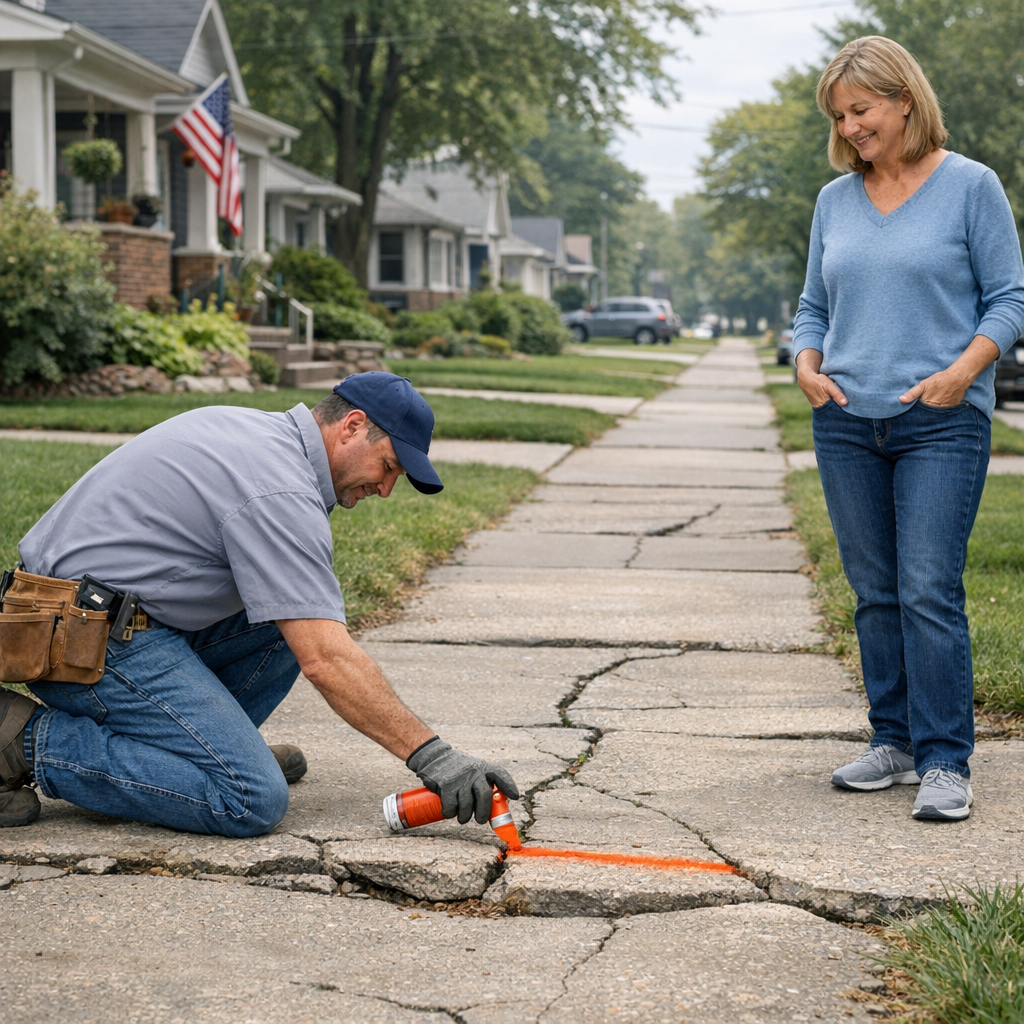
Take photos, note measurements, and categorize damage as minor, moderate, or severe. Minor problems can often be patched. Moderate to severe damage usually requires full panel replacement.
DIY Patching Versus Professional Replacement
DIY works for small chips and cosmetic spalling, but there are limits. Patching is faster and cheaper short term, yet inferior materials or poor prep can lead to repeat failures, especially in freeze-thaw conditions.
Hire a professional when:
- Multiple adjacent panels are damaged
- There is significant settlement or root heave
- You need code compliance, ADA accessibility, or municipal approval
- The project timeline and warranty matter
A licensed concrete contractor will diagnose the root cause, recommend durable materials such as fiber-reinforced mixes, and manage permits when needed.
What a Pro Contractor Will Do
A full-service contractor follows a repeatable process so repairs last longer:
- Site evaluation and documentation, with photos and measurements
- Permit checks and code compliance guidance where municipal work is involved
- Demolition of damaged panels and removal of compromised subbase
- Proper subgrade compaction and, where necessary, new aggregate base
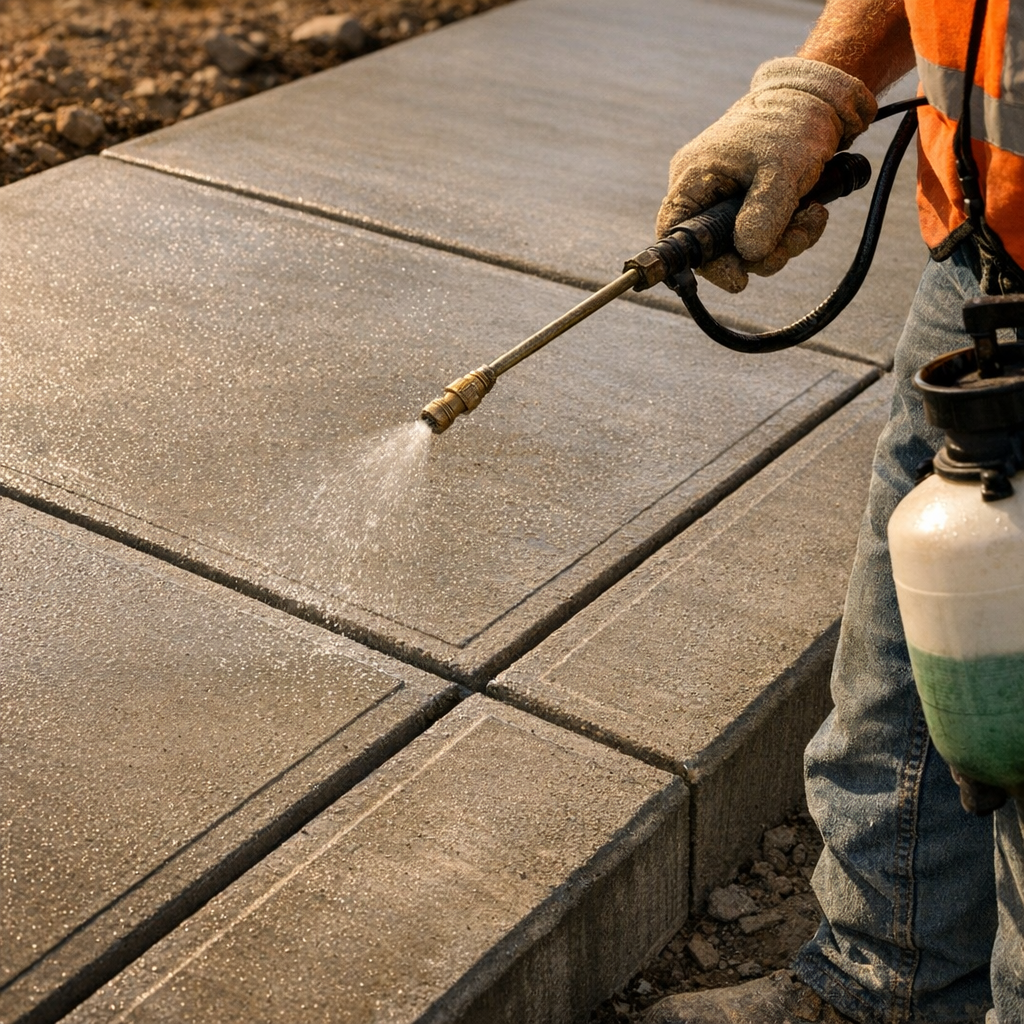
- Placement of fiber-reinforced concrete, controlled water-cement ratios, and moisture-control curing
- Use of pumps and laser screeds for flatness and fast, accurate placement on larger jobs
- Final finishing, saw-cut control joints, and warranty documentation with Procore-style reporting
Colin Concrete Des Moines-style crews bring insurance, fast estimates, transparent pricing, workmanship warranties, and tools like laser screeds and pumps to ensure long-term performance.
Costs, Timeline, and What Affects Price
Typical sidewalk panel replacement ranges by scope:
- Small patch or localized repair: lower cost, same-day to next-day work
- Full panel replacement (4×4 to 5×5 panels): moderate cost, usually 1 to 3 days depending on curing
- Large runs or municipal projects: higher cost, multiple days plus permit lead time
Key cost drivers include accessibility, base repair needs, finish type, required thickness for load, and any ADA adjustments. Using fiber-reinforced mixes and proper curing increases upfront costs but reduces maintenance and extends life, which is especially important in freeze-thaw environments.
Permits, Code, and Municipal Replacement Programs
Des Moines and many suburban jurisdictions have rules about sidewalk condition and who pays for replacement. Property owners are often responsible for repairs adjacent to their property, and the city may require permits and inspection. Before starting a repair, confirm local codes and whether the city offers cost-share or replacement programs.
Preventive Maintenance for Longevity
After repair, keep your sidewalks durable with these steps:
- Clear snow without metal shovels that chip edges
- Use pet-safe and low-corrosion de-icers
- Avoid heavy vehicle loads on pedestrian slabs
- Seal small cracks early with appropriate sealants
- Maintain drainage away from slab edges to prevent subgrade washout
Annual inspection after winter helps catch problems early and avoid larger replacement costs.
Who Benefits From Professional Repairs
- Homeowners who want safe, attractive front walks and curb appeal
- Property managers and landlords seeking code-compliant, low-maintenance surfaces
- Developers and general contractors who need tight tolerances and documented compliance for multifamily and commercial projects
Professionals that offer Procore-style reporting, insured crews, and workmanship warranties make life easier for busy property owners and contractors who must meet schedules and inspection requirements.
Frequently Asked Questions
How do I know if a sidewalk needs full replacement or just a patch?
If the slab has active settlement, deep cracks across the panel, or the subbase is compromised, full replacement is the right choice. Cosmetic flaking and small chips can often be patched temporarily.
Will the city of Des Moines pay to replace my sidewalk?
City policies vary. In many cases property owners are responsible, but some municipalities have programs or timelines for public sidewalk replacement. Check local ordinances before you begin.
How long does a repaired sidewalk last in Iowa weather?
With proper subgrade work, fiber-reinforced concrete, correct jointing, and proper curing, a professionally replaced sidewalk can last 25 years or more in freeze-thaw climates.
Can tree roots be managed without removing the tree?
Solutions include root pruning with root barrier installation and redesigning the slab, but major roots may require tree removal if they threaten structural stability. A contractor and arborist can coordinate the best approach.
Is there a cost-effective alternative to full replacement?
Optionally, a slab leveling or concrete raising procedure can correct certain settlement issues, and overlays can refresh surfaces, but these are not suitable for slabs with severe structural damage.
What warranty should I expect from a contractor?
Look for a written workmanship warranty and documented curing processes. A reputable contractor will offer clear warranty terms, insurance proof, and project documentation.
Ready to Fix Your Sidewalk? Practical Next Steps
If you have a crumbling sidewalk, start by photographing the damage and noting the most hazardous spots. For reliable, code-compliant repairs with long-term durability, contact a full-service concrete contractor who uses fiber-reinforced mixes, moisture-control curing, laser screeds, and traces progress with professional reporting. For an estimate or to schedule an assessment, visit https://colinconcretedesmoines.com and request a fast, transparent quote.
Conclusion
Crumbling sidewalks are more than an eyesore, they are a liability. The right repair balances diagnosis, material selection, and execution to resist Des Moines freeze-thaw cycles for years to come. Whether you need a small patch or a full panel replacement, prioritize proper subgrade work, fiber-reinforced mixes, and experienced crews that provide clear pricing and warranties. Take action early, and you will save time and money down the road.