
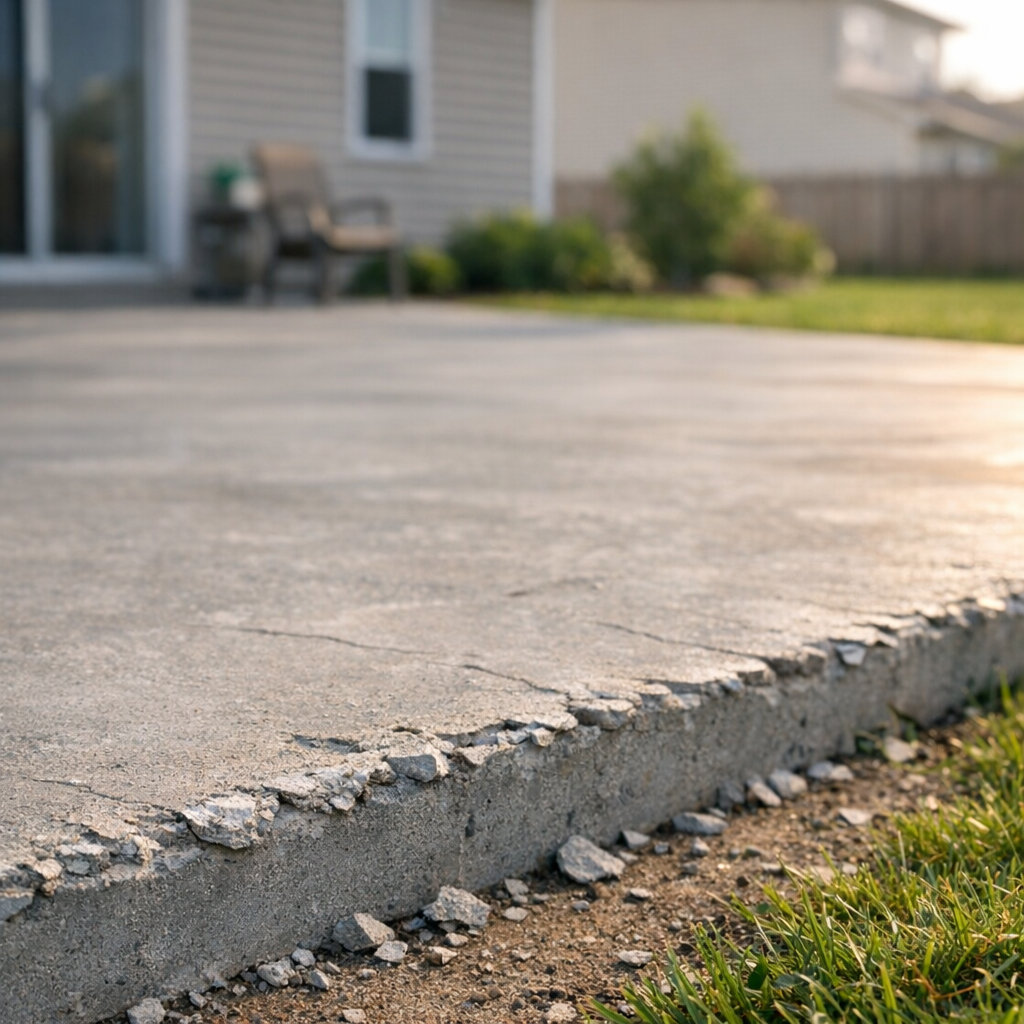
Your patio looked great the day it was finished, and then you noticed small flakes, dull patches, or thin layers peeling off the surface. It is frustrating, especially on new concrete. Here’s what’s happening, why scaling shows up so quickly, and what you can do about it in the Des Moines climate.
Thank you for reading this post, don't forget to subscribe!The short answer: why is my new concrete patio scaling often comes down to a combination of material choices and jobsite practices, most commonly insufficient air entrainment, a high water-cement ratio, improper finishing or curing, and exposure to freeze-thaw cycles or deicing chemicals. Read on for clear causes, how to diagnose what’s wrong, practical repairs, and steps to prevent scaling on future pours.
What scaling actually is
Scaling is the local flaking or peeling of the near-surface mortar layer, leaving a rough, pitted look. It is not the same as deep spalling where aggregate falls out, but if scaling continues it can progress to spalling. Scaling is primarily a physical deterioration caused by pressures in the surface layer during freezing and thawing, often made worse by deicing salts.
The most common causes of scaling
1. Lack of proper air entrainment
Air entrainment creates microscopic bubbles that act as tiny pressure-relief chambers when water freezes inside concrete. Without the correct amount and distribution of entrained air, the surface cannot absorb freezing stresses and starts to flake. For freeze-thaw exposure, air-entrained mixes are essential. For technical guidance see the American Concrete Pavement Association on scale-resistant concrete.
2. High water-cement ratio or weak surface paste
Too much mixing water increases porosity and reduces surface strength. A weak surface paste will absorb water and become vulnerable to freezing pressures. Mix designs for exterior slabs in cold climates generally target lower water-cement ratios and higher strength to reduce porosity.
3. Improper finishing techniques
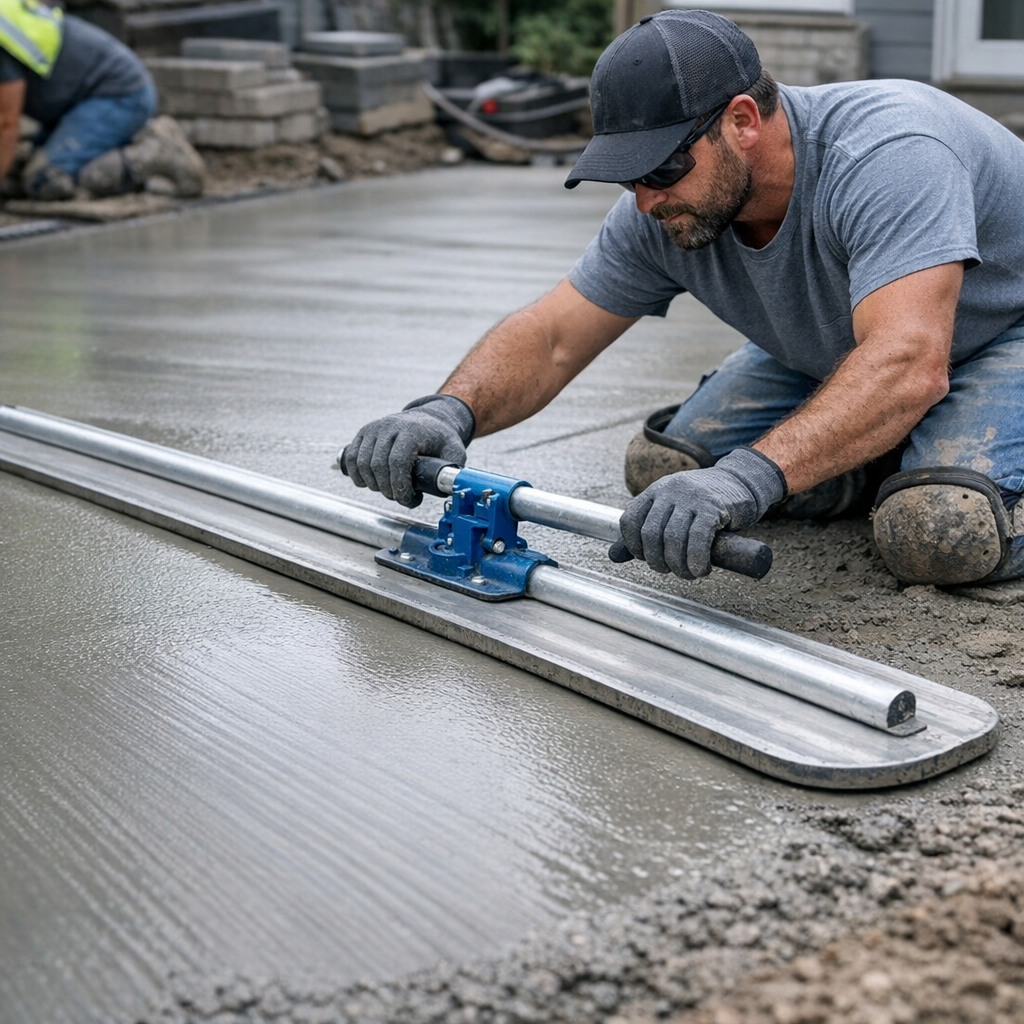
Overworking the surface, finishing while bleed water is present, or applying excessive floating and troweling can create a weak, glazed paste layer at the top. That thin layer is the first to scale. Timing matters: finish after bleed water evaporates and use finishing methods suited to the exposure and aggregate size.
4. Insufficient curing
Concrete gains surface strength through proper curing, which keeps the surface moist long enough to hydrate. Poor curing — short duration, no curing compound, or exposure to rapid drying — leaves a weak micro-surface that scales easily.
5. Deicing chemicals and freeze-thaw cycles
Deicers can increase surface saturation and accelerate scaling, especially on newly placed concrete that is still relatively saturated and not fully hardened. Repeated freeze-thaw cycles in wet conditions are the main environmental driver of scaling in Iowa winters.
6. Improper mix design or poor materials
Low cement content, poor-quality aggregates, or missing supplementary cementitious materials can contribute to a weak surface and reduced durability in severe exposure conditions.
How to quickly diagnose the problem
- Inspect the extent: light fine flaking near the surface suggests surface paste weakness, while exposed aggregate points to deeper distress.
- Check timing: did scaling appear within weeks to months of the pour? Early scaling often indicates finishing or curing problems, or lack of air entrainment.
- Look at use and winter exposure: did the patio face heavy deicer use or repeated freeze-thaw cycles soon after installation?
If you want a professional inspection, our team at Colin Concrete can evaluate mix records, finishing photos, and on-site conditions to determine cause and recommend a repair plan. See our services and project gallery at https://colinconcretedesmoines.com
Practical repairs and short-term fixes
- Clean and assess, then use a polymer-modified surface repair product or micro-overlay for shallow scaling, following manufacturer instructions. Proper bonding and profile preparation are critical.
- Apply a high-quality penetrating siloxane or silane sealer to reduce water absorption once repairs cure. Sealers help but do not fix deep mechanical deficiencies.
- For extensive scaling that exposes aggregate or covers large areas, replacement of the affected slab may be the most durable solution.
For product-level guidance, manufacturers of air entrainers and concrete admixtures explain the role of entrained air in durability, and industry bulletins from local concrete associations discuss repair and prevention best practices.
How to prevent scaling on future patios
- Specify air-entrained concrete designed for freeze-thaw exposure, with target air content appropriate for aggregate size and local climate.
- Use a mix with a low water-cement ratio and a 4000 psi class where practical to reduce porosity.
- Finish correctly, avoid overworking the surface, and do not trowel bleed water into the surface.
- Cure properly, using wet curing, curing blankets, or an effective curing compound for at least the first 7 days in moderate temperatures, longer in cold or windy conditions.
- Delay heavy deicing use until the concrete has reached adequate strength and consider using less aggressive deicers or sand for traction when possible.
Authoritative resources that explain scaling mechanisms and prevention include the American Concrete Pavement Association and federal research on concrete durability. See technical guidance from the American Concrete Pavement Association and the Federal Highway Administration for best practices.
When to call a professional
If scaling appears early, is widespread, or you suspect mix or placement issues, call a qualified concrete contractor. Professionals can review batch tickets, mix designs, and finishing photos, and perform non-destructive surface testing to recommend repair or replacement. For local work in the Des Moines metro, check our project pages and service areas at:
- Colin Concrete Des Moines home page, https://colinconcretedesmoines.com
- Waukee services and patio work, https://colinconcretedesmoines.com/waukee-ia-concrete-contractors-fall-driveway-patio-pros/
- Urbandale concrete solutions, https://colinconcretedesmoines.com/reliable-concrete-contractors-in-urbandale-ia-built-for-iowas-four-seasons/
Frequently asked questions
How soon can scaling appear on a new patio?
Scaling can appear within days to months. Early scaling often points to finishing or curing errors, or lack of air entrainment, while long-term scaling is usually exposure related.
Can a sealer fix scaling?
A sealer can slow further water penetration and protect after repairs, but it will not reattach or restore severely scaled surface layers. Repair or overlay is required first for structural recovery.
Did the contractor use the wrong concrete mix?
Possibly. If the mix lacked air entrainment, had too much water, or was low strength, it would be more likely to scale. Ask for the batch ticket or mix design for verification.
Are deicing salts the main cause?
Deicers accelerate and worsen scaling, especially on saturated or weak surfaces. But salts alone rarely cause scaling without underlying material or curing problems.
Can I patch it myself?
Small isolated scaling can be repaired with DIY polymer-modified patch products, but correct surface preparation and following manufacturer instructions are essential. For larger areas, hire a pro.
How long should curing last to prevent scaling?
A minimum of 7 days of proper curing is common, longer in cold or windy conditions. Effective curing improves surface strength and reduces scaling risk.
Next steps for Des Moines homeowners
If your new patio is scaling, document the damage with photos, check the contractor paperwork for mix and curing methods, and contact a reputable concrete specialist for an inspection. For local expertise, schedule an assessment with Colin Concrete at https://colinconcretedesmoines.com so we can evaluate and recommend a cost-effective repair or replacement.
Get help with your patio
Don’t let surface scaling get worse. Schedule a free inspection with Colin Concrete to review your patio, batch tickets, and repair options. Visit https://colinconcretedesmoines.com or call the number on our site for fast, transparent estimates and workmanship warranties.
Conclusion
Scaling is a preventable problem when mix design, finishing, curing, and exposure management are handled correctly. The good news is many scaled surfaces are repairable with the right approach. If your new concrete patio is peeling or flaking, act quickly, document the issue, and get a professional inspection to protect your investment and restore long-term durability.